
Since Brexit, a profoundly Churchillian event, the United Kingdom has experienced chronic political instability. No fewer than five prime ministers have succeeded one another at the head of a country whose governability is now being questioned. As speculation grows over who might replace the current prime minister, Keir Starmer, whose position is increasingly under pressure, should the ideal candidate look to Churchill for inspiration? A recent article in The Guardian compares the current political situation in Britain, where governments have recently lasted anywhere from a few weeks to several months, to that of France’s Fourth Republic, whose permanent state of crisis was resolved in part by the rise of a providential figure, Charles de Gaulle. Given the similarities between the two men in the public imagination, it is tempting to see Winston Churchill (1874–1965) as a model who could inspire an end to today’s instability. Churchill was long revered before later being reassessed. His legacy returned to the forefront during the heated Brexit debate, which further polarised British society: would he have voted to remain or to leave? Throughout his distinguished career, Churchill supported the idea of a united Europe, though not including the United Kingdom, which he believed should maintain a “special” relationship with the United States. This allowed both supporters and opponents of the EU to claim him as their own. Above all, however, it is the image of a united nation, crowned by victory over Nazi barbarism, that continues to define the Churchill myth. But should today’s political leaders really follow his example to overcome what increasingly appears to be a dead end? A wartime leader rather than a peacetime statesman The short answer is no, obviously. Churchill was, above all, a wartime leader, with no genuine long-term vision for governing a country in peacetime. British voters made this clear in 1945 by electing a far less charismatic but far more capable administrator and consensus-builder: his Labour opponent, Clement Attlee. But the story Churchill told during the Second World War was that of a triumphant and eternal United Kingdom, confident in its strength and global influence, and this positive narrative later inspired Brexit advocates, from Boris Johnson to Nigel Farage. Yet such a glorious vision depended on the constant presence of an enemy to fight and Churchill’s controversial comparison during the 1945 election campaign between a potential Labour government and the Gestapo was simply out of step with the British public’s desire for peace. Winston Churchill’s famous “Finest Hour” radio address on June 18, 1940, marked a turning point in British morale and wartime communication. Beyond the incompatibility of Churchill’s wartime storytelling with the post-war era and, indeed, with today’s circumstances, future leaders could still draw inspiration from certain aspects of his rhetoric. Indeed, the idea of unity and shared destiny, where an entire people stand together against adversity is probably one of the most valuable messages for a country deeply divided: between North and South; between the political centre and the Celtic “periphery” of Scotland, Wales, and Northern Ireland, where calls for independence from London are growing stronger; and between a liberal, multicultural younger generation and a more conservative older population. While these underlying divisions were partly exposed by the 2016 decision to leave the European Union, Brexit also created new political identities, pitting a progressive segment of society against a more conservative one amid ongoing culture wars over the very definition of British identity. The debate has also fragmented the political system: increasingly, populist parties compete with the traditional parties, transforming British politics from a two-party system into a multiparty landscape. Starmer: The anti-Churchill? In this uncertain climate, the Labour Party which campaigned in the 2024 general election on the promise of change while presenting Starmer as a leader capable of restoring institutional stability, and which largely benefited from widespread rejection of the Conservatives, now ironically finds itself in a situation similar to that of the Tory Party: internally divided and led by a leader whose authority is under question, particularly after disastrous local election results in May 2026. In a distinctly Churchillian turn of phrase, Ben Worthy and Mark Bennister argue that “Starmer has struggled because he disappointed too many, and persuaded too few.” Worse still, he has never managed to build a strong personal connection with the public. His numerous U-turns, more than a dozen, including on student loan repayments, the creation of a digital identity card, and support for disabled and elderly citizens as well as his dithering in making bold decisions or offering a clear direction for the country, have made him one of Britain’s most unpopular prime ministers. Churchill, by contrast, remains the country’s most admired. The contenders for the leadership Labour has strict rules for challenging its leader. A candidate must secure the backing of at least 20% of Labour members of Parliament (which represents 81 MPs today) before a preferential vote among party members is held, with the incumbent automatically included. So, who hopes to lead the country? One of the first to express interest is former Health Secretary Wes Streeting, who resigned after the May 7 local elections. His ambitions are not new; he could have sought the Labour leadership in 2024. According to Westminster sources, Labour strategist Morgan McSweeney saw Starmer as more of an “HR manager” than a charismatic leader, a temporary figure meant to shield the party from the far-left influence of former leader Jeremy Corbyn before eventually handing over the reins to stronger contenders. The rest is history. Positioned on the party’s right wing, much like Tony Blair before him, Streeting has recently criticised Starmer for lacking vision. He openly advocates rejoining the European Union, moving beyond Starmer’s cautious policy of merely “resetting” relations. It is a bold proposal in a country that has yet to heal the wounds of Brexit. By bringing the possibility of rejoining the EU into the spotlight, he forces other Labour leadership hopefuls to take a clear position on this fundamental issue. However, Streeting lacks broad support within the party and may be damaged by his association with Peter Mandelson, once a leading Labour figure who has become politically toxic following revelations about his long-standing relationship with Jeffrey Epstein. More popular with the general public, Greater Manchester Mayor Andy Burnham represents a genuine threat to Starmer from the party’s left wing. Burnham aims to apply his “Manchesterism” model nationwide, seeking to end the neoliberal policies introduced by Margaret Thatcher and largely maintained by Labour prime ministers Tony Blair and Gordon Brown. In Manchester, he notably strengthened public control by bringing bus services back under public management. As prime minister, he would advocate more nationalisations, invest heavily in social housing, strengthen devolution in Wales, Scotland, and Northern Ireland, and increase public borrowing, a proposal that has already raised concerns among financial markets. The European question remains particularly delicate. Burnham is firmly pro-European but less enthusiastic than Streeting about rejoining the EU, largely for pragmatic reasons. Since he is not currently an MP, he cannot yet challenge Starmer directly and must first win a by-election in Makerfield on 18 June, after the sitting MP agreed to resign. This presents a dilemma: while 65% of Labour supporters are pro-EU, 65% of Makerfield voters backed Brexit in 2016. Burnham must, therefore, strike a careful balance. The election will be crucial not only for him but also for Labour and the country as a whole. A positive stance toward the EU could strengthen Reform UK, Nigel Farage’s populist party, which is strongly anti-EU and highly popular in northern England. Burnham will face Reform UK candidate Robert Kenyon, a plumber by trade, in what Farage has once again described in Churchillian terms as a battle of “David versus Goliath”. A defeat could call into question Labour’s ability to persuade voters over Reform UK and threaten the party’s future. Two other figures are also potential candidates. The first is former Housing Secretary and Deputy Leader Angela Rayner, a centre-left politician popular with the party grassroots but forced to resign over unpaid property taxes, a particularly damaging issue for someone responsible for housing policy. The final possible candidate is former Labour leader Ed Miliband, who remains relatively popular on the party’s left wing. However, his reputation was permanently affected by Labour’s defeat in the 2015 general election. He is mainly seen as a fallback option should Burnham fail to win the Makerfield by-election. Finally, Starmer himself should not be overlooked. He retains the support of MPs who prioritise stability and wish to avoid the kind of internal warfare that tore apart the Conservative Party even if, in reality, Labour’s own civil war has already begun. So, does Britain need a wartime leader? Lloyd George rather than Churchill? If so, the country clearly does not need a new Churchill. If Britain were to look to its history for a wartime leader to emulate, David Lloyd George, prime minister during the First World War, would be a far more appropriate model. He combined wartime leadership with a long-term vision of creating a country worthy of the sacrifices made during the Great War. It was this positive vision of the future, rather than Churchill’s more combative narrative, that helped Lloyd George remain in power after the war. Yet, whoever succeeds Starmer, or Starmer himself if he remains in office, should draw inspiration from Churchill’s ability to inspire the British people during their darkest hours by offering a message of hope, reconciliation, and a renewed understanding of British identity. Good luck! A weekly e-mail in English featuring expertise from scholars and researchers. It provides an introduction to the diversity of research coming out of the continent and considers some of the key issues facing European countries. Get the newsletter!









You are uninstalling complete packages of ancient programs. Beliefs, limitations, and blocks...

The EUs repair policies are changing the way tech is designed
In the late 1970s, concerned by resource use and scarcity, German industrial...
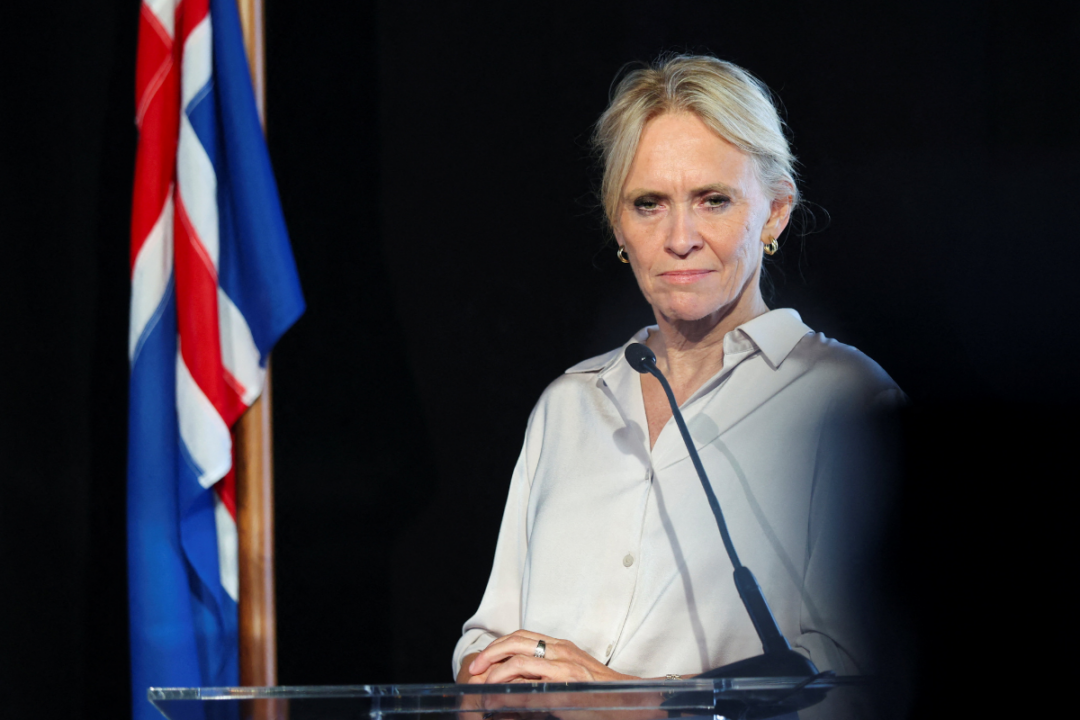
Iceland Focuses on Security Partnerships After Voters Reject Opening EU Membership Talks
Icelandic Minister for Foreign Affairs Thorgerdur Katrin Gunnarsdottir attends a press conference...



Italy, Spain Extend Tit-for-Tat Border Curbs After Ceuta Illegal Immigrant Crisis
Immigrants gather on a hill as they attempt crossing from the border...
