Every week, Promethean Action holds a Saturday Class — a deep dive into the ideas, history, and strategic thinking that the mainstream won’t touch. We’d love for you to join us live. Sign up here and we’ll send you class details every week.When Neil Armstrong took “one giant leap for mankind” on July 20, 1969, almost no one understood what the real legacy of Apollo would be.It would not be footprints on the Moon.It would be the transformation of life back here on Earth.Why a political movement is teaching you rocket scienceKesha Rogers — a lifelong advocate for the space program and a longtime collaborator of economist and statesman Lyndon LaRouche, who fought for the original Apollo mission as the driver of human progress — leads this week’s class.Her argument is simple, and it cuts against decades of Malthusian pessimism:A nation that aims for the Moon doesn’t just reach the Moon. It rebuilds itself on the way there.Apollo built the digital ageWe’re told the “spinoffs” of Apollo were things like Tang and Velcro. Kesha says that’s a distraction from the real story.To land a man on the Moon, NASA partnered with MIT’s Instrumentation Lab, led by Charles Draper, to build something that had never existed: a compact, real-time guidance computer a human could actually talk to.That single problem forced breakthroughs we now live inside every day:The microchip — in the 1960s, the Apollo program consumed nearly 60% of all integrated circuits manufactured in America.The human-computer interface — the first time people navigated a machine through a screen and keypad in real time.The software discipline that became modern computer engineering.Today, microchips power every car, every factory, every device in your hand. That entire world traces back to the guidance system that flew to the Moon.The leap from the Wright Brothers’ first flight in 1903 to the Apollo landing took just 66 years — and it dragged the whole economy from an agrarian past into the digital age.The same leap is in front of us right nowFor 50 years after the last Apollo landing, that spirit was buried under budget fights and anti-growth politics.Then President Trump revived it — first with the Artemis program in his first term, and now with a March 2026 executive order calling for American space superiority and a permanent return to the Moon.Not a flag and footprints. A Moon base.On April 1, four astronauts — Victor Glover, Christina Koch, Reid Wiseman, and Canada’s Jeremy Hansen — flew around the Moon on Artemis II, the first crew past the Moon since Apollo 8.And it carried something new: an optical (laser) communications system that beamed back 4K video and hundreds of gigabytes of data in near real time.Soon we won’t just hear about the Moon hours later. We’ll participate as if we’re standing on the surface.The blueprint for a Moon baseOn May 26, NASA — under administrator Jared Isaacman — laid out a three-phase plan to build out the Moon before humans ever set foot again, all between now and crewed landings in 2028–2030:Phase 1: The first privately funded lunar lander, from Blue Origin, in fall 2026.Phase 2: The largest commercial payload ever, flown on a SpaceX Falcon Heavy with Astrobotic.Phase 3: Intuitive Machines’ “Lunar Vortex” to study the Moon’s magnetic environment.In all, NASA is planning roughly 25 launches and 21 landings, scaling cargo deliveries from tens to about 150 metric tons.The target is the Shackleton connecting ridge at the lunar South Pole — high ground with near-constant sunlight for solar power, beside permanently shadowed craters holding water ice.That water means rocket fuel, oxygen, and the springboard from the Moon to Mars. Alongside it sits Helium-3, one of the Moon’s most coveted resources.And the most futuristic piece: Firefly’s “Moon Fall” — AI-powered autonomous drones that will map the surface at one centimeter per pixel, a hundred times sharper than anything we’ve seen.We are in a race — and not just with ourselvesChina and Russia are building their own lunar base, the International Lunar Research Station, targeting Chinese astronauts on the Moon by 2030.Their architecture mirrors ours: heavy-lift Long March 10 rockets, the “Dreamboat” crew spacecraft, in-situ resource use, even 3D-printing structures from lunar soil.Kesha’s warning, echoing Isaacman: this won’t be won on luck. It will be won by whoever mobilizes the resources, the workforce, and the ingenuity to build it.The good news? Congress just delivered $10 billion in new funding for Artemis with bipartisan support — on top of what commercial partners are investing.Watch the full class — and send it to anyone who still thinks the space program is a luxury we can’t afford.Further readingKesha’s writings on the lunar economy and the golden age of exploration — see her author page.One Giant Leap: The Impossible Mission That Flew Us to the Moon — Charles Fishman (the book Kesha recommended in class).Watch the full class on YouTube—Promethean Action Editorial StaffPS: The 2026 midterms will determine whether President Trump’s agenda survives and accelerates — or gets reversed and crushed.Promethean PAC’s Midterm Bootcamp is a semi-monthly training series equipping activists, candidates, and grassroots leaders with the ideas and messaging to win. Sign up and check your email for the next session’s Zoom link.

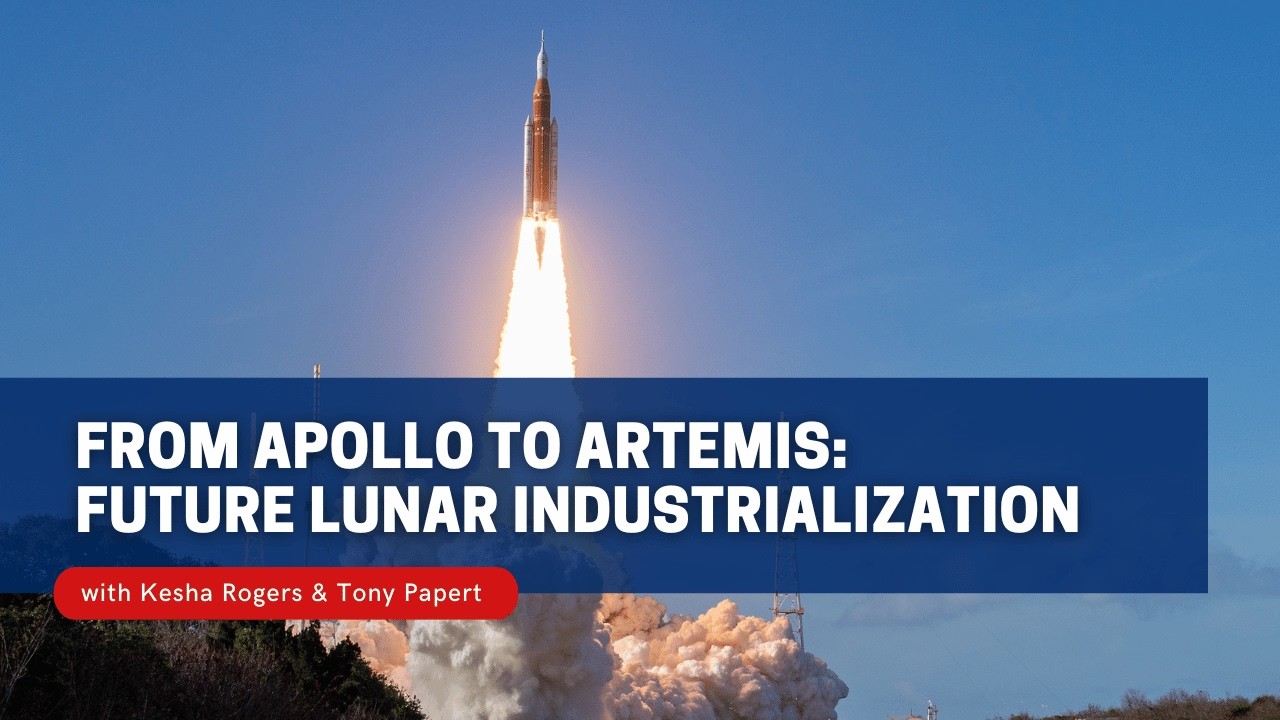
Saturday Class – From Apollo to Artemis: Future Lunar Industrialization – June 6, 2026









Related Articles

EuropeThe Final wakeup call
Lula wins a miracle election in Brazil. Now comes the hard part: putting the country back on the right track
Three weeks ago, Brazilian President Luiz Inácio Lula da Silva’s political obituaries...

EuropeThe Final wakeup call
US midterms: what a new Congress could and could not change for Europe
US midterm elections traditionally attract fewer voters than presidential contests. But this...

EuropeThe Final wakeup call
Political power without balance leads to the erosion of democracy, what Montesquieu can teach modern-day France
KEY TAKEAWAYS Democratic erosion does not start by doing away with elections;...



DruthersThe Final wakeup call
Facing the Crooked of Hormuz
By Tom Engelhardt | Substack.com/@TomEngelhardt I was born on July 20, 1944,...
