Chinese Foreign Minister Wang Yi will travel to New York to chair a high-level meeting of the U.N. Security Council hosted by China on May 26 and then will visit Canada, the Chinese regime’s foreign ministry announced on May 22.Analysts told The Epoch Times that Wang’s visit to Canada is intended to seek maneuvering space in the backyard of the United States.As the rotating president of the U.N. Security Council for the month of May, China will convene a high-level meeting on May 26.Wang will also attend a May 28 meeting of the Group of Friends of Global Governance, a coalition launched by China at the U.N. headquarters in New York in December 2025, and will have meetings with U.N. Secretary General António Guterres and the foreign ministers from other countries, according to the ministry.According to China’s foreign ministry, Wang aims to use the meeting to “enhance the authority and efficacy of the U.N. and its Security Council.”Wang will visit Canada from May 28 to 30 by invitation of Canada’s Minister of Foreign Affairs Anita Anand, the ministry said.Wang chairing the U.N. Security Council’s high-level meeting will give the Chinese communist regime a platform to speak and condemn the United States regarding the Iran war, Shen Ming-shih, research fellow at the Division of National Security Research at Taiwan’s Institute for National Defense and Security Research, told The Epoch Times. “It gives him the opportunity to seize the upper hand in the battle for international public opinion.”Shen also noted that the U.N. Security Council, in the past few years, has ceased to play any meaningful role in many international conflicts that have arisen. “This is primarily because China and Russia, as permanent members, possess veto power; consequently, it has become impossible to pass any resolutions,” he said.Chen Pokong, a U.S.-based China analyst and author, noted that under normal circumstances, it would be logical for Wang to pay a state visit to the United States while attending the U.N. General Assembly if U.S.–China relations were on good terms.“However, Wang only goes to New York to chair the U.N. meeting, and the U.S. side did not extend an invitation for him to visit the United States, nor are there any scheduled meetings between him and the U.S. Secretary of State. This demonstrates that U.S.–China relations are not nearly as cordial as they appeared just a few days ago during Trump’s visit to China,” Chen told The Epoch Times.Trump visited China from May 13 to May 15, and was greeted with high-level reception by the Chinese side, including visiting the Temple of Heaven in Beijing, accompanied by ruling Chinese Communist Party (CCP) leader Xi Jinping.The United States decided against receiving Wang at this time, Chen said, but Canada has agreed to do so. “Visiting Canada is essentially going into America’s backyard.”Canada–China RelationsWang’s visit to Canada is aimed at driving a wedge between Canada and the United States, as the current Canadian Prime Minister Mark Carney has maintained a very pro-China stance and relations between Canada and the United States remain strained due to their tariff disputes, Shen said.The United States has imposed tariffs on various Canadian goods, from steel products to mushrooms over subsidy claims.The Carney administration’s January decision to allow entry for up to 49,000 China-made electric vehicles at a preferential tariff rate met with heavy criticism from the United States, and Canada could face a 100 percent U.S. tariff penalty as the decision may affect the North American market and threaten the U.S. automobile industry.Chen said the Carney administration’s objective is simply to secure certain economic benefits; however, they will not align Canada completely with communist China due to fundamental differences in values, human rights, and systems.“Canada’s decision to host Wang Yi was for mutual self-interest,” Chen said. For Canada, it’s about economic interests, while for China, the deal “allows the CCP to maneuver in the United States’ backyard.”A woman uses an electric vehicle charging station at a Canadian Tire in Scarborough, Ont., on June 14, 2023. The Canadian Press/Doug IvesHowever, Chen said that fundamentally, Canada as a free democracy and China as an authoritarian regime are adversarial in nature. “Canada is a close neighbor and the ‘backyard’ of the United States, Canada cannot possibly align itself with the CCP; moreover, they are ideologically incompatible,” he said.“Because Canada is a nation that places great value on human rights and democracy, it views the CCP’s actions with profound revulsion,” he said.Fang Wei, a U.S.-based senior journalist, told The Epoch Times that the current Canadian government is trying to find a “non-U.S.” solution to its economic problems, “especially when facing the fast-approaching USMCA [U.S.–Mexico–Canada Agreement] review deadline in July, which would impact 75 percent of Canadian exports. One partner Canada is seeking is China.”The USMCA is a free trade agreement among the United States, Mexico, and Canada. The USMCA joint review is a mandatory milestone required under Article 34.7 of the agreement, where the U.S., Mexico, and Canada must decide by July 1 whether to extend the pact for another 16 years.“China will not resolve Canada’s problems. But the two’s tie-up will further put a strain on the U.S.–Canada relationship, which will consequently hurt Canada’s trade with the United States and the chance of continuation of USMCA,” Fang said.“Canada’s small domestic market cannot stand [the flood of cheap Chinese goods]. The United States is still the best target market [for] Canadian products and services,” he said.UN’s AuthorityThe Trump administration has withdrawn from some U.N. organizations and cut its contributions, saying that the programs are not working in the interests of the United States.As to the CCP’s rhetoric that Wang’s meetings at the U.N. are to strengthen and enhance the body’s functionality and authority, Shen said that it lies in whether China is willing to contribute more funds.“International bodies affiliated with the U.N. that are under the sway of the CCP are, naturally, disadvantageous to the United States. Therefore, the United States is unlikely to participate in them, or may even cease its financial contributions to these organizations,” Shen said.“If the United States chooses not to participate, other nations may very well follow suit,” he said. “I do not believe that the United Nations’ standing will be enhanced simply because Wang Yi says it should be.”Members of the United Nations Security Council attend a meeting on the situation in the Middle East at the United Nations headquarters in New York City on Jan. 22, 2026. Michael M. Santiago/Getty ImagesFang said, “I don’t think, however, that Wang Yi is able to accomplish much through such a meeting, as the Chinese government itself is the one that lacks credibility and leadership the most. It can repeat its rhetoric but few countries will follow.”Saying strengthening or enhancing the U.N.’s authority amounts to a complete admission that the organization is in decline, Chen said. “In the face of the United States becoming strong again under Trump’s administration, the power of the U.N. has indeed waned.”The U.N. has effectively become an entity held hostage by regimes such as the CCP, Cuba, and Russia, and is even hostile toward the United States, Chen noted. “Without U.S. funding and participation, it is simply impossible for the CCP to revitalize the United Nations,” he said.Luo Ya and Reuters contributed to this report.

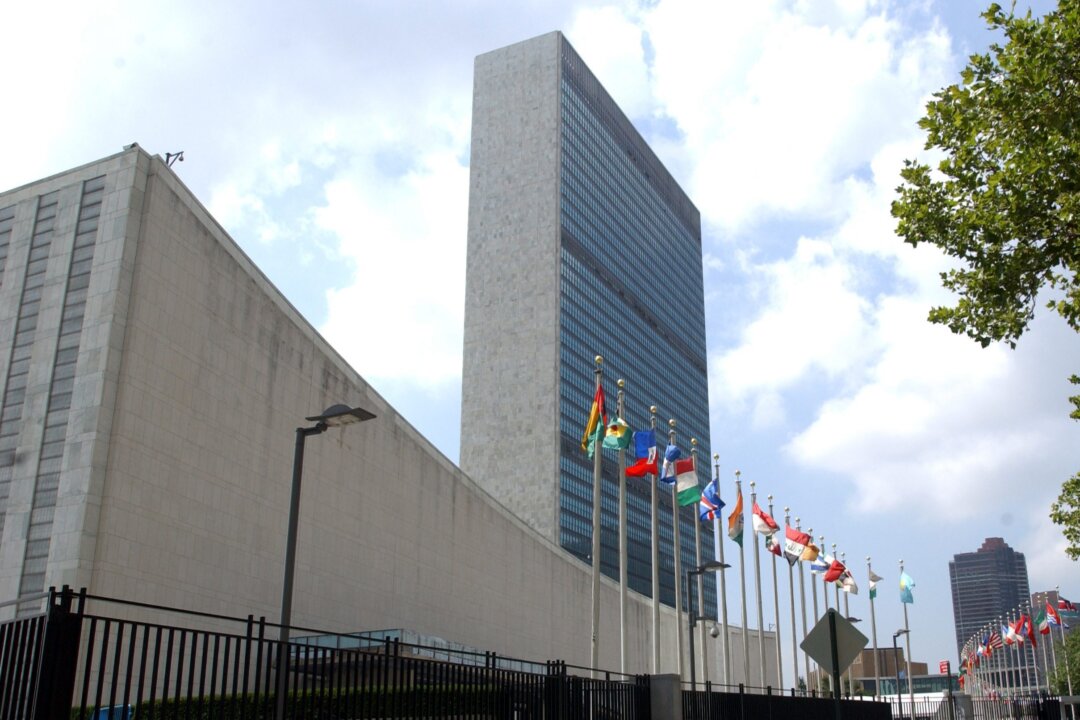
Chinese Foreign Minister to Chair UN Security Council Meeting in US, Visit Canada









Related Articles
China Business & EconomyChina NewsChina Technology
China Tech Index Plunges More Than 40 Percent From July Peak
China’s technology-heavy STAR 50 index has fallen by more than 40 percent...
China Military NewsChina NewsChinese RegimeInside CCP OfficialdomSpecial TopicsZhang Youxia
Xi Opens CCP Plenum Amid Sweeping Purges, Record-Low Attendance Forecast
Chinese Communist Party leader Xi Jinping opened a four-day meeting of senior...
China Business & EconomyChina NewsChinese RegimeFinance & Business TiesInside CCP OfficialdomSpecial Topics
Chinas Economic Woes Deepen as CCP Plenum Focuses on Political Control
The Chinese Communist Party (CCP) opened a four-day leadership meeting in Beijing...


China NewsEuropeGlobalUK NewsWorld News
UK Must Be Ready for War in 1,000 Days, Says British Defense Secretary
British Defense Secretary Wes Streeting has said the country must be ready...
