
Who owns a swarm of bees? And what happens when they stray onto a neighbour’s land? In early medieval Ireland, such questions were addressed by a remarkable set of laws known as the Bechbretha, which set out the rights and responsibilities associated with beekeeping. Also known as bee-judgments, these laws formed part of the wider medieval Irish legal system, Brehon law (known in Old Irish as fénechas or customary law). Brehon law espoused restorative rather than criminal justice and was chiefly concerned with the type of compensation to be paid for crimes committed. Most of these laws were written down in the 7th and 8th centuries, but they probably preserve much older traditions that had previously been passed down orally. Early medieval Irish society was hierarchical. In legal cases, the amount of compensation owed or received depended entirely on a person’s social rank, with payments varying according to their status. The Bechbretha provided a legal guide for lawyers dealing with cases involving bee trespass (where a neighbour’s bees came onto another’s land and supposedly stole nectar from flowers and plants), injuries or death caused by bees, beehive theft and the compensation owed in each situation. Legal cases could be brought against beekeepers whose bees stung passersby. National Museum of Antiquities, CC BY-SA In medieval Ireland, bees were given legal status because they were classified as domestic livestock. Like cattle, horses, pigs, poultry and sheep, they were legally protected because of their considerable value. Beekeeping produced a wide range of goods, including honey for food and sweetening, as well as mead and beer, beeswax for candles, sealants and writing tablets, and other products used in medicine, polishing, lubrication, skincare and waterproofing. The Bechbretha also had another purpose – maintaining good relations within local communities. According to the Bechbretha and another legal text, the 8th-century Bretha Comhaithchesa, Judgements on Neighbourhood, a mutual agreement among the farming community ensured compensation would be paid if and when animal trespass, theft or injury occurred. A certain level of trust between neighbours was required for this process to work. That said, it is one thing to show where a neighbour’s large domestic animal has trespassed or caused damage. It is something else to prove that neighbouring bees had rampaged through your flowers, stealing nectar before buzzing away with their ill-gotten gains. One suggestion the Bechbretha makes is to dust flour over bees, follow them to source and identify the culprits. Because honeybees tend to return repeatedly to the same nectar sources, tracking and marking them with white flour – which scatters onto the ground as they fly, leaving a visible flight path – can be effective. The laws also state that the owner of stray bees has three years to collect their honey, but by the fourth year must surrender the first swarm from that hive to the wronged party. The illustration for bees in the Aberdeen Bestiary manuscript, written and illuminated in England around 1200. Aberdeen University Library Online Collections, CC BY-SA The Bechbretha also dealt with questions about ownership of swarms which settled and built new hives on either private or common land. The beekeeper who found the new hive was entitled to a third of the honey for three years but after that time elapsed, the landowner on which the swarm settled became its owner. Where a swarm was discovered in woodland, the finder was entitled to (almost) everything. The local church and patriarch of the finder’s kin-group were both entitled to a share. Where hives were stolen or illegally moved and where perpetrators got stung or died from being stung, beekeepers were not held responsible. Where bees stung people without provocation, compensation was due, though if the victim killed the bee(s), their death was deemed recompense enough. Generally, for valid situations where someone was stung, killed or maimed, hives were given over in payment. Theft of beehives carried hefty penalties, dependent on their location. The closer a hive was to a homestead, particularly a high-status one, the larger the compensation. This was usually in the form of cattle, the main currency used in pre-coinage Ireland. Theft of hives from monasteries also carried imposing fines. A man tries to catch bees in a basket. Illustration from a medieval French manuscript. National Library of France, CC BY-SA That there were a set of early medieval Irish laws solely for bees reveals the high regard with which these little creatures were held. Restitution through beehives and bee produce helped the proliferation of beekeeping throughout the community. In pre-industrial, early medieval Ireland, where society’s survival depended so much upon the climate, bees were a pivotal part of the agricultural system, as they are today. At the close of the tenth century, writers of Irish historical records documented two instances of bech-dibad – bee mortality – which resulted in mass famine and death among the human population. The fact that these disasters were recorded is significant in that it suggests an awareness about what happens if the bees disappear. Today, bee colonies around the world face multiple threats – from habitat loss, climate change, toxic chemicals and deadly invasive parasites. The Bechbretha shows that if the will is there and communities are involved and feel invested, protecting our bees is possible.










The EUs repair policies are changing the way tech is designed
In the late 1970s, concerned by resource use and scarcity, German industrial...

Iceland Focuses on Security Partnerships After Voters Reject Opening EU Membership Talks
Icelandic Minister for Foreign Affairs Thorgerdur Katrin Gunnarsdottir attends a press conference...
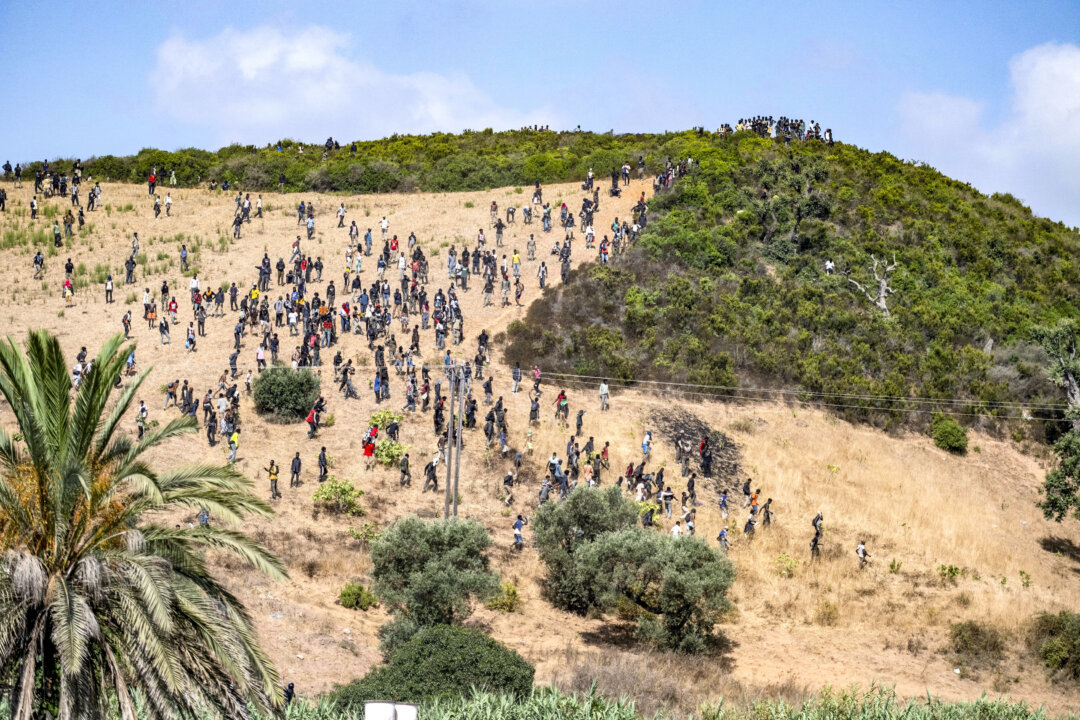
Italy, Spain Extend Tit-for-Tat Border Curbs After Ceuta Illegal Immigrant Crisis
Immigrants gather on a hill as they attempt crossing from the border...



Vaccine Maker Halts Trial on mRNA Cancer Shot
A pharmacist administers the Pfizer-BioNTech vaccine in Los Angeles, Calif., on October...
