
As part-night lighting (i.e., turning off streetlights in the middle of the night) becomes more widespread among local authorities, three studies focusing, respectively, on robins, toads and bats show that, often, turning off the lights for a few hours is not enough to restore natural night. In terms of biodiversity, the challenge is not just about switching off the lights, but knowing when and where to do so. In recent years, switching off street lighting in the middle of the night has turned out to be a no-brainer for several challenges: reducing energy bills, demonstrating a commitment to energy efficiency, and limiting light pollution and its effects on ecosystems. From a biodiversity perspective, the best solution would be to have no lighting at all. But this option clashes with other legitimate uses of night-time spaces: our own! This leaves one question: is switching off the lights for a few hours in the middle of the night really enough to reduce the impact of light on biodiversity? Not necessarily: its effects on organisms depend on the context – location, large-scale light landscape, weather conditions – and the species concerned. A widespread measure whose biological effects remain poorly understood Not all species actually use night-time in the same way. The early evening, the middle of the night and the hours leading up to dawn are often associated with different behaviours: foraging, movement, returning to roost, falling asleep and waking up, communication… In this context, part-night lighting may limit certain effects of light pollution on biodiversity… or miss the mark entirely if it doesn’t coincide with species’ peak activity times. Another important point: switching off lights locally does not necessarily mean returning to total darkness. In towns and cities, nearby lighting – streetlights on adjacent streets, shop signs, shop windows or private lighting – as well as light scattered by clouds often maintain residual brightness. And this effect is not limited to urban zones: in rural areas too, the light halo from towns and cities can remain visible for several dozen kilometres (approx. 15 miles). For the species most sensitive to light, the difference between periods when lights are on and off may, therefore, be minimal, even when public lighting is switched off locally. A local council’s switch-off schedule is therefore not sufficient, on its own, to describe the actual lighting conditions to which animals are exposed. The European robin, commonly found in cities: switching off the lights in the middle of the night isn’t enough The European robin (Erithacus rubecula). Giles Laurent, CC BY This is what we observe in the European robin. For this diurnal bird, part-night lighting is not sufficient, in an urban context, for restoring activity patterns comparable to those observed in unlit areas. Even when streetlights are switched off between 11:00 pm and 6:00 am, the birds tend to sing earlier in the morning and later in the evening than in truly dark areas. Spectogram of the European robin’s song. Fourni par l’auteur To test this effect in the Nantes metropolitan area (Loire-Atlantique department) in France, we compared three types of site: unlit sites, sites lit up all night, and sites where street lighting is switched off for part of the night. We used a simple indicator: the European robin’s song. By recording the soundscape over several days, we can reconstruct the species’ singing patterns across the entire day-night cycle and see how they vary according to light conditions. The result is clear: sites where lighting is cut off in the middle of the night often look more like sites lit all night than unlit ones. The gap appears mainly at key moments for this species, at dawn and dusk – respectively around 40 minutes before sunrise and 20 minutes after sunset – which correspond to its peak vocal activity. The familiar bird song of robins, as well as those of the Eurasian wren, chaffinches and blackcaps. Laurent Godet, Fourni par l’auteur737 KB (download) In our study, the peak in the “dawn chorus” occurs on average before sunrise, by a matter of tens of minutes. However, it is precisely at this time, in an urban landscape that is already well lit, that part-night lighting is barely distinguishable from continuous lighting. This is no doubt due to the central roles dawn and dusk play in diurnal species: these transitions serve as reference points for synchronising daily rhythms. Many lighting systems still leave lights on in the early evening and switch them back on before dawn. In other words, lights are switched off in the middle of the night, but are kept on at the two times that matter most for synchronising activity. For a robin, this shift can have very real consequences: singing earlier also means defending its territory earlier, interacting differently with other birds, and bringing forward essential activities such as foraging or attracting a mate. The data alone does not allow us to conclude that there is a direct effect on reproduction or survival. However, it does show that part-night lighting does not automatically bring the situation back to normal, particularly in urban areas where darkness is often incomplete even when a street or neighbourhood is in the dark. A bat from Réunion: switching lights off slightly earlier could make all the difference A free-tailed bat native to the island of Réunion (Mormopterus acetabulosus). Paul Jossigny, CC BY For the free-tail bat, a nocturnal bat endemic to Réunion, bringing forward the switch-off times by two hours is enough to mitigate the effect of the lighting at the start of the night. However, this effect persists at the end of the night, when lighting in the morning is switched on early. We studied this species, Mormopterus francoismoutoui, in a setting that allowed us to go beyond a simple comparison between lit and unlit sites. For one month, at certain sites, the part-night lighting scheme was altered: the streetlights were switched off two hours earlier than usual. This allowed us to compare the situation before and after this change at the same sites, alongside unlit control sites. Bat activity was monitored acoustically, using recording devices to capture their echolocation calls. This is not a direct count of individuals, but an indicator of their activity. Free-tailed bats in Réunion flying out of a roost. Samuel Challéat, CNRS Nocturnal Environment Observatory, UMR Géode, Fourni par l’auteur The results show that as long as the streetlights remain on, bats are detected more frequently near the lit areas, particularly at the beginning and end of the night, i.e. during their peak activity periods. When the evening switch-off is brought forward, this effect disappears at the start of the night: the light no longer “structures” their activity as it did before. However, a difference tends to persist before dawn, which is consistent with the morning switch-on remaining unchanged. Bats therefore still seem to be attracted to lit areas during their peak of activity before dawn, particularly when the weather was favourable. This result highlights an important point: the effectiveness of part-night lighting depends on how much it overlaps with the activity rhythms of the species present. Turning off the lights in the middle of the night may have little effect if a species concentrates its movements and foraging at the beginning or end of the night. Conversely, a seemingly modest adjustment – in this case, switching off the lights two hours earlier in the evening – may be enough to mitigate the effect of lighting for part of the night. However, we must exercise caution when interpreting these findings. A higher presence near streetlights does not necessarily mean that light is beneficial. It may reflect an opportunity, for example, if insects are attracted to the light but it may also indicate more ambiguous effects: altered movement patterns, a concentration of individuals in certain areas, increased competition, or greater exposure to predators. In other words, these results primarily show a redistribution of activity over time and space, without allowing us to conclude that artificial lighting is, in itself, beneficial or harmful. For toads, partial switch-off remains only a partial solution Spiny toad (Bufo spinosus). Frank Vassen, CC BY For the spiny toad (Bufo spinosus), a primarily nocturnal amphibian, part-night lighting mitigates certain effects of artificial light to some extent, without recreating the conditions of a truly dark night. The spiny toad is a common species in southern and western France, frequently found near inhabited areas, including urban and suburban settings. For its very close relative, the common toad (Bufo bufo), artificial light at night is already known to affect behaviour, physiology and even gene expression in cells: over 1,000 genes malfunction when the animals are exposed to low-intensity light at night! However, in these animals, activity is often most pronounced at the start of the night, suggesting that part-night lighting can, at best, only mitigate the effects. What is meant by ‘gene expression’? Gene expression refers to the way in which an organism “activates” or “deactivates” certain genes, depending on the time of day, the environment or the state it is in. Not all genes are active all the time. Depending on whether it is day or night, or whether an animal is resting, active or under stress, certain genes are activated more than others. This enables the production of the molecules necessary for the organism to function. To say that artificial light can alter gene expression therefore means that it does not merely change the visible behaviour of animals: it can also profoundly affect their biological functioning. We tested this hypothesis experimentally on individuals from one of the areas least affected by light pollution in western France – in Mayenne and Orne. Three groups were formed: one group was kept in natural darkness, one group was exposed to low light levels throughout the night (0.5 lux) and one group was subjected to a part-night lighting scheme between 11:00 pm and 5:00 am, but with the same light intensity of 0.5 lux for the rest of the night. After at least nine days of exposure, we monitored the males’ activity via video during the night. The distance travelled varied little between the different groups, no doubt partly due to the experimental setup. However, one finding stands out clearly: the longer the toads are exposed to light, the more time they spend in their shelter. The individuals subjected to part-night lighting occupy an intermediate position between those placed in darkness and those exposed to light all night. This is also the only group to show a resumption of activity after the lights were switched back on at 5:00 am. For a toad, this can have very real consequences: spending more time in hiding potentially means having less time to forage for food, find a mate or move to another site. The surge in activity observed when the lights were switched on again could represent extra energy spent or a source of stress. Part-night lighting therefore reduces certain behavioural effects, but for these animals it does not seem to be equivalent to a completely unlit night. We still do not know whether this attenuation also results in a reduction in the physiological or genetic effects of artificial light. We also need to gain a better understanding of the impact of a sudden change in light intensity, both when the lights are switched off and when they are switched back on. A common finding: the importance of key moments during the night It would be an oversimplification to conclude that part-night lighting is pointless. However, our findings serve as a reminder that it is primarily designed with human night-time activities in mind – when public spaces are less busy and traffic is lighter – rather than with the times when light has the greatest influence on biodiversity. In our three studies, it is precisely the early and late hours of the night that appear to be decisive. For robins, maintaining light at dusk and dawn is sufficient for sustaining shifts in activity, even when the lights are switched off in the middle of the night. For free-tail bats, bringing forward the evening switch-off reduces the effect of light at the start of the night but not at the end of the night if the morning switch-on remains unchanged. Where toads are concerned, switching the lights back on at the end of the night revives activity at a time when it would normally be decreasing. In all three cases, the conclusion is the same: to be effective, part-night lighting must coincide with the periods when species are most sensitive to light and produce a genuinely perceptible reduction in brightness. Finally, describing part-night lighting simply as “turning lights off” can be misleading. This method of managing street lighting also involves abrupt, artificial transitions: switching on, switching off, and switching on again, which can disrupt organisms. Turning off the lights in the middle of the night is, therefore, not just about less light: it is also another way of artificially dividing up the night. What are the implications for local action? These findings do not, of course, provide a one-size-fits-all solution. However, they suggest three key measures if we are to ensure that part-night lighting also benefits biodiversity. Firstly, adjust lighting schedules around dusk and dawn, which are often crucial for species’ rhythms and activity. Secondly, reduce light spill from areas that remain lit – adjacent streets, shop signs, private lighting – so that switching off the lights results in a real reduction in brightness. Finally, adapt the lighting strategy to suit different locations – city centres, residential areas, the outskirts of nature areas – rather than applying the same rule everywhere. Such planning decisions are best informed by both environmental expertise and residents’ experience, so as to identify sensitive locations and times, make decisions transparently, and then adjust the choices in light of feedback and observations. A weekly e-mail in English featuring expertise from scholars and researchers. It provides an introduction to the diversity of research coming out of the continent and considers some of the key issues facing European countries. Get the newsletter!









You are uninstalling complete packages of ancient programs. Beliefs, limitations, and blocks...

The EUs repair policies are changing the way tech is designed
In the late 1970s, concerned by resource use and scarcity, German industrial...

Iceland Focuses on Security Partnerships After Voters Reject Opening EU Membership Talks
Icelandic Minister for Foreign Affairs Thorgerdur Katrin Gunnarsdottir attends a press conference...
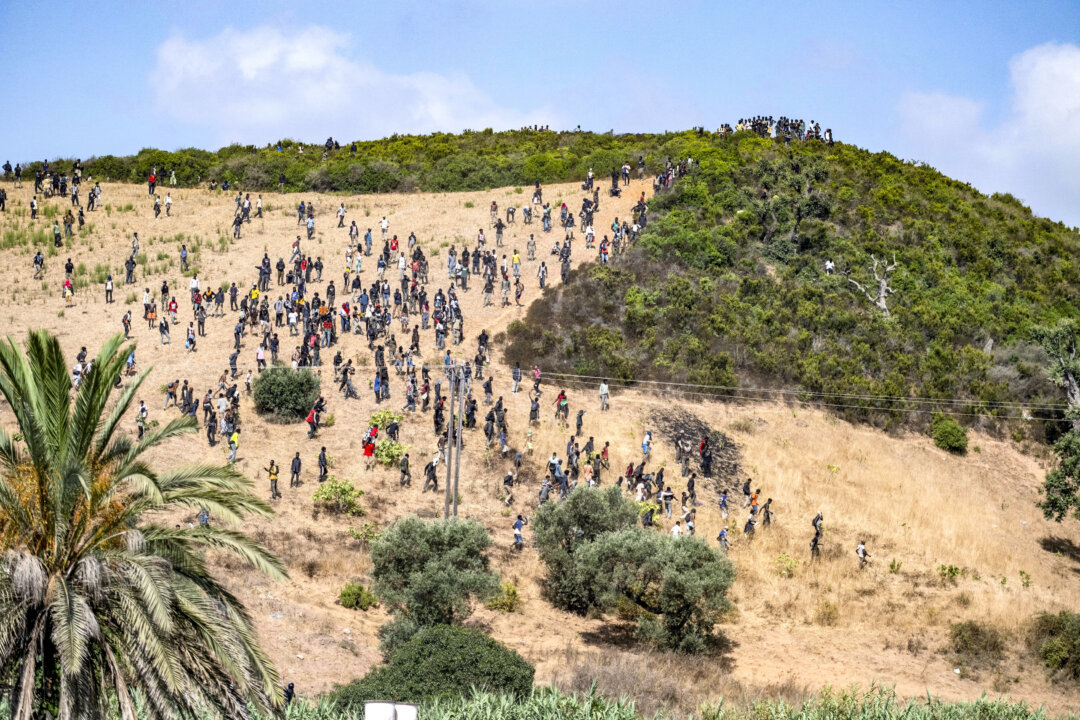


Italy, Spain Extend Tit-for-Tat Border Curbs After Ceuta Illegal Immigrant Crisis
Immigrants gather on a hill as they attempt crossing from the border...
