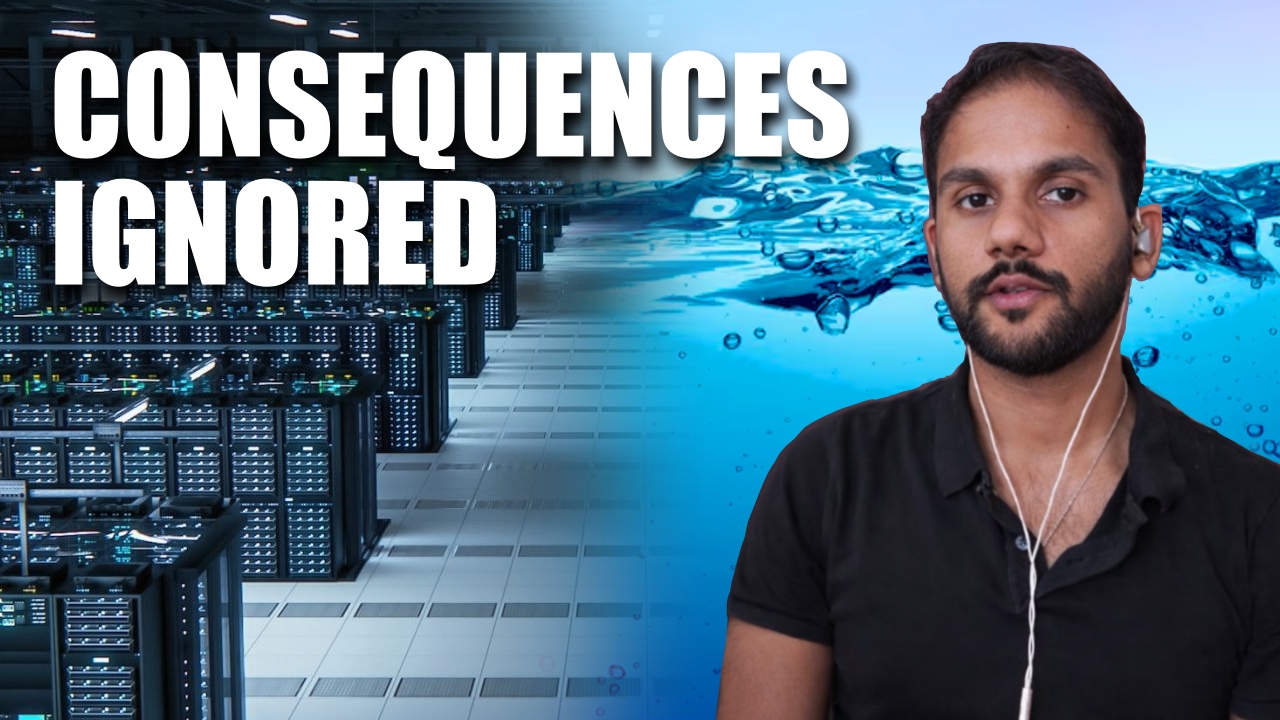
Hakeem Anwar discusses the rapid expansion of AI data centres and their growing impact on infrastructure, resources, and autonomy, arguing that these massive facilities consume vast amounts of water and electricity while operating with little transparency or public oversight. He explains how thousands of data centres, some approaching the scale of entire cities, are being deployed in ways that strain local environments and bypass meaningful community input, while also enabling a broader shift toward centralized computing power. At the same time, Anwar highlights how AI is being embedded into everyday technologies to manufacture demand and consolidate control, raising concerns about surveillance, dependence, and the erosion of individual agency, while still acknowledging that AI can be a powerful tool when used intentionally, particularly through local, user-controlled systems that preserve autonomy.Watch the Full InterviewIn an era of digital surveillance, algorithmic bias, and growing censorship, privacy has never been more important. As centralized powers extend into every layer of our digital lives, those who value truth, freedom, and autonomy need tools they can trust. Above Phone delivers exactly that, and my core team relies on Above Phones and Above Books to run our operations securely.Save up to $150 on privacy-focused devices—including laptops, tablets, and phones—while supporting the educational and advocacy work of my team, Take Back Our Tech, and Above. Use discount code DRTROZZI or access the offer through the link below.Visit Above Phone StoreThis video featuring Hakeem Anwar is rich with insights, but we know time is limited. Below is a concise summary highlighting the key takeaways from our discussion for your convenience.AI data centres are expanding rapidly across the United States. The Data Centre report by Anwar estimates around 4,000 data centres nationwide, forming dense clusters near major cities.Some data centres are approaching the size of major urban areas. A Meta facility in northern Louisiana is almost the size of Manhattan, highlighting the immense physical footprint of these developments.Water consumption can reach millions of gallons per day. Based on power capacity and standard usage estimates, a single large data centre is likely using around 2.5 million gallons of water daily.These estimates are necessary due to a lack of transparency. Companies do not disclose full resource usage, and in many cases do not even track their own water consumption, leaving significant gaps in accountability.Data centres place significant strain on electricity systems. Large facilities can operate at around 2 gigawatts of power continuously, raising concerns about energy demand and rising costs.Groundwater depletion is a major downstream risk. Heavy water extraction can lower water tables below well depth, causing wells to run dry and creating serious consequences for landowners.Water depletion disrupts entire ecosystems. Declining groundwater reduces river flow, damages plant systems that filter toxins and prevent erosion, and weakens the broader environmental balance.Projects are often approved without meaningful public awareness. Data centres can be zoned and approved before local residents are informed, limiting the opportunity for communities to object.Expansion is driven by competition among major technology companies. Companies are racing to build larger facilities with similar specifications, positioning themselves for anticipated future demand.Demand for AI is being reinforced through product integration. AI features are embedded into devices and software, creating artificially inflated demand, regardless of whether individuals actively choose to engage with them.Local AI systems provide greater control and reduced censorship. Running AI on personal machines allows users to operate independently and avoid reliance on centralized platforms.Overreliance on AI can undermine human capability. The delegation of thinking and creative tasks to AI risks is reducing individual skill development and personal engagement.A more balanced use of AI is necessary. AI can be useful for learning and productivity, but should be used in a way that supports rather than replaces human effort.Data Centre Report. Above mapped over 3400 US data center locations, analyzed water stress, and shared solutions. Link↗ Digital ID Report. Above analyzed digital ID rollouts, mandates, and impacts, offering answers and solutions in a new report. Link↗Sovereign AI Guide. How AI works, its costs and risks, and practical, privacy-focused use grounded in critical thinking. Link↗Take Back Our Tech. A front-line public advocacy mission led by Hakeem, focused on reclaiming digital sovereignty: Link↗Save up to $150 on privacy-focused devices—including laptops, tablets, and phones—while supporting the educational and advocacy work of my team, Take Back Our Tech, and Above. Use discount code DRTROZZI or access the offer through the link below.Visit Above Phone Store










Related Articles

Dr Mark Trozzi
Wins of the Week 148 with Glen Jung
This week’s developments highlight growing efforts to challenge institutional decisions, defend individual...

Dr Mark Trozzi
Influenza Season: What You Need to Know and How to Protect Yourself
Influenza season is upon us, and big pharma has lots of mistakes...

Dr Mark Trozzi
Wins of the Week 147 with Ted Kuntz
This week’s victories reflect growing efforts to expose conflicts of interest, strengthen...



Dr Mark Trozzi
Dr. Angus Dalgleish Warns of Aggressive Cancers After COVID Injection
COVID shots are causing aggressive cancers that are difficult to treat, including...
