
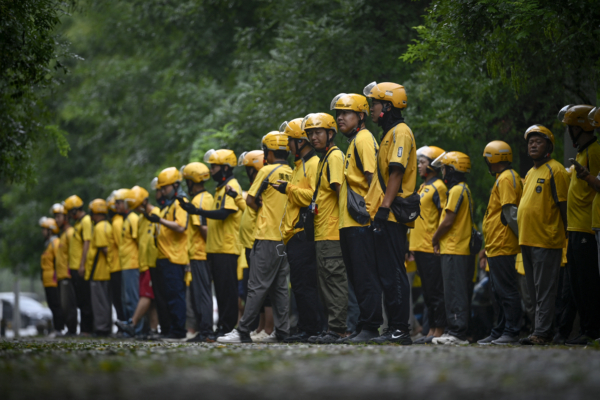
Beijing is moving to tighten its grip on tens of millions of gig workers—an increasingly vital but volatile segment of China’s labor force—prompting warnings from analysts that the effort could deepen social tensions rather than contain them.On April 26, China’s top leadership bodies, the General Office of the Chinese Communist Party (CCP) and the State Council, released new guidelines via Chinese state media outlet Xinhua News Agency, calling for stronger management of what the CCP describes as the country’s “new employment groups.”The directive is dated Oct. 29, 2025, but was only just made public. It calls for increased adherence to Chinese leader Xi Jinping’s political doctrine and urges workers to “listen to and follow the Party.”Using vague language, it also mentions plans for “a working mechanism characterized by top-to-bottom coordination” by the year 2027 and further objectives within another five years, including that “ideological and political guidance will be more forceful.”The move comes as Beijing seeks to assert tighter control over the fast-growing gig workforce that now numbers about 84 million people—roughly one-fifth of China’s employed population—according to a February analysis in “Qiushi,” a CCP propaganda magazine.Vast, Hard-to-Control WorkforceChina defines “new employment groups” as workers who are engaged in flexible, platform-based jobs tied to the digital economy. They include food delivery riders, couriers, ride-hailing drivers, e-commerce workers, and live-stream hosts, many of whom are young job seekers drawn by low barriers to entry but who face long hours, unstable incomes, and limited labor protections.The category overlaps with China’s broader concept of flexible employment, which includes part-time workers and the self-employed. Officials estimated that by 2025, more than 200 million people fell into that broader grouping, according to Xinhua News Agency.Despite their numbers, these workers often lack access to social benefits and operate outside traditional labor structures, making them difficult to organize and, from the CCP’s perspective, difficult to control, according to U.S.-based China current affairs commentator Wang He.Wang told The Epoch Times the new directive reflects mounting concern within the CCP about the political risks posed by this group. He said the policy is about extending state control.“The CCP sees this [as a segment of the workforce] that cannot be allowed to drift beyond Party oversight,” he said. “The priority is political control.”Wang said that in recent years, China has already expanded surveillance systems and grassroots governance networks. The latest policy signals an effort to integrate gig workers more fully into that framework, while reinforcing the Party’s authority over both society and the government.“This group is young, mobile, and highly connected through the internet,” he said. “Their ability to voice grievances is stronger than many other groups.”Signs of DiscontentIncidents over the past year have underscored those concerns.In December 2025, hundreds of delivery riders in Changsha, China, gathered to protest restrictions on access to a residential compound. Videos circulating online showed one participant dressed in a yellow cape, prompting a heavy police response.More recently, from late March to early April, delivery workers in Chongqing, China, staged a multi-day strike, protesting falling pay rates and what they described as exploitative platform practices.According to some experts, such episodes, although localized, have shown the potential for broader unrest.Xu Zhen, a senior professional in China’s capital markets, told The Epoch Times that disputes involving delivery workers have increasingly become flashpoints for social instability.“The CCP is trying to consolidate various tools of social control, through Party branches in platform companies and even intervention in algorithms,” he said. “But it’s not clear these measures will work.”The official guidelines also promised better services and legal protections for gig workers, including efforts to solve “practical difficulties” and “enhance ideological and political work.”Critics say such language is often more rhetorical than substantive.Wang said the promise to protect rights and provide services is largely a facade.In practice, many gig workers struggle to access social insurance or other benefits, leaving them effectively marginalized within China’s labor system, according to Wang. Local governments, already under fiscal strain, may lack the resources—or the incentive—to expand support.Expanding Party ReachThe policy also reflects a broader institutional shift.In 2023, Beijing established a new Central Social Work Department tasked with strengthening social stability and expanding CCP influence across a wide range of sectors, from industry associations to private enterprises and grassroots organizations.Earlier this month, the CCP also announced a campaign via Chinese state media outlet the People’s Daily targeting industry associations, again stressing the need for stronger party leadership.Taken together, Wang said the measures point to a deepening emphasis on control amid economic uncertainty and rising social pressures, raising questions about whether tighter oversight will ensure stability or fuel further discontent.Ning Haizhong and Luo Ya contributed to this report.









Ohio State Agrees to $2.1 Million Federal Settlement Over Undisclosed China Research Ties
Ohio State University has agreed to pay $2.1 million to resolve federal...

Chinese Scientists Flagged Glacial Flood Danger One Year Before Nepal Catastrophe
More than a year before the catastrophic flash flood devastated the China–Nepal...
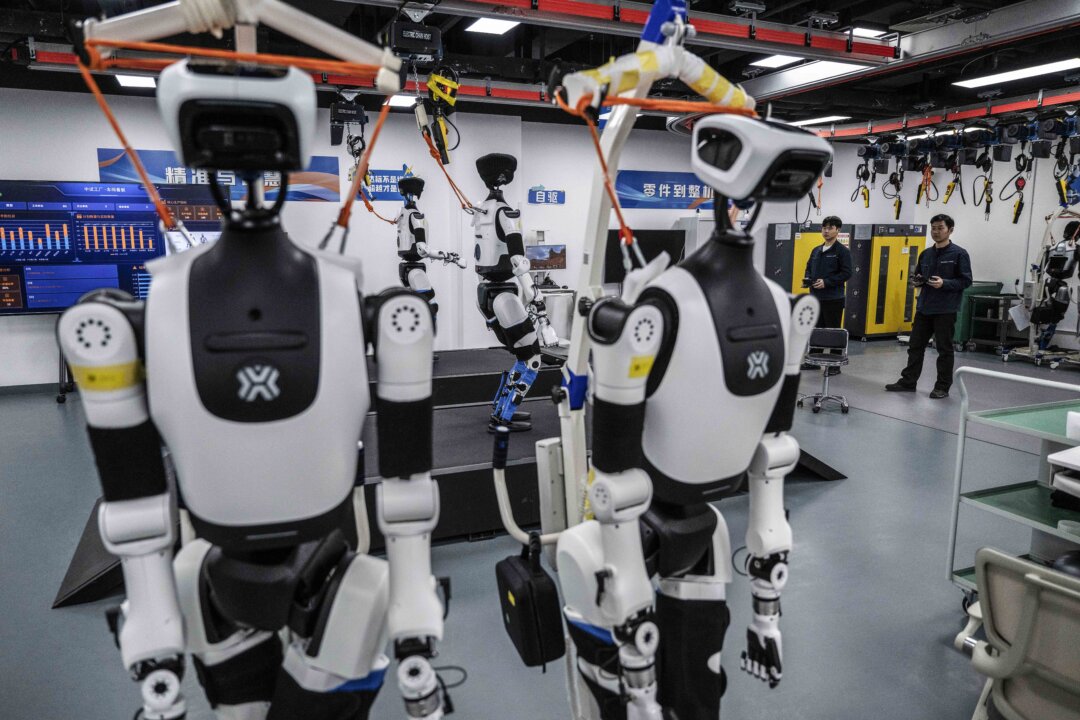
Chinas Humanoid Robot Companies Face Reality Check
China is showcasing humanoid robots as symbols of its technological ambitions. However,...



Iceland Focuses on Security Partnerships After Voters Reject Opening EU Membership Talks
Icelandic Minister for Foreign Affairs Thorgerdur Katrin Gunnarsdottir attends a press conference...
