During a recent five-day trip to Beijing, a Chinese tourist posted on social media that he passed through security checks six times and was required to scan his national ID card 15 times.“Basically, everywhere you go, you have to scan your ID,” he said in a video shared on WeChat.“At tourist sites, subway stations, and many public spaces, there are ID checkpoints. Your trip gets interrupted again and again.”His experience offers a window into a rapidly expanding system of identity control in Beijing—one that integrates big data and facial recognition technology to monitor movement across the city’s public spaces.Several petitioners, rights advocates, and other individuals who spoke to The Epoch Times say the system reflects a broader shift toward data-driven social control, raising concerns about privacy and civil liberties in China. They spoke to the publication on condition of anonymity or only publishing their surnames out of fear of reprisal.City of Constant SurveillanceAcross Beijing, security checks and ID verification have become nearly unavoidable. Subway stations routinely require bag inspections, while many locations also demand ID scans tied directly to personal data systems.For certain groups, the system can be even more restrictive.A woman surnamed Li, who has repeatedly traveled to Beijing to petition regime authorities, told The Epoch Times that scrutiny has intensified.Petitioning is an administrative procedure for hearing public complaints and grievances. In practice, it’s widely reported by human rights groups that the regime routinely dismisses petitioners and often persecutes those who are dissatisfied with the regime’s authoritarian rule.“I just came back from Beijing. This time, the checks were more frequent than before,” she said. “Places like Tiananmen Square all have security checks. Petitioners are basically inspected wherever they go.”In many cases, she said, individuals flagged as “key persons” may be stopped entirely.“If you’re considered a priority target, you may not be allowed to pass at all. They’ll detain you and hand you over to your local authorities,” she said.Others describe a system that operates not just through physical checkpoints, but through invisible digital monitoring.A male petitioner from Dalian, surnamed Ma, told The Epoch Times that facial recognition systems are now widespread across the city.“Beijing is covered with surveillance. The ‘Skynet’ system is very dense,” he said, referring to China’s vast network of cameras. “As soon as you appear, the system can identify who you are, where you’re from, and whether you’re on a blacklist.”Regional Profiling and Digital ControlThe system also appears to apply different rules to different groups.At a business hotel in Beijing’s Chaoyang district, a staff member told The Epoch Times that guests with ID numbers beginning with “65”—a code indicating registration in the Xinjiang region—often face additional scrutiny.Xinjiang, also known as East Turkistan among pro-independence activists, is populated mainly by ethnic Uyghurs who face intensified scrutiny and oppression from the regime.“They usually require extra registration, and sometimes we have to report them to the local police station,” the staff member said. “Even Han Chinese from Xinjiang are reported. Tibetans, though, are not allowed to stay.”A Beijing-based rights advocate surnamed Li said the capital’s central districts and transportation hubs have effectively formed a dense network of layered identity verification points.“Tourist sites, subways, and public spaces all have multiple checkpoints,” he said. “Combined with video surveillance and facial recognition, your movements are continuously recorded.”He described the system as a form of “technological authoritarian governance,” in which control is exerted not only through physical policing but also through pervasive digital oversight.China’s surveillance expansion has been underpinned by laws such as the Anti-Terrorism Law and Cybersecurity Law, which have steadily extended real-name registration requirements.Today, data from hotels, public transportation, telecommunications, and online platforms are all linked in real time with the regime’s public security systems.A Chinese online commentator told The Epoch Times that this marks a shift in how authorities manage society.“Urban governance is moving from general prevention to precise monitoring of specific groups,” she said. “With facial recognition combined with identity data, it’s far more efficient than manual checks.”She likened the experience to living under constant digital restraint.“Every citizen is like wearing ankle monitors all the time,” she said.Yang Qian contributed to this report.

Beijings High-Tech Surveillance Turns Daily Life Into a Series of ID Checks, Locals and Travelers Say
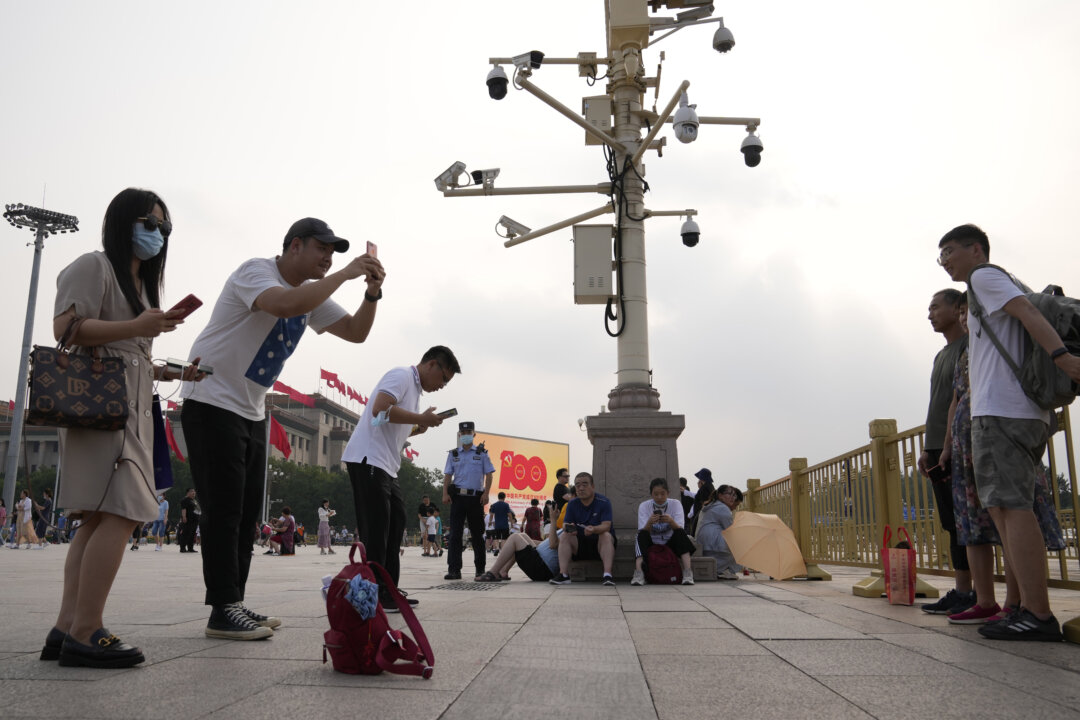
Beijings High-Tech Surveillance Turns Daily Life Into a Series of ID Checks, Locals and Travelers Say








Related Articles
China Business & EconomyChina NewsChina Technology
China Tech Index Plunges More Than 40 Percent From July Peak
China’s technology-heavy STAR 50 index has fallen by more than 40 percent...
China Military NewsChina NewsChinese RegimeInside CCP OfficialdomSpecial TopicsZhang Youxia
Xi Opens CCP Plenum Amid Sweeping Purges, Record-Low Attendance Forecast
Chinese Communist Party leader Xi Jinping opened a four-day meeting of senior...

China Business & EconomyChina NewsChinese RegimeFinance & Business TiesInside CCP OfficialdomSpecial Topics
Chinas Economic Woes Deepen as CCP Plenum Focuses on Political Control
The Chinese Communist Party (CCP) opened a four-day leadership meeting in Beijing...



China NewsEuropeGlobalUK NewsWorld News
UK Must Be Ready for War in 1,000 Days, Says British Defense Secretary
British Defense Secretary Wes Streeting has said the country must be ready...
