The situation in the Middle East represents a negative framework for Italy, which, like its European partners, is a mere spectator watching a conflict that it does not endorse. Italy is both an exporting nation, sensitive to global economic cycles, and a country characterised by its dependence on fossil fuels, with Italian electricity production largely powered by natural gas. Both the rise in gas prices and a slowdown in global trade pose a dangerous economic pincer for Italy. This widely shared assessment within the Italian political class underpins Italy’s critical stance towards the conflict. EU alignment versus handling US relations with care It is also important to note a shift in Italy’s positioning. Since the beginning of Trump’s presidency, Giorgia Meloni’s government has shown conciliation towards Trump. While Italy maintained a form of European orthodoxy – supporting Ukraine, expressing a favourable position towards Denmark regarding Greenland – it also tried to please both sides, paranoidly avoiding initiatives that could be perceived as distancing itself from Washington, especially due to concerns over tariffs. From this perspective, Italy remained in the background regarding European defence initiatives led by France and the United Kingdom, from the Coalition of the Willing to the new concept of “Forward Deterrence,” which sees France collaborating with major European countries, including Germany. In some ways, this Italian caution may have contributed to a misjudgment by the Italian government, which, for example, did not anticipate Germany’s growing distance from the United States. In February, Italy’s participation as an observer in Trump’s “Board of Peace” had already raised many questions. This choice by Meloni’s government appeared as a continuation of an open line towards the American administration, a traditional position she has repeatedly voiced when evoking her vision of Western unity, conceived as a fundamental project. At the time, the left-wing opposition expressed its discontent, while even the Vatican showed its perplexity. Italy seeks distance on Iran Following Israel’s and the United States’ military action against Iran, the Italian Prime Minister expressed euphemistic distancing from the United States, declaring in the Chamber of Deputies that the actions of the United States and Israel were taking place outside international law. This amounted to an implicit rejection by Italy, which remains constitutionally committed to legality. Although not a direct condemnation of the Trump administration, this moment marked a turning point, breaking with a government that had previously appeared consistently lenient towards Trump’s positions. This shift was later confirmed by Italy’s signing, alongside Canada, France, Germany and the United Kingdom, of a letter refusing to send military capabilities to the Strait of Hormuz following a request by Donald Trump. Keeping energy options open with Tehran Further factors help explain this position. Italy has always cultivated its relationship with Tehran. Iran had been a privileged partner in Italy’s energy policy, established by ENI under Enrico Mattei since 1957, an agreement that, in some ways, endured even after the 1979 revolution. Despite sanctions, Italian diplomacy has always sought to maintain channels of dialogue with Tehran. On the other hand, Italians have always been, rightly, extremely critical of military ventures aimed at regime change. In 2011, they had warned – though unheeded – that the fall of Gaddafi’s regime would lead to a scenario of great instability. They were also disillusioned by the withdrawal from Afghanistan, a theatre in which they had invested heavily and where they perceived a form of American betrayal. Generally, Italy, a country marked by pacifism, does not believe in solutions imposed by force. Thus, the March 2026 attack represents a worst-case scenario for Italians: it creates a risk for their economy, marks a rupture with a country long considered a partner, and defines a military spiral that Italians know to be harmful. This conflict, along with pressures at home, has put the Meloni government in a state of crisis, as it has made Atlantic loyalty a hallmark, in keeping with the line expressed by the Italian right since Silvio Berlusconi. The Italian context Italian domestic politics have been characterised by competition over the recent government-backed justice referendum – a key test for Meloni, who, despite this defeat, is continuing as PM. The events in Minneapolis and the blatant violations of freedoms by U.S. federal forces have contributed to Italy’s cautious stance towards judicial reform, perceived as an untouchable shield for democracy. References to Trump now act as a repellent for the entire Italian political class, including the right. This factor played a role in the vote against the referendum, which is a major blow for Meloni. It is also worth noting that the visit of Palantir CEO Peter Thiel to Rome in March 2026 sparked both calculated political indifference and an outcry among Catholic circles: Thiel was labelled a heretic and an opponent of the social doctrine of a religious institution that remains steadfast in its defence of democracy. This distance from America’s tech-right contrasts with the warm welcome Giorgia Meloni had reserved for Elon Musk until 2024. The radicalisation of Trump’s position is pushing the Italian government to clarify its pro-European choice, a painful evolution for a political camp whose visceral Atlanticism feels betrayed by the United States. A weekly e-mail in English featuring expertise from scholars and researchers. It provides an introduction to the diversity of research coming out of the continent and considers some of the key issues facing European countries. Get the newsletter!







Related Articles
EuropeThe Final wakeup call
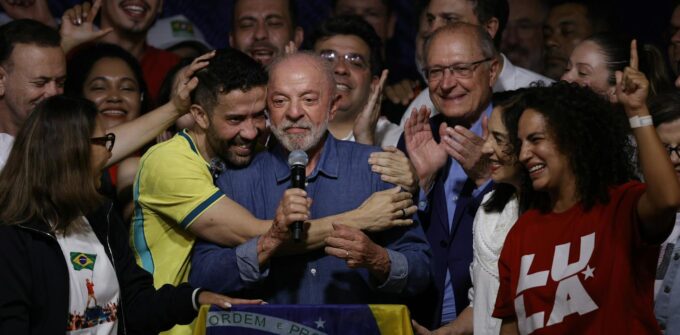
Lula wins a miracle election in Brazil. Now comes the hard part: putting the country back on the right track
Three weeks ago, Brazilian President Luiz Inácio Lula da Silva’s political obituaries...
EuropeThe Final wakeup call
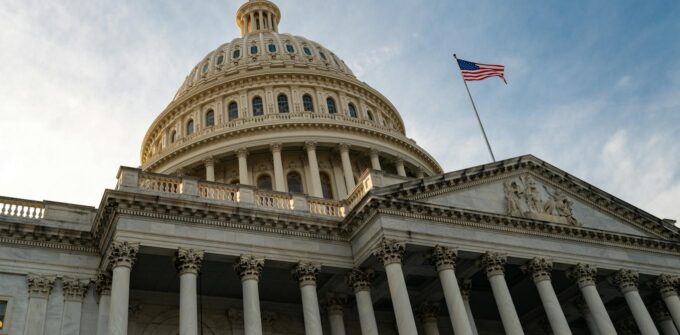
US midterms: what a new Congress could and could not change for Europe
US midterm elections traditionally attract fewer voters than presidential contests. But this...
EuropeThe Final wakeup call
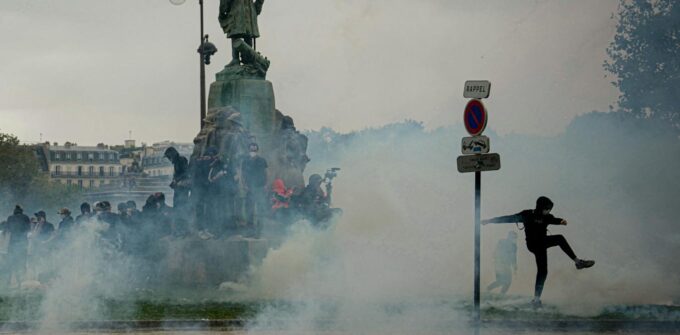
Political power without balance leads to the erosion of democracy, what Montesquieu can teach modern-day France
KEY TAKEAWAYS Democratic erosion does not start by doing away with elections;...


DruthersThe Final wakeup call
Facing the Crooked of Hormuz
By Tom Engelhardt | Substack.com/@TomEngelhardt I was born on July 20, 1944,...
