
Robert F. Kennedy Jr. is not just a controversial politician. There is more to him than meets the eye: he is a figure who has turned suspicion into a political identity, and who has learned how to weaponize the language of transparency in order to erode confidence in Public health itself. His rise to power is not only a story about vaccines. It is a story about how distrust is produced. Sentence by sentence, metaphor by metaphor, until uncertainty feels like common sense. Kennedy’s biography begins with inherited authority. Born in 1954, the nephew of John F. Kennedy and the son of Robert F. Kennedy, he carries a name that still resonates with American idealism. Yet, as French newspaper Le Monde notes, he has increasingly become associated with conspiracy-inflected activism and vaccine skepticism, an uneasy fusion of dynasty and dissidence. For decades, Kennedy’s public career was not centred on medicine but on environmental law. He built credibility as an environmental lawyer and activist battling corporate polluters, suing industries accused of poisoning rivers and communities. This period matters because it provided the moral template that continues to shape his rhetoric. Powerful industries harm the innocent, regulators fail, and the lone crusader exposes what has been hidden. The problem is that Kennedy later imported this “template” and applied it to public health, treating vaccines less as medical tools than as symbols of institutional corruption. The “RFK Jr. rhetoric” in the making The pivot began in the mid-2000s, when Kennedy increasingly started promoting claims about vaccine safety. He became chairman of Children’s Health Defense, one of the most influential organizations in the American anti-vaccine ecosystem. Fact-checkers note that he repeatedly advanced debunked links between vaccines and autism, despite overwhelming scientific evidence rejecting them. The language of doubt: reading between the lines What distinguishes Kennedy is not simply his conclusions, but his rhetorical method. He rarely presents himself as an opponent of vaccination outright. Instead, he constructs a linguistic shield of moderation: “I am pro-safety… I am not anti-vaccine… All of my kids are vaccinated.” This disclaimer is not incidental. It is strategic. By denying the label while sustaining suspicion, Kennedy makes doubt appear reasonable, even responsible. The effect is to normalise distrust without ever owning its implications. During the Coronavirus pandemic, this rhetoric expanded dramatically. Nature described Kennedy as one of the most prominent spreaders of vaccine misinformation in the United States. NPR similarly highlighted how he amplified distrust toward public health institutions during the crisis. His language in this period reveals a consistent populist grammar of ordinary citizens and parents versus captured elites. Vaccination becomes not a medical intervention but a symbol of coercion. “Submit to the government, do what you’re told,” he says, lamenting that “there is no discussion.” Pitching Science against ‘truth seeking’ This language is politically potent precisely because it shifts the terrain. The debate is no longer about epidemiology, but it is about freedom, betrayal, and moral agency. Science becomes not a method but an institution to be distrusted. Kennedy’s discourse is sustained by a careful cultivation of uncertainty. “There isn’t proof,” he concedes, then pivots, “we don’t know what causes it yet, so shouldn’t we be open-minded?” The move is subtle – consensus is reshaped as premature closure, scepticism as intellectual virtue. At times, Kennedy goes further, redefining science itself. “Science doesn’t say anything,” he declares. “Science is a dispute.” It is an epistemic manoeuvre with serious consequences. If science is merely an endless argument, then no evidence can ever fully settle the question. Doubt becomes permanent. To legitimize dissent, Kennedy often relies on moral storytelling rather than rigorous methodology. He invokes Francis Kelsey, the FDA scientist who resisted thalidomide approval, celebrating her because she “questioned science.” The implicit suggestion is clear: today’s dissident may be tomorrow’s hero. But the analogy is misleading. Questioning regulatory negligence is not equivalent to undermining decades of vaccine evidence. When challenged directly, Kennedy often replaces consensus with competing “alternative” studies, promising that if wrong he will “publicly apologise,” while insisting “there are other studies as well.” Closure is endlessly deferred and the conversation is designed never to end. The most consequential shift, however, is that Kennedy’s rhetoric has begun to reshape institutions. Lawmakers accused him of destabilising vaccine governance after he dismissed all 17 members of a major advisory committee, calling the move unprecedented and reckless. The American Public Health Association warned that his record reflects misinformation and poor scientific judgment. The Lancet went further, arguing that his influence could worsen global vaccine hesitancy, citing Samoa’s measles outbreak as a deadly example of mistrust amplified into catastrophe. Kennedy does not operate alone. Around him exists an ecosystem that portrays him as a persecuted truth-teller. US Senator Elizabeth Warren’s report describes his leadership as a systematic pattern of anti-vaccine disruption. What emerges is not merely individual skepticism, but a movement in which mistrust is foundational and transparency becomes a political weapon. The deeper question RFK Jr. forces upon public life is not whether vaccines are safe – a matter repeatedly settled by scientific evidence – but whether democratic societies can survive the strategic erosion of shared reality. Where will RFK Jr.’s voice lead to? At some point, the story stops being about one man’s claims and becomes about the culture that allows those claims to flourish. How does doubt become identity? How does questioning become a form of power? And what happens when the language of science is transformed into a battlefield rather than a method? In such a world, science stops functioning as a common tool for establishing evidence. Instead, it becomes a rhetorical terrain. Competing actors claim the authority of science, each presenting their own version of it. The result is not clarity but permanent conflict, where the word itself becomes ammunition in the fight over who gets to define reality. Kennedy began as an environmental crusader. He has become a Public health dissident. He is now something more troubling: a political actor whose influence lies not in solving uncertainty, but in sustaining it. Perhaps the most urgent question is not what Robert F. Kennedy Jr. believes. It is what his rhetoric makes possible.







You are uninstalling complete packages of ancient programs. Beliefs, limitations, and blocks...

The EUs repair policies are changing the way tech is designed
In the late 1970s, concerned by resource use and scarcity, German industrial...
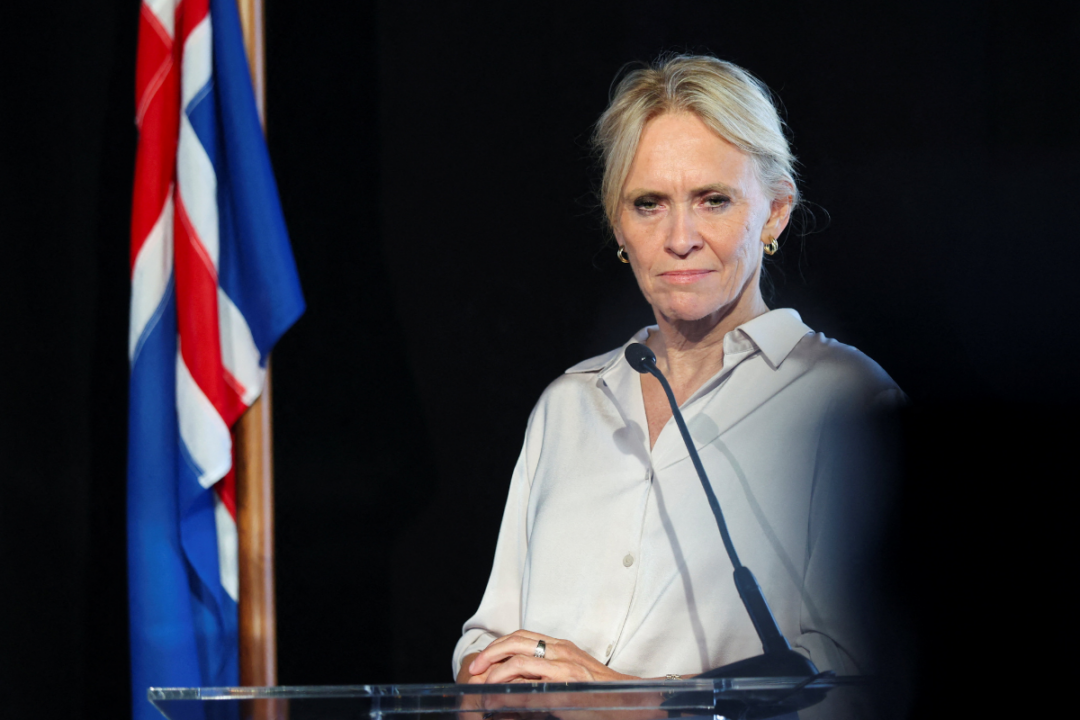
Iceland Focuses on Security Partnerships After Voters Reject Opening EU Membership Talks
Icelandic Minister for Foreign Affairs Thorgerdur Katrin Gunnarsdottir attends a press conference...
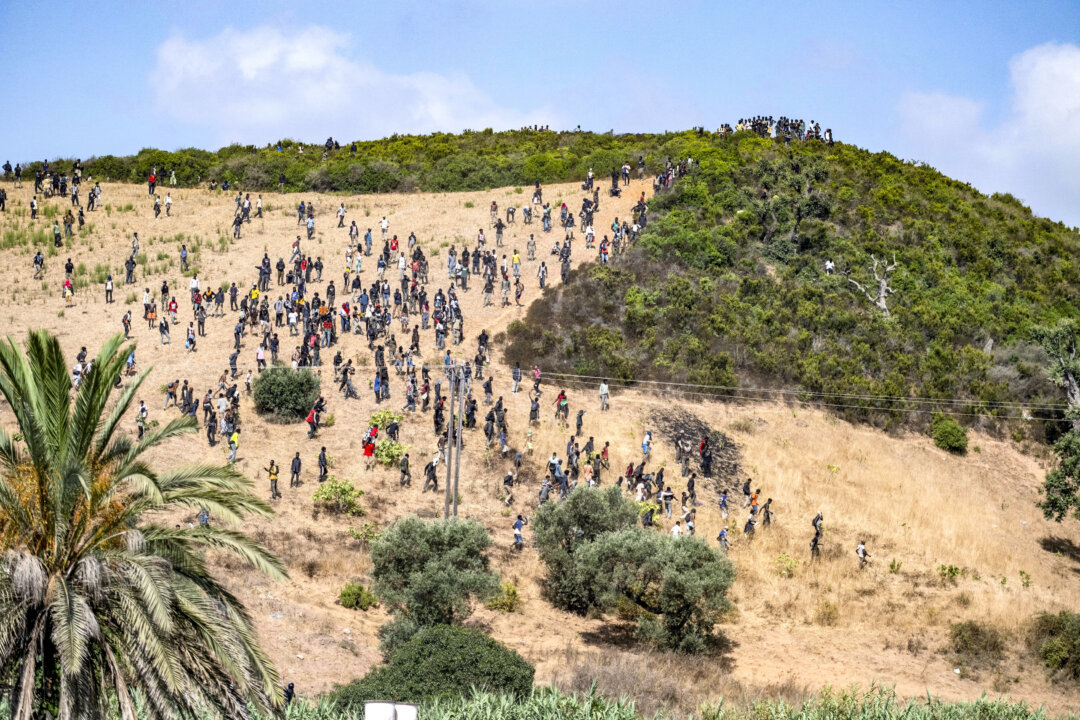


Italy, Spain Extend Tit-for-Tat Border Curbs After Ceuta Illegal Immigrant Crisis
Immigrants gather on a hill as they attempt crossing from the border...
