
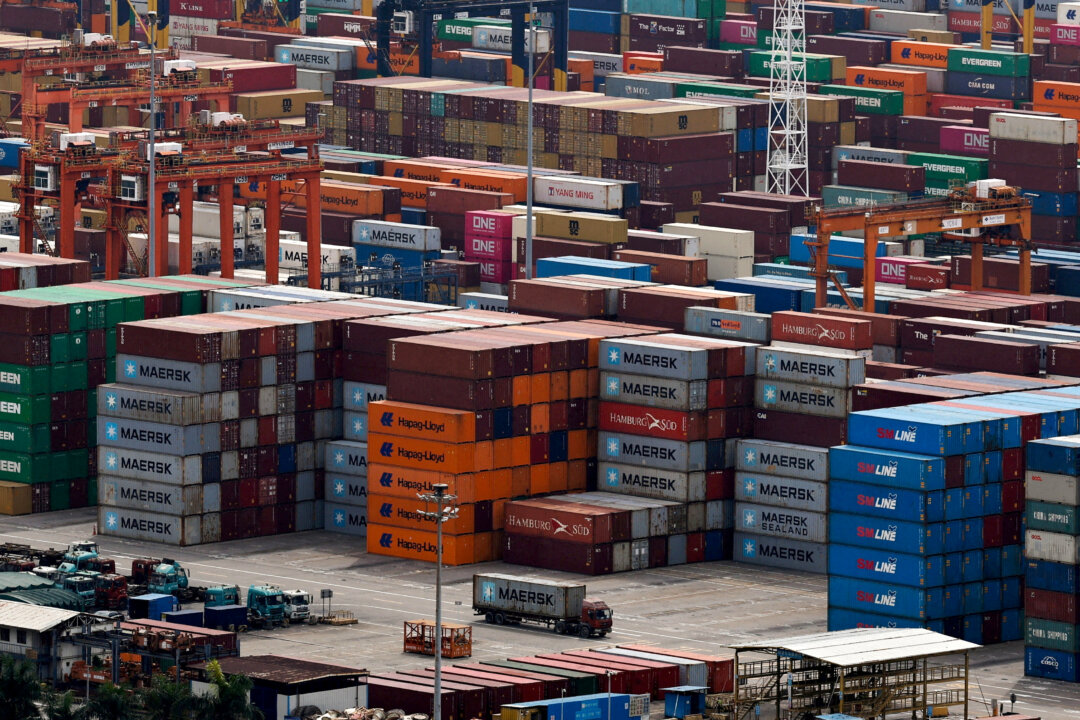
The duties on a type of engineering plastic include 74.9 percent on U.S. imports and 34.5 percent on European Union imports, among others.
On May 18, a week after the 90-day tariff truce between the United States and China, the Chinese regime announced anti-dumping duties on a type of engineering plastic, known as POM copolymer, from the United States, the European Union, Japan, and Taiwan.
The Chinese Ministry of Commerce said the plastic was being dumped by those entities, causing substantial damage to the mainland Chinese POM copolymer industry.
The duties include 74.9 percent on U.S. imports, 34.5 percent on European Union imports, 35.5 percent on Japanese imports (24.5 percent on Asahi Kasei Corp), and 32.6 percent on Taiwanese imports (with duties on Formosa Plastics at 4 percent and Polyplastics Taiwan at 3.8 percent).
The Chinese regime said its investigation began in May 2024, following the Biden administration’s imposition of tariffs on Chinese electric vehicles, advanced batteries, steel, and other products.
Days before U.S. President Donald Trump’s inauguration, the Chinese regime imposed tariffs on imported industrial plastic.
In January, the Ministry of Commerce confirmed dumping activities and introduced preliminary anti-dumping measures.
Ongoing Competition Following Trade Truce
After May 10–11 talks in Switzerland, the United States and China agreed to a 90-day trade truce, reducing U.S. tariffs on Chinese goods to 30 percent from 145 percent and Chinese retaliatory tariffs on U.S. goods to 10 percent from 125 percent, facilitating negotiations for a broader trade deal.
Related Stories
On May 15, a bipartisan group of U.S. House lawmakers introduced a bill to block the Chinese regime from accessing advanced U.S. semiconductor chips.
Lawmakers warn that such access could enable weapons deployable against the United States, bolster China’s surveillance capabilities, and undermine U.S. dominance in artificial intelligence (AI) and other technology sectors.
Two days earlier, the department alerted the public that it should not use United States-made AI chips to train Chinese AI models or become part of transactions aimed at evading export controls.
Also last week, Chinese leader Xi Jinping hosted a summit in Beijing with leaders from Latin America and the Caribbean, during which Colombia joined its Belt and Road Initiative.
Colombia, traditionally a U.S. ally, made this symbolically significant decision a day after the U.S.–China trade truce.
Launched in 2013, China has expanded its foothold in Latin America via the Belt and Road Initiative, in which 21 countries, including Brazil, Chile, and Peru, are participants, reflecting China’s strategic effort to counter Western dominance, particularly that of the United States.








Ohio State Agrees to $2.1 Million Federal Settlement Over Undisclosed China Research Ties
Ohio State University has agreed to pay $2.1 million to resolve federal...
Chinese Scientists Flagged Glacial Flood Danger One Year Before Nepal Catastrophe
More than a year before the catastrophic flash flood devastated the China–Nepal...
Chinas Humanoid Robot Companies Face Reality Check
China is showcasing humanoid robots as symbols of its technological ambitions. However,...


USDA Unveils New Support for Ranchers to Rebuild Cattle Herds
The U.S. Department of Agriculture has unveiled a new package of measures...
