
In June 2018 I had the opportunity to visit Minsk, the capital of Belarus. In a large bookshop in the city centre – beneath the inquisitorial gaze of the ever-present portraits of the dictator Alexander Lukashenko – I asked the bookseller for one of the volumes of Svetlana Alexievich’s collected works. The Russian publisher Vremya had reissued them after the author was awarded the Nobel Prize in Literature in 2015. But the newest Russian edition of The Unwomanly Face of War – the Alexievich book I had just translated into Catalan – was not on the shelves. Instead, to my surprise, the bookseller pulled a copy out from under the counter. The complete works of Belarus’s only Nobel laureate were being kept out of sight from Belarusian readers. Her books had to be requested as though they were exclusive items – or worse, forbidden or dangerous goods. Perhaps they turned a blind eye in my case because I was a foreigner, but it is not a stretch to think that local readers who bought Alexievich’s works at the time may well have found their names added directly to some State register, much like how Russia monitors its citizens’ internet searches today. And I say “at the time” here because I have my doubts as to whether Alexievich’s books are still available in bookshops in her own country today. Read more: I was in Georgia in the late 1980s: I observed how tradition survived harsh Sovietisation and rapid transformation That brief scene seemed to encapsulate the increasingly uncomfortable status Alexievich’s books had acquired in Belarus and across the post-Soviet world. Indeed, I had a similar experience in Russia just three months after my visit to Minsk, when I found myself in Moscow for a translation congress. I decided to repeat my Alexievich experiment in another large bookshop, this time on the city’s main thoroughfare of Tverskaya Street. There, the collected works were not hidden from view but rather placed beyond the customer’s reach. High up on a shelf, nearly touching the ceiling, I spotted the volume I was looking for: Voices from Chernobyl. I asked the bookseller how I was supposed to get up there. She replied with blunt discourtesy: “You’ll find a ladder somewhere.” And sure enough, I did find one. Prayer and voices 2026 marks forty years since the Chernobyl nuclear disaster, one of the many factors that contributed to the collapse of the Soviet Union. On this bleak anniversary, it is worth sketching the origins of the critical disdain Alexievich has faced in her home country and in Russia, particularly in connection with Voices from Chernobyl. First English translation of Voices from Chernobyl by Svetlana Alexievich. Aurum Press Svetlana Alexievich’s books have been translated into 52 languages and published in 55 countries. The first English version of Voices from Chernobyl: Chronicle of the Future was translated by Antonina W Bouis and published in London by Aurum Press in 1999. The book was also released in a new translation by Keith Gessen in 2005 by Dalkey Archive Press, in the US, titled Voices from Chernobyl: the Oral History of a Nuclear Disaster. The most recent English translation, by Anna Gunin and Arch Tait, was published by Penguin Books in 2016 under the title Chernobyl Prayer: A Chronicle of the Future. From her exile in Berlin, Alexievich herself declared recently: “I fear that today every modern person should know something about the atom and its dangers”. For that reason, she still recommends Voices from Chernobyl as an entry point into her literary universe. Read more: Chernobyl at 40: the lies, the loss and why we can’t let go A first reading of Alexievich The original version of the book appeared in the first issue of the Russian journal Friendship of Peoples (Дружба народов) in 1997, where it was recognised as one of the ten most outstanding contributions of the year – an endorsement that granted it immediate literary legitimacy. Svetlana Alexievich at Villa Waldberta, 1996. Barbara Niggl Radloff / City Museum of Munich, CC BY-SA That same year, the poet and critic Valery Lipnevich devoted a long review to the book in one of the most influential Russian literary journals of the twentieth century, The New World (Новый мир). Under the title Farewell to Eternity, the review interpreted the work as a meditation on the collapse of the scientific and moral progress of Homo sovieticus, highlighting Alexievich’s decision not to “write, but record, document” a polyphony of voices. Lipnevich wrote: “In the case of Svetlana Alexievich, we are faced with a radically new phenomenon. Documentary writing as such is not new, but up to now we have mostly read an ideologised documentary prose – writing disguised as documentary that had little interest in reality itself. What Alexievich is doing today might be called a new literature of fact. It is glasnost and social openness that have made her books possible. They convey the voice of the people as it is, without embellishment.” Between 1997 and 1999, reviews largely followed this line. They emphasised the ethical and testimonial nature of her work, placing it within the tradition of Russian documentary prose – alongside figures such as Aleksandr Solzhenitsyn, Ales Adamovich and Daniil Granin – while also underlining the high literary quality of her documentary project. The liberalising post-Soviet spirit of the wild nineties seemed to accompany the reception of Alexievich’s work. Read more: How the image of a besieged and victimized Russia came to be so ingrained in the country’s psyche Reception after the 2000s From the publication of her first book during perestroika – 1985’s The Unwomanly Face of War – the critical narrative surrounding Alexievich already carried ideological and political accusations that would come to dominate her reception from the 2000s onward. It was then that allegations of Russophobia and anti-Soviet sentiment proliferated online and in reader reviews. Her books were increasingly labelled as polemics, and her literary method itself came under attack – precisely because it rests on a constellation of complementary and sometimes contradictory perceptions of some of the most profound collective traumas of homo sovieticus. The real turning point, however, came with Alexievich’s Nobel Prize and acceptance lecture. The international visibility of an author who questioned the Kremlin’s narratives of national exaltation did not go unnoticed. Matters worsened further with HBO’s 2019 Chernobyl miniseries. Read more: Chernobyl at 40: Secret Stasi files reveal extent of Soviet misinformation campaign over nuclear disaster As reported by the independent outlet Meduza, Kremlin-aligned media (including Argumenty i Fakty, Express-Gazeta, Rossiyskaya Gazeta and Komsomolskaya Pravda, among others) seized on the series’ release to launch furious attacks, not only against the show but also against Alexievich and Voices from Chernobyl, from which the series had drawn several narrative threads. Still from the miniseries Chernobyl. HBO The revision of history The closure of independent media and sites of historical memory, the lack of freedom of expression and assembly, the rehabilitation of the Soviet past (Stalin and the Gulag included), and the growing suspicion towards critical, non-heroic narratives of national history have shaped a context in which Voices from Chernobyl and Alexievich’s other books are no longer read as multifaceted, humanistic literary contributions. Instead, they have become simply “awkward” texts – hard to stomach and best kept at a distance. In April 2024, Russia’s Federal Service for Supervision in Education and Science opened an investigation following the appearance of an excerpt from Voices from Chernobyl on an online platform used to prepare for the Russian university entrance exam. Nina Ostanina, chair of the Duma Committee for the Protection of the Family, denounced Alexievich’s works as being “saturated with hatred for Russia and Russian culture”. It may not be long before her work is entirely banned. For now, her texts are merely disguised: her books hidden, removed from libraries, or placed on shelves that are almost impossible to reach. One can only hope there is still a ladder somewhere… A weekly e-mail in English featuring expertise from scholars and researchers. It provides an introduction to the diversity of research coming out of the continent and considers some of the key issues facing European countries. Get the newsletter!








You are uninstalling complete packages of ancient programs. Beliefs, limitations, and blocks...

The EUs repair policies are changing the way tech is designed
In the late 1970s, concerned by resource use and scarcity, German industrial...
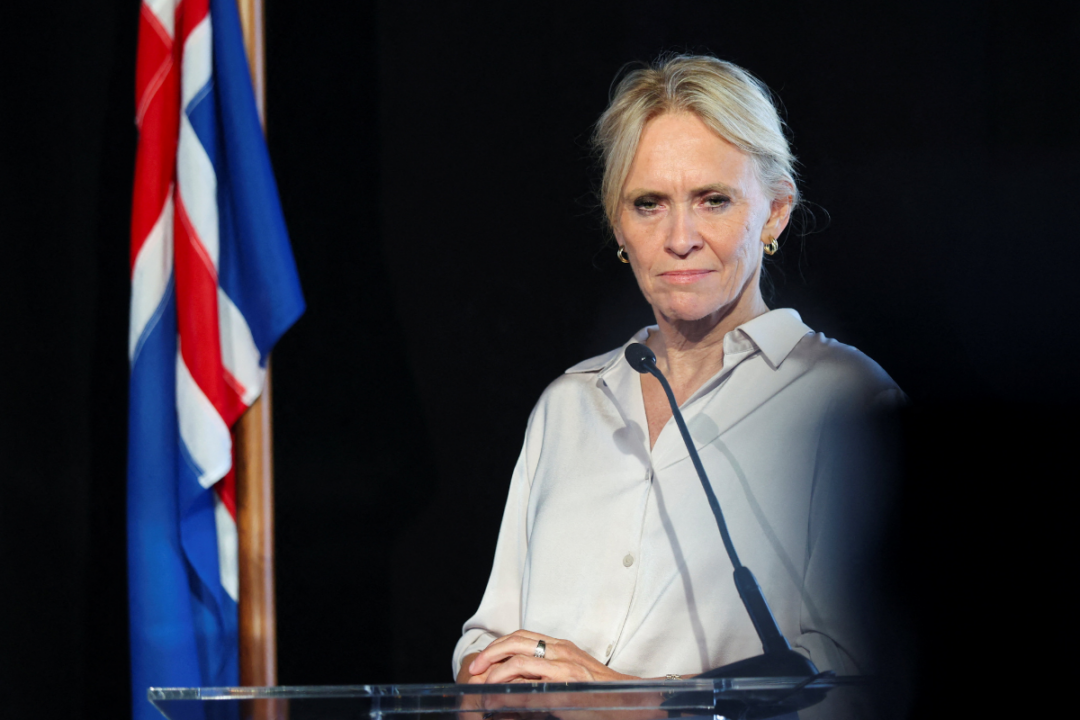
Iceland Focuses on Security Partnerships After Voters Reject Opening EU Membership Talks
Icelandic Minister for Foreign Affairs Thorgerdur Katrin Gunnarsdottir attends a press conference...
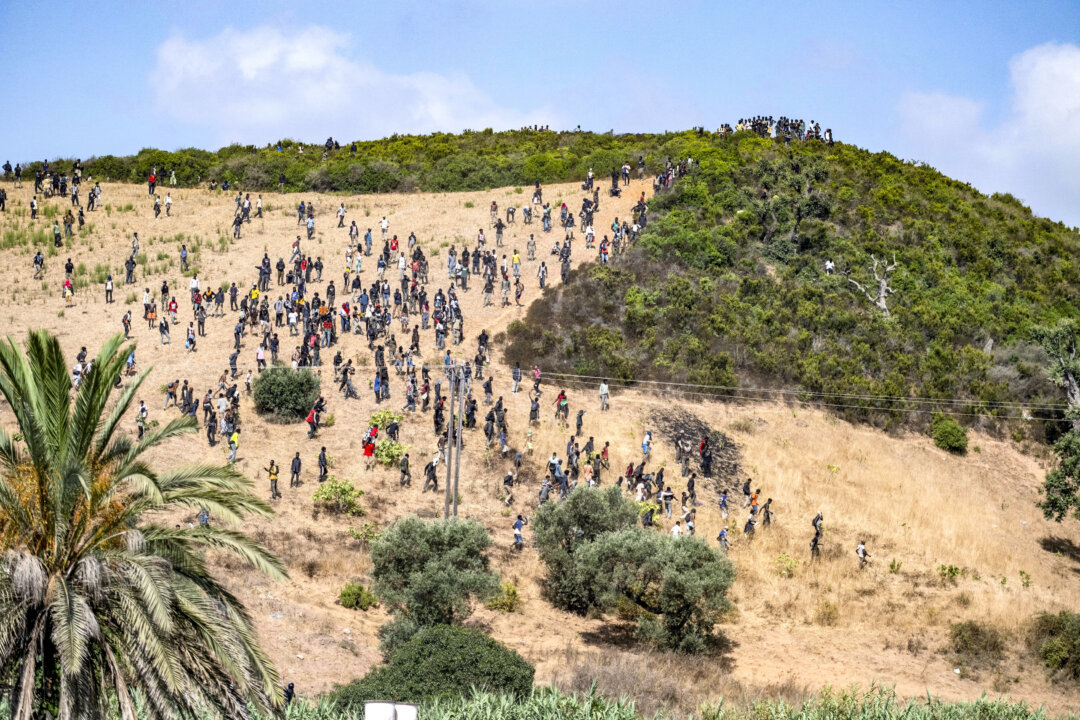


Italy, Spain Extend Tit-for-Tat Border Curbs After Ceuta Illegal Immigrant Crisis
Immigrants gather on a hill as they attempt crossing from the border...
