Online spaces, and social media in particular, are forums for vigorous political debate. They provide a space for members of the public to express political opinions, organise, and sometimes even interact directly with politicians. While they clearly have democratising potential, these platforms have also become fertile ground for hate speech, toxic interactions and online violence. By analysing over 3.2 million responses on X (formerly Twitter) to 88 candidates for the 2024 European Parliament elections, our team at the European Commission’s Joint Research Centre have found significant differences in how women and men in politics get treated online. Applying a toxicity detection algorithm called Perspective API, we studied both the volume and types of “toxic” replies received by different candidates. The algorithm’s toxicity score ranges from zero to one. It estimates the likelihood that a reader would perceive text as toxic, and defines toxicity as “a rude, disrespectful, or unreasonable comment that is likely to make you leave a discussion”. Almost 80% of the candidates studied, who were from France, Ireland, Italy, Portugal, and Spain, received toxic replies, but the raw numbers showed a real and measurable gender gap: women candidates received more toxic replies in absolute terms than their male counterparts. However, accounting for differences in the overall number of replies for each post, the gender difference in the proportion of toxic replies was no longer statistically significant. Women posted less than men and yet were addressed more. In other words, their accounts attracted more attention overall, toxic and benign alike. 2,700 toxic messages To conduct our analysis, we gathered posts mentioning each candidate, then narrowed the data to focus on replies to the candidates’ posts. The toxicity detection algorithm scored each post for toxicity, flagging anything above a given threshold for closer inspection. Once the algorithm had done its work, we turned to what the messages actually said, manually coding nearly 2,700 of the most clearly toxic replies. These were messages where the automated tool registered the highest probability of toxicity, meaning nine out of ten human raters would agree they were toxic. The content of the posts clearly showed that women and men face vastly different attitudes once they enter the realm of politics. Read more: Female politicians can be punished at the polls for not smiling – but men aren’t “Shut up and do the dishes” Of these clearly toxic replies, 71% were directed at women candidates. The content was strikingly different from what male politicians faced. Female candidates were subjected to personal degrading attacks, sexist slurs, sexually explicit remarks, and repeated attempts to silence them or question their right to occupy political space. One in four received comments of a sexual nature. Male politicians were not spared abuse, but the insults they faced tended to focus on their political decisions, their professional conduct, or their character – accusations of corruption, dishonesty, or incompetence. The targets were their actions, not their presence in public life. This distinction matters. When abuse is identity-based rather than policy-based, it sends a fundamentally different message: not “I disagree with you,” but “you do not belong here.” This reflects what scholars call “semiotic violence” – harm carried out through language and symbols that works to delegitimise women as political actors. Read more: Everyday sexist online language is not random, and that’s the problem More insults, stacked together The analysis went further by measuring what we called “toxicity intensity” – the number of abusive elements bundled into a single reply. A message targeting a woman might combine a sexist insult with a sexual threat, a reference to mental illness, and a demand that she leave politics entirely. We found that 62% of toxic replies to women contained two or more such elements. By contrast, 52% of toxic replies to men had only one. Multiple simultaneous attacks carry a higher psychological impact than a single insult, sending a collective signal that a woman’s presence in the political space is unwelcome. The data also revealed that female candidates from left-leaning political groups attracted higher volumes of toxic replies. This pattern mirrors findings from studies of elections in Brazil, suggesting that gender and political ideology intersect in ways that increase abuse. A global problem The study adds to a growing body of evidence that online hostility toward women in politics is not limited to a single country, platform, or political culture. Research from Sweden, New Zealand and the Netherlands has documented the same gendered patterns: women do not always receive more abuse in sheer volume, but what they receive is more personal, more sexualised, and aimed at denying their right to hold office. The consequences are real. Scholars have linked online abuse to reduced re-election ambitions among female politicians, self-censorship, and women withdrawing from digital spaces altogether. When abuse shapes who runs for office, it shapes who governs. The European Union has begun taking steps to combat this. A new directive on violence against women criminalises cyberstalking and harassment across all EU countries. The Digital Services Act, which came into effect in 2024, also requires large platforms to identify and mitigate risks to democratic processes, including gender-based harms. These measures are necessary, but they are not enough. Social media platform moderation policies should account for gendered abuse – not only its volume – and invest more in detection tools that understand context and local language. Continuous monitoring is also necessary. Online abuse adapts, and responses must evolve with it. The bottom line is this: women in politics are not simply subjected to a louder version of the abuse men face. They face a different phenomenon that operates through personal denigration, sexualisation, and the systematic erasure of their right to be there at all. Understanding that difference is the first step towards addressing it. A weekly e-mail in English featuring expertise from scholars and researchers. It provides an introduction to the diversity of research coming out of the continent and considers some of the key issues facing European countries. Get the newsletter!










Related Articles
EuropeThe Final wakeup call
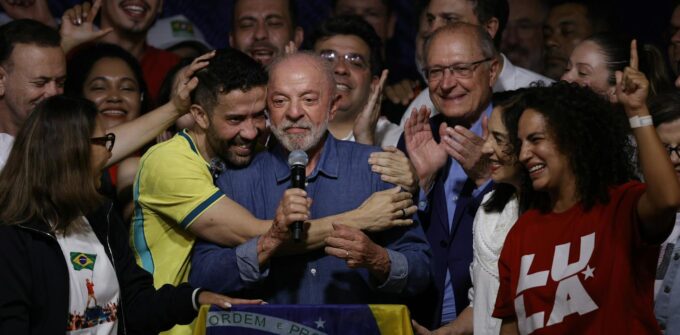
Lula wins a miracle election in Brazil. Now comes the hard part: putting the country back on the right track
Three weeks ago, Brazilian President Luiz Inácio Lula da Silva’s political obituaries...

EuropeThe Final wakeup call
US midterms: what a new Congress could and could not change for Europe
US midterm elections traditionally attract fewer voters than presidential contests. But this...
EuropeThe Final wakeup call
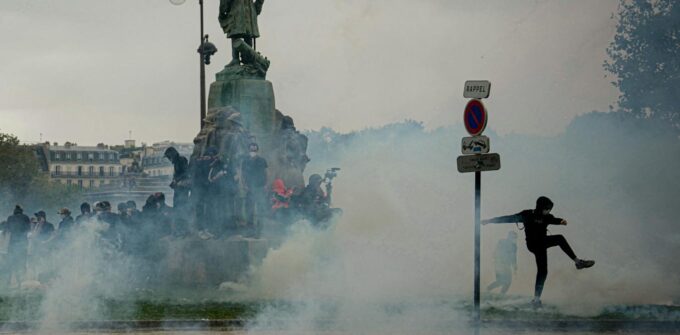
Political power without balance leads to the erosion of democracy, what Montesquieu can teach modern-day France
KEY TAKEAWAYS Democratic erosion does not start by doing away with elections;...



DruthersThe Final wakeup call
Facing the Crooked of Hormuz
By Tom Engelhardt | Substack.com/@TomEngelhardt I was born on July 20, 1944,...
