
Saturday Class – Cutting the Cost of Ambition; Launching a Golden Age of Innovation – August 1, 2026
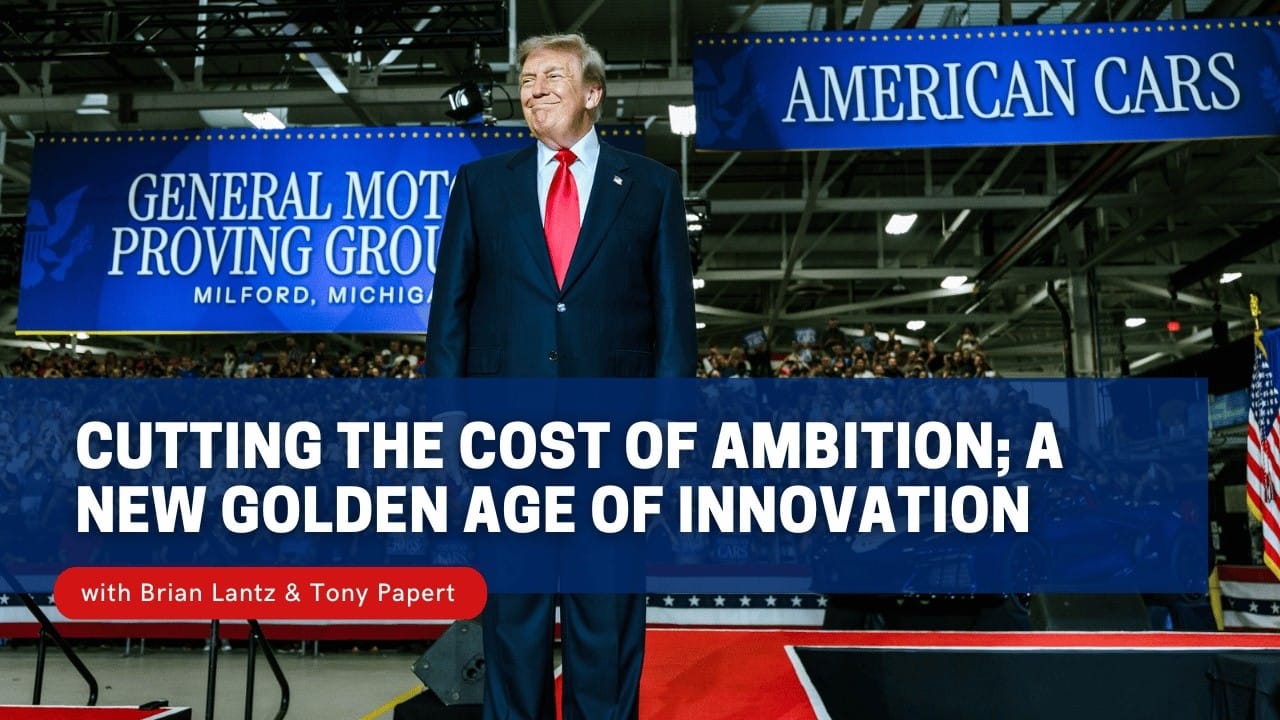
Every week, Promethean Action holds a Saturday Class — a deep dive into the ideas, history, and strategic thinking that the mainstream won’t touch. We’d love for you to join us live. Sign up here and we’ll send you class details every week.The hardest problem in nuclear was never the physics.America had simply forgotten how to build. That era just ended.Brian Lantz on the four nuclear reactors that went critical in a single month — the first new American designs in forty years — the factory boom behind the headlines, and the apprenticeship revolution that pays you to learn how to build.This is the latest in an ongoing Saturday Class series on the American System economics driving Trump’s industrial revolution.Four reactors in one month — after forty years of nothingA week before this class, SpaceX’s Starship flew its thirteenth test flight and splashed down in the Indian Ocean. Brian opened there for a reason: the country that spent decades debating whether it could still build anything is now proving it on several fronts at once.The proof he started with: President Trump’s Energy Department challenged America’s young nuclear startups to get new test reactors critical by July 4th. Four companies delivered. Antares Nuclear’s Mark-0 went critical June 4th — the first privately developed non-light-water reactor to do so in America in over forty years. Valar Atomics’ Ward 250 followed on June 18th, Deployable Energy’s Unity on June 30th, and Aalo Atomics crossed the line at 12:20 a.m. on July 4th itself. The first four newly designed nuclear reactors to go critical in the United States in forty to fifty years — in one month.On July 24th, their founders stood in the Oval Office: Jordan Bramble of Antares, Bobby Gallagher of Deployable Energy, Isaiah Taylor of Valar — 27 years old — and Matt Loszak of Aalo. A new generation stepping up, and financed by means we’re only becoming familiar with: three of the four firms had over $100 million of venture capital invested in their projects.Aalo’s test reactor at Idaho National Laboratory was built from bare dirt in 36 days. Valar’s Ward 250 was flown from California to a Utah Air Force base aboard a C-17 Globemaster in February — the first time a new nuclear reactor has ever been moved by plane.None of it happened until the federal government took up its American System role. The Trump administration’s nuclear regulators completely rewrote the rulebook, and the revolution in nuclear technology followed. Brian’s summary of the whole night came from Aalo’s chief technology officer, Yasir Arafat, an experienced U.S. nuclear scientist:The hardest problem in nuclear was never the physics. Our country simply forgot how to build.— Yasir Arafat, Aalo Atomics, as quoted by Brian LantzWe’re not producing things — we’re producing factoriesThe workforce is shifting out of services, overhead, and hospitality into productive work. Manufacturing growth has continued for months, whatever the noise in the media. New unemployment filings hit their lowest level since 1969. And orders for machine tools — the machines that make machines, the cornerstone of an economy — ran more than 30% ahead of last year in the first half of 2026.Brian ran the examples: Velo3D building out industrial-scale additive manufacturing in Livermore, California. Hitachi Energy doubling its South Boston, Virginia plant into the largest power-transformer facility in the country. Stadler Rail building out a 245,000-square-foot trainset factory in Nevada.But the conception underneath is bigger than any factory: manufacturing industrial ecosystems. “Supply chain” is a linear term. What’s actually being built are webs of capability — smaller companies, facilities, and spinoffs growing up around anchor projects.Nucor’s multi-billion-dollar advanced steel plant in West Virginia anchors a new heavy-steel cluster of fabrication, galvanizing, and supplier activity along the Ohio River. TerraPower’s Natrium plant in Kemmerer, Wyoming — the first fast small modular reactor built in the United States, now cleared for construction and already in negotiations for more in Kansas and beyond — draws heat exchangers from Premier Technology in Idaho, control systems from Curtiss-Wright, and cranes from Konecranes in Springfield, Ohio. Its fuel starts as imports, then shifts to Centrus Energy’s new commercial fuel facility in Piketon, Ohio, with metalization done in Richland, Washington and completion in Wilmington, North Carolina.In other words: just the nuclear fuel buildout is a new national ecosystem — a web of capability that every future project will draw on.We have done this before. The Manhattan Project went to Oak Ridge, Tennessee — where “nothing” existed — because the Tennessee Valley Authority was there. Over 14% of the TVA system’s energy went into the diffusion processes that made the fuel. Today Oak Ridge produces medical isotopes, runs one of the world’s leading supercomputers, and hosts small modular reactor and fuel companies.The tariffs are what make the buildout possible here rather than somewhere else. Remember the picture from last August: Tim Cook standing beside the president to announce $100 billion of Apple investment into U.S. manufacturing. Nvidia has committed over $500 billion to domestic production. TSMC is building out Arizona. We are reshoring the hardware of AI — capabilities that, in most cases, we invented.And the precedent is the Moonshot: at its peak, the U.S. military and NASA accounted for 70% of global demand for computer chips, and over 20,000 industrial firms were engaged in the Apollo program. That market built the chip industry — in America and in the world.The Department of War rewrites its contractsThe same challenge-and-deliver method that got four reactors critical is now standard practice in defense. New “framework agreements” reward firms for scaling capacity, investing capital, and training workers — with fixed, predictable prices that let them mobilize venture investors.Anduril Industries is building Arsenal-1 in Pickaway County, Ohio — five million square feet, producing cruise and other missiles at half or less of today’s cost. Even Lockheed is answering: its new PAC-3 “ACE” interceptor is coming in at roughly half the price of the Patriot missiles it replaces, with a sub-$1 million price target set for new systems going forward. New factories are following in Maryland, Huntsville, and Dallas–Fort Worth.Stack on top of that the Genesis Mission — the executive order President Trump issued last November 24th to integrate the federal government’s data holdings, the largest database in the world, with AI and private collaborators to accelerate discovery in everything from pharmaceuticals to housing to food production. As Brian put it: AI will not create discovery. It will accelerate human discovery.America stands at the cusp of a revolution in science in which AI will accelerate discovery, multiply human cognitive capabilities, and unlock solutions to some of our greatest challenges. But AI for science will still find itself subject to the frictions and inefficiencies of institutions.— Michael Kratsios, White House Office of Science and Technology Policy, Science: A New Golden AgeA dead economy versus an economy in motionBrian put two Greek sculptures side by side. The archaic figure, from around 500–600 B.C., stands rigid — it may convey a certain power, but it is static. The classical figure, from around 250–300 B.C., is caught in mid-motion, reaching for something.That is the difference between what President Trump rightly called a dead economy — decades of an economy taking in its own laundry, dependent on imports, going nowhere — and an economy set in motion. Civilizations have made this leap before: classical Greece, and above all the Renaissance. It is the leap we are making now.Your tuition is zero, and the job is already waitingYou cannot build ecosystems without an expanding skilled workforce — welders, electricians, HVAC techs — in numbers that simply do not exist today. So the buildout is effectively drafting the AI hyperscalers and big manufacturers into training the American workforce, hundreds of millions of dollars at a time. This is where the cost of ambition is being cut for ordinary Americans.Start with BuildFreedom.US. The Department of War’s industrial base office just put $10 million behind Mike Rowe — of Dirty Jobs — as the public ringmaster of a national apprenticeship drive. The ads are already on TV. The programs listed there are tuition-free, and many pay you from the moment your application is accepted:Electricians — an IBEW partnership teaching the skills to wire ships, submarines, and defense installations.Welders — American Welding Society shipyard apprenticeships with the major builders, including HII and Bath Iron Works.CNC machinists — the National Institute for Metalworking Skills, working with General Dynamics, L3Harris, and Raytheon.These are hybrid programs — apprenticeship work plus classroom study plus applied practice — and they are not just offers. They are filling up.Then the corporate wave: Ford has pledged $300 million, starting immediately, for technician and manufacturing apprenticeships. Google committed $50 million targeting 300,000 Americans. BlackRock put $100 million into its Future Builders program — $30 million of it into Texas alongside the IBEW’s Electrical Training Alliance, Texas State Technical College, and Dallas College. Carhartt and BlackRock launched the Alliance for America’s Skilled Trades. OpenAI is partnering with North America’s Building Trades Unions on apprenticeship-readiness programs at roughly 270 facilities around the country.Meta’s Workforce Academy is the sharpest picture of the new deal on offer. It is a four-week program — safety, data-center layout, basic components, basic math. But your application comes with a qualified job offer from Meta or one of its contractors before you start. Tuition paid. Transportation paid. Room and board paid. Starting pay on the other end runs $20–25 an hour, and the four sites — Baton Rouge, Indianapolis, Houston, and Columbus — already have waiting lists.As of January 1st, Pell Grants — which used to apply only to four-year colleges — now cover shorter jobs-training programs, public or private. And the community colleges focused on the trades have grown enrollment more than 20% in about five years, while four-year colleges grow at 1% a year. People have done the math on which degrees lead somewhere.Automation has never once eliminated the human mindThe trades themselves are transforming into hybrid tech-trades. The HVAC tech learns digital controls for factories, not just homes. The welding graduate from a Houston community college walks into SpaceX’s Star Factory near Brownsville — going from 4,000 to 8,000 employees this year — and learns robotic welding, then programming, then systems management. Every rung raises the pay, and the opportunities keep expanding.Never in history has automation eliminated the need for human contributions. It has only exposed bottlenecks and opened new frontiers for the one thing machines don’t do: discovery. Kratsios’ report says the quiet part about how that capability actually moves — not just in papers and patents, but in the tacit knowledge passed on from mentor to mentee. His recommendations: embed hands-on technical training into STEM curricula, let industry credentials count toward degrees, and reward real-world technical work alongside academic publication.And replace the old linear pipeline — university research, then application, then commercialization — with rapid iteration, the SpaceX model: build, test, learn, rebuild. That is the new gold standard in industry, and it is becoming the new gold standard in science.Reuniting the United StatesBrian closed the geography of all this with a point he develops at length in his Substack piece America’s July 4th and America’s South: the South is now the most populous region of the country — 39% of the U.S. population — and sends more of its people into the military than any other region. They come home with skills.The South and Midwest together hold over 60% of the nation’s growing manufacturing capacity. Of the roughly $1.7 trillion in new factory and facility investment committed so far in 2026, the top five states are Texas, Virginia, Idaho, Arizona, and North Carolina — and Texas, Virginia, and North Carolina alone account for nearly $1 trillion of it. Average income in the South has climbed to 93% of the national average.If you want to keep the United States down, you keep it divided — and for the British Empire of every era, the South was always the pawn. That is being superseded. Decades of nation-building — the TVA, air conditioning, Hill-Burton hospitals — are paying off, and the heartland is being reunited, north to south, as the productive driver of the American economy. We are being united as a nation, not divided.Energy means the deedThe word energy comes from the Greek energeia — the deed, the work accomplished. That is the real content of the word, and the buildout now runs the whole stack:Microreactors — proven this summer, small, portable, and modular, from high-temperature gas-cooled to sodium-cooled fast designs.Small modular reactors — Natrium first in Wyoming, with more being sited at Oak Ridge, on TVA and other federal land.Full-scale nuclear — the Department of Energy has announced $17.5 billion in guaranteed loans for long-lead components — forgings and the like — for ten Westinghouse AP1000 reactors, built in pairs at five sites, with private investors and utilities being drawn in now.Fusion — DOE’s finalized roadmap, written with Helion, Commonwealth Fusion Systems, TAE and others, to bring fusion power to the grid by 2035, if not sooner.And contrary to the media: the president’s ratepayer protection policy is in effect. The data-center hyperscalers are having to deliver their own power behind the meter — a White House convening on July 23rd locked big tech and the utilities into exactly that. If your rates are going up, look at your blue state’s green policies, not the buildout. The whole direction of this administration is to bring energy prices down.The federal government’s job, in the American System, is not to build all of this itself. It is to promote it, to clear the way — to cut what stands in the way of ambition, and bring not only electricity but ultimately neutrons to the grid.For the first time in decades, ambition in America is getting cheaper. That is what the start of a golden age looks like.Your homework and ResourcesBrian Lantz’s Substack — deeper dives on manufacturing ecosystems, the defense buildout, and America’s South.Science: A New Golden Age — the White House report on rebuilding American science that Brian quoted throughout the class.BuildFreedom.US — the apprenticeship listings. Send it to someone who needs a career, not a lecture.Watch the full class — then send it to the person in your life who still thinks America doesn’t build anything anymore.—Promethean Action Editorial StaffPS: The 2026 midterms will determine whether President Trump’s agenda survives and accelerates — or gets reversed and crushed.Our Midterm Bootcamp is a semi-monthly training series equipping activists, candidates, and grassroots leaders with the ideas and messaging to win. Sign up and check your email for the next session’s Zoom link.










Trump and his important role in this Change
I'm getting a lot of threats that you don't know about... Any...
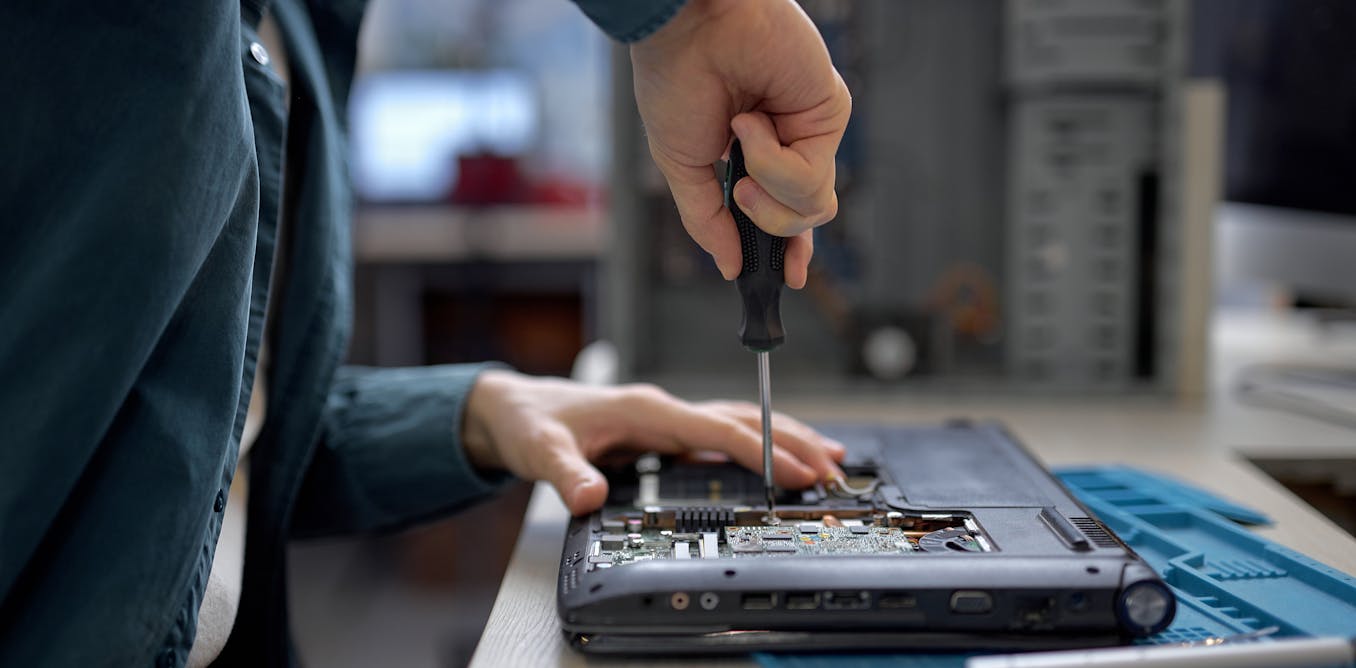
The EUs repair policies are changing the way tech is designed
In the late 1970s, concerned by resource use and scarcity, German industrial...

The Monday Brief – While America Builds, Europe Schemes To Rob Its Citizens – August 31, 2026
Watch on YoutubeThe G20 meets today in Asheville and Barbara Boyd frames...



Promethean Overviews Trump Declares War on the Foundations Cartel: Bessent’s Plan to End the Dark Money Empire
Scott Bessent and President Trump are targeting the dark money nonprofit networks...
