
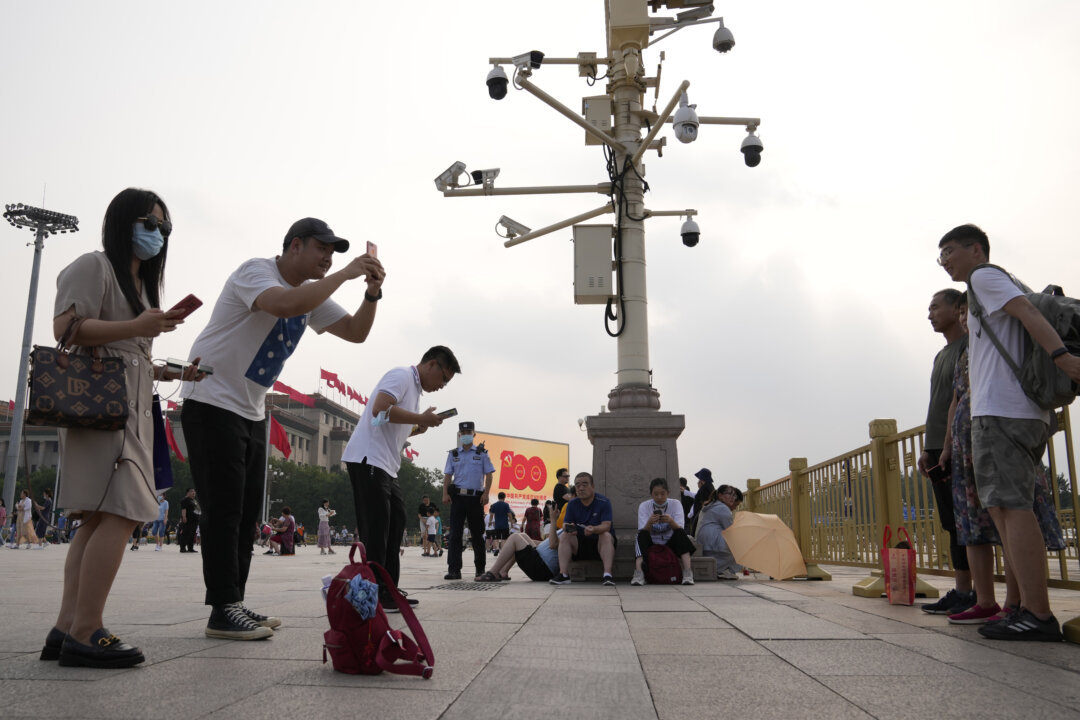
Villages straddling the administrative boundary between Beijing and neighboring Hebei Province have been separated by razor-wire fencing, surveillance cameras, and roadblocks, prompting criticism that the Chinese regime is increasingly treating ordinary citizens as security threats in preventing them from entering the capital city.Videos and photos circulated online in recent days show a green metal fence topped with razor wire erected between Baoshang Village in Xianghe County, Hebei Province, and Xiaotun Village in Beijing’s Tongzhou District. Surveillance cameras have been installed along the barrier, while some village roads have been blocked with iron gates, concrete barriers, and parked trucks.The images have drawn widespread attention on Chinese social media, with some netizens accusing the regime of turning the Chinese capital into a “giant prison.”Several China-based critics of the regime spoke to The Epoch Times on condition of anonymity out of fear of reprisal.Disruptions to Daily LifeA petitioner from Hebei Province who travels to Beijing to seek redress from regime authorities, surnamed Liu, told The Epoch Times that the newly installed fencing has cut off a route that residents previously used to travel between the two villages.Related Story“Some sections are topped with razor wire, and even motorcyclists entering Beijing now have to undergo ID checks,” she said. “The razor wire and concrete barriers have blocked roads used by people living around Beijing. Even simple things like shopping have become inconvenient.”Liu said many people commute across the Beijing–Hebei boundary for work or to visit relatives, but the new restrictions have made those trips difficult.“Instead of finding ways to make life easier for ordinary people, the government is putting all of its energy into monitoring and restricting them,” she said. “It’s very disheartening.”According to Liu, many petitioners live in the surrounding area, and the barriers have effectively cut off one of their routes into Beijing while also preventing residents of the neighboring villages from visiting one another.Regime’s Increased Security MeasuresA Beijing-based dissident, surnamed Li, told The Epoch Times that residents must already make advance reservations to enter Tiananmen Square and now face multiple checkpoints simply to enter Beijing.“People used to say Tiananmen Square was like a prison,” he said. “Now you could say the entire city of Beijing has become a prison.”Li said that checkpoints have also been established in areas bordering Beijing’s Haidian and Changping districts.“This kind of security posture used to exist only along national borders,” he said. “Now it’s appearing on ordinary administrative boundaries. It shows the regime’s fear has reached an extreme, to the point where they regard ordinary citizens as potential enemies.”He said the measures reflect the Chinese Communist Party’s (CCP’s) long-standing emphasis on maintaining domestic stability through surveillance and control.For years, the CCP has imposed tighter security on petitioners, rights activists, and human rights lawyers, particularly during politically sensitive periods such as the annual meetings of China’s rubber-stamp legislature and political advisory body. Temporary checkpoints are routinely established around Beijing during those events to inspect people entering the capital.Another Beijing-based rights advocate, surnamed Chen, told The Epoch Times the latest tightening could be linked to upcoming politically sensitive dates, including the Chinese military’s Aug. 1 anniversary.“Whether it’s the annual legislative meetings, June 4, July 1, Aug. 1, or National Day on Oct. 1, these are all sensitive dates for the regime,” Chen said. “They deploy checkpoints, neighborhood grid managers, and other security personnel to strengthen social controls.”The tighter controls also stand in contrast to Beijing’s long-running campaign to promote economic integration with neighboring Hebei Province and the port city of Tianjin.Chen noted that while the regime frequently promotes the coordinated development of the Beijing–Tianjin–Hebei region, residents from Hebei continue to face increasingly stringent checks when entering the capital.He said some Beijing dissidents have also been forcibly escorted out of the city and left in surrounding Hebei areas to prevent them from remaining in Beijing.For years, the Chinese regime has promoted coordinated development between parts of Beijing and the neighboring counties of Hebei. Official plans call for greater transportation connectivity, industrial cooperation, and integrated public services.Yet despite those goals, the neighboring villages of Baoshang and Xiaotun are now separated by a permanent razor-wire fence, underscoring the contrast between the regime’s regional integration campaign and its expanding domestic security measures.Zhou Yu contributed to this report.









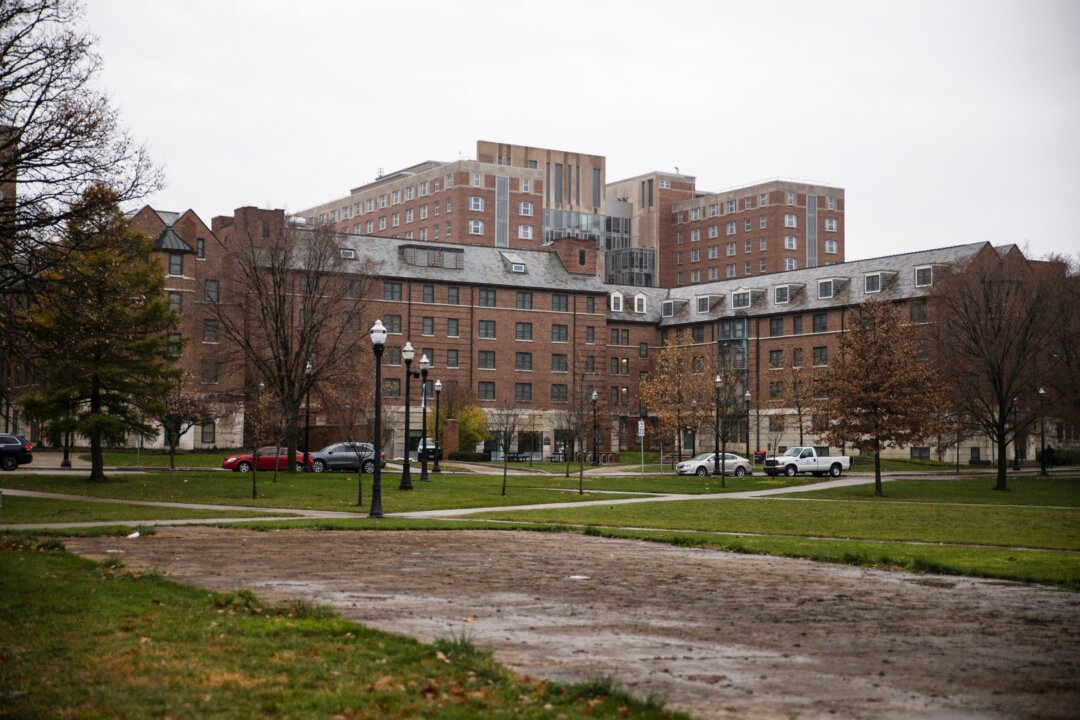
Ohio State Agrees to $2.1 Million Federal Settlement Over Undisclosed China Research Ties
Ohio State University has agreed to pay $2.1 million to resolve federal...
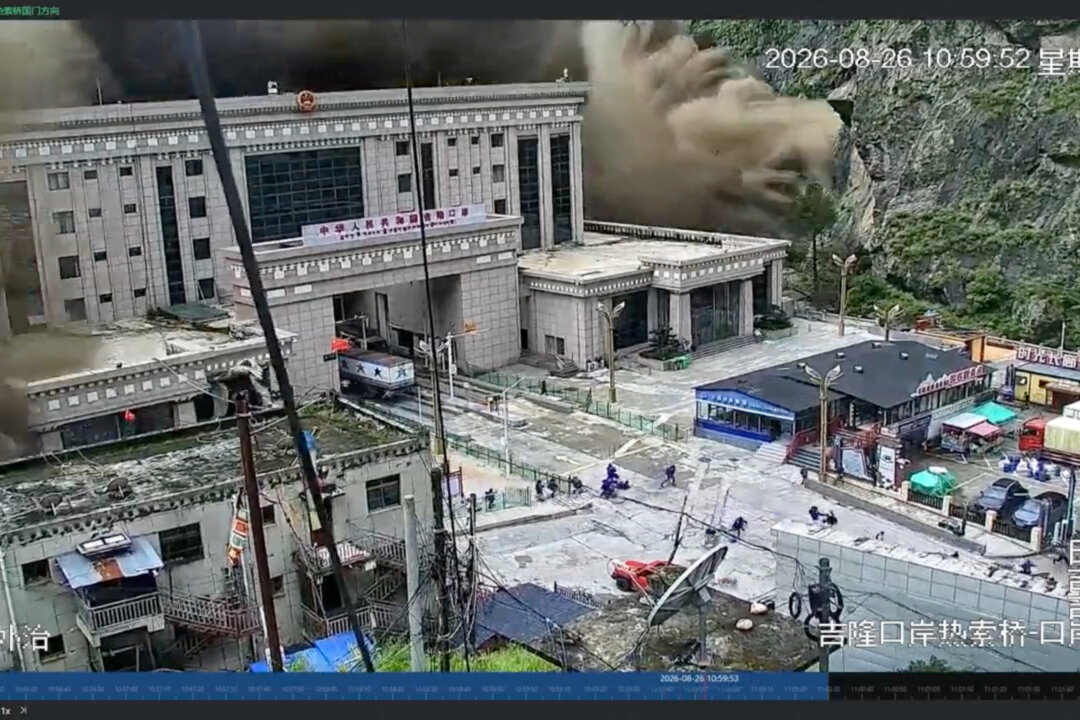
Chinese Scientists Flagged Glacial Flood Danger One Year Before Nepal Catastrophe
More than a year before the catastrophic flash flood devastated the China–Nepal...
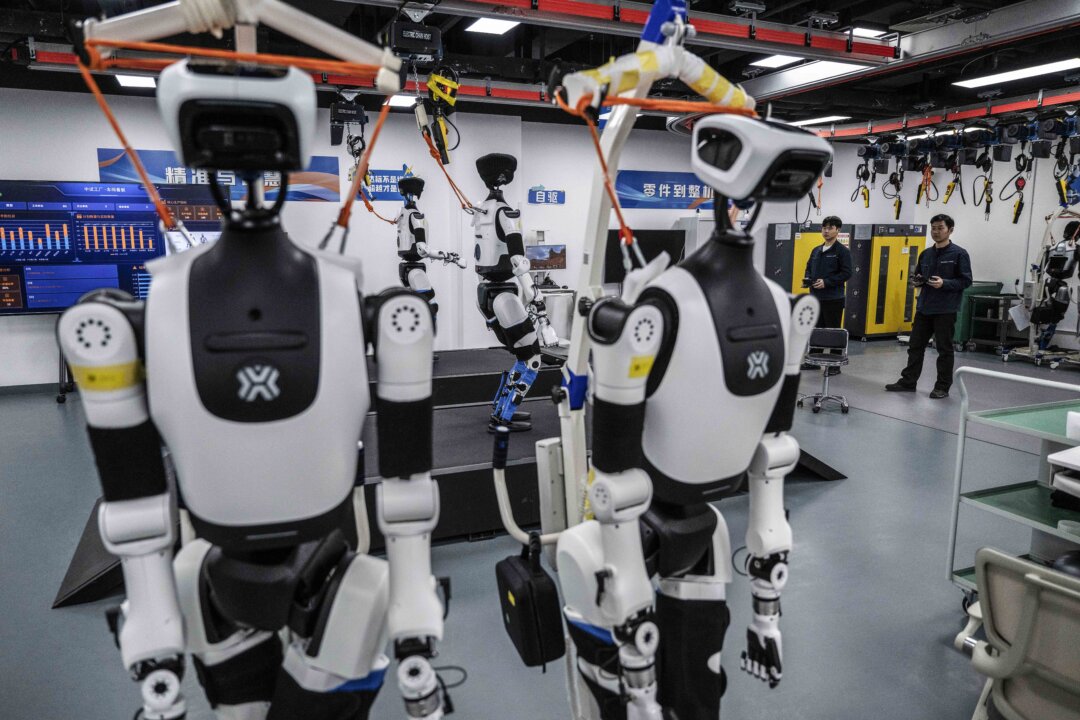
Chinas Humanoid Robot Companies Face Reality Check
China is showcasing humanoid robots as symbols of its technological ambitions. However,...



Iceland Focuses on Security Partnerships After Voters Reject Opening EU Membership Talks
Icelandic Minister for Foreign Affairs Thorgerdur Katrin Gunnarsdottir attends a press conference...
