News AnalysisSÃO PAULO, Brazil—Incumbent Brazilian President Luiz Inácio “Lula” da Silva was reelected on Oct. 25 for an unprecedented nonconsecutive fourth term.Lula previously led the country from 2003 to 2011, was elected again in 2023, and has cemented his status as the face of Brazilian progressive politics, winning 51.79 percent of the vote against Flávio Bolsonaro, son of former President Jair Bolsonaro.The elder Bolsonaro was himself detained and unable to run, sentenced on Sept. 11, 2025, for attempting a coup in a case labeled by his supporters as political persecution, and criticized by U.S. President Donald Trump. Some legal experts and a dissenting Brazilian Supreme Court opinion said the sentencing lacked due process.Lula’s camp has said that defeating the Bolsonaro family in courts and at the ballot was about “saving democracy” and preserving rights against “fascism,” rhetoric that propelled Lula to gather about 11 million more votes in the election’s second round than he had in the first and come from behind to win it all.The political environment is polarizing, as Brazil’s elections carry high stakes.Lula will now be able to nominate four more justices to the Supreme Court and have a supermajority; the country has rising debt to manage while interest rates are into double digits; persistent violent crime remains a critical concern; and U.S.–Brazil relations are at an all-time low as Lula rejected the U.S.’s designations of two cartels as foreign terrorist organizations and broke a regional trend of Washington-led cooperation.With everything at stake, he faces an institutional crisis ahead. The very first 24 hours after his electoral win are telling.The opening statement of Lula’s first speech after results were announced listed stricter regulations on social media as a top priority.His rift with big tech is under scrutiny, as many fear it could restrict freedom of speech. Lula’s political camp has sided with the Supreme Court as it took down X in the country in 2024 and censored some posts and profiles. X said it believed the move did not involve due process and violated Brazilian law.On Oct. 27, the local stock market opened down more than 17 percent. Regulators stopped all trading for one hour to contain the volatility of “despair sell-offs” in the worst downward slide since the COVID-19 pandemic. Meanwhile, the dollar rose by about 10.5 percent against the real, Brazil’s currency, as money fled the country.On the same day, Flávio Bolsonaro, after conceding the elections, was ordered to turn his passport in to the authorities in an attempt to prevent him from leaving Brazil.The move is part of investigations into money laundering linked to a friend of Flávio’s and came from controversial Supreme Court justice Alexandre de Moraes—the same justice who led the prosecution against his father and has been accused of weaponizing the justice system alongside Lula’s party.At the time of writing on Oct. 27, Flávio Bolsonaro had left Brazil for the United States, a source close to the family told The Epoch Times. His departure came a day after he was ordered to surrender his passport within 24 hours. Flávio Bolsonaro had previously stated publicly that he had no intention of leaving Brazil.A senior U.S. State Department official said the Department will grant visas to Bolsonaro and his family to allow them entry into the United States.The United States previously sanctioned Moraes for human rights violations under the Global Magnitsky Act. Washington and Brasília went back and forth to resolve a diplomatic crisis, and the sanctions were lifted in December 2025.Flávio Bolsonaro initially contested the results and said he would seek to annul the elections, although his party later accepted them. He then said he would challenge Lula’s campaign in court.His complaint focused on an uneven two-hour extension to voting across the country.Both campaigns had asked for an extension, but court orders to implement it came just as the vote was supposed to end, so many polling stations were already closed and couldn’t reopen. It appeared inconsequential after only a fraction of the votes came in during that window—but it did expose authorities to scrutiny for their ill-timed decision and poor organization.The elections’ aftermath comes amid plummeting institutional confidence.A September poll showed a record lack of trust in the Supreme Court; 48 percent of interviewees said they were wary of it. A September poll found that 58 percent trusted the Federal Police, the Brazilian equivalent of the FBI.Against that backdrop, Lula has been criticized for increasing reliance on the Supreme Court to bypass Congress and to be able to govern. He did not have a majority in either chamber in his last term, and his next term has left him even more isolated.Although Brazil’s right lost the presidential election, conservative parties made significant gains in Congress. About 64 percent of the incoming Senate and 59 percent of the newly elected Chamber of Deputies align with the right.Flávio Bolsonaro’s Liberal Party emerged with the largest delegations in both chambers, securing 28 Senate seats and 121 seats in the Chamber. Lula will need to negotiate with centrist parties to secure legislative majorities.If campaign rhetoric is any indicator, Lula could face adversarial speakers in both the House and Senate, have Supreme Court nominations blocked, and face unprecedented impeachment processes against Supreme Court justices, which Brazilian law puts in the Senate.Furthermore, unforgiving economics might leave Lula stalled in Congress.According to the Brazilian Treasury’s estimates, if the current spending trend continues, the government will outspend its budget in the coming years. Rising debt and some of the world’s highest interest rates may make major financial reforms necessary—including changes to retirement spending. Those could require congressional approval.His domestic woes are matched by challenges abroad.Brazil and the United States have been historical allies, fighting side by side during World War II. Now, Washington and Brasília face a historical diplomatic crisis.Compounding this, U.S. big tech companies claim that Brazil’s justice system targeted them without due process; the United States hit Brazil with some of the highest tariffs worldwide, which Trump claimed was due to political persecution against Jair Bolsonaro.Reacting to the vote, Trump said, “It looked like another rigged election, really.”As the United States reshuffles its foreign policy with a renewed focus on Latin America, Brazil—the region’s largest country by territory, economy, and population—is also the main holdout on U.S. alignment.Alongside Mexico, Brazil is the biggest player refusing to join the “Shield of the Americas,” or the American Counter Cartel Coalition, an alliance built to fight transnational organized crime.Two Brazilian cartels, the Primeiro Comando da Capital and the Comando Vermelho, have been singled out by the alliance as targets, and analysts say they and other criminal groups could find refuge in Brazil with inadequate international cooperation.Lula has shown he prefers to discuss trade and security through different institutional channels—the World Trade Organization and the Organization of American States—but with Trump’s preference for direct diplomacy and his earlier personal criticism, agreement is slow to come.At the twilight of his political career, Lula, now 81, faces an exceptionally sensitive environment to navigate.Correction: A previous version of this article misstated the Brazilian president’s age. The Epoch Times regrets the error.

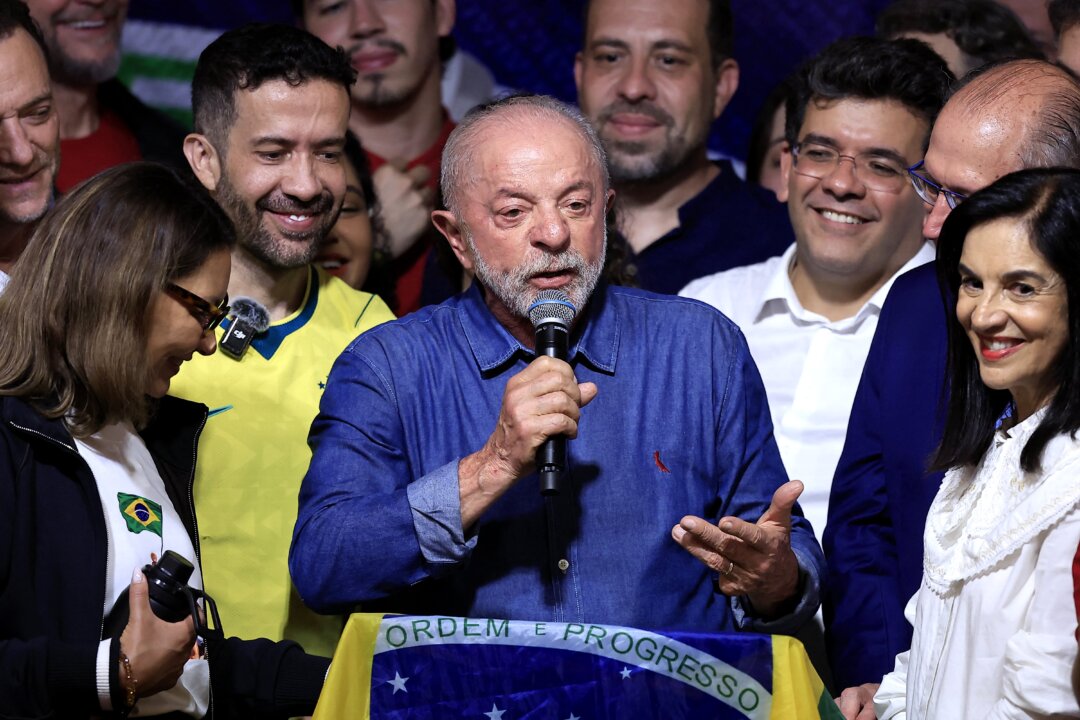
Lula Wins Historic 4th Term, but Brazil Faces Deepening Political Divisions







Related Articles
CanadaChina NewsChinese InterferenceChinese RegimeFeatured Canadian NewsTop Canadian NewsWorld News
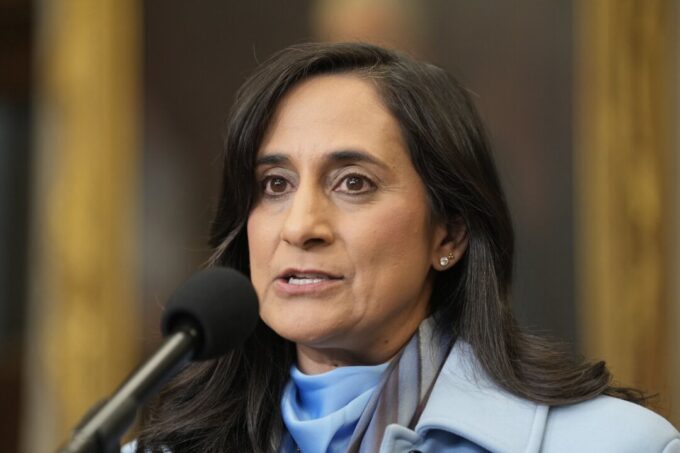
Foreign Minister Says Ottawa Closely Following Attack on Falun Gong Practitioner Outside Toronto Consulate
Foreign Affairs Minister Anita Anand says her department is aware of and...
Australia NewsAustralia Top NewsBusinessCompaniesOpinionSocial IssuesViewpointsWorld News
NABs Planned 2,500 Job Cuts Add to Mounting Pressure on Australias Labour Market
CommentaryThousands of banking workers face an uncertain future as National Australia Bank...
China NewsEuropeGlobalWorld News
Polish President Aborts Senegal Trip as Protests Erupt Over Court Chiefs Suspension
Polish President Karol Nawrocki turned back his plane on Oct. 30 while...



China NewsEuropeWorld News
Helicopter With the EU Force in Bosnia Crashes, Killing 4 and Injuring 11
First responders stand next to the wreckage of an Italian CH-47 Chinook...
