
By Maddie | Substack.com/@BooksBehindBorders Halfway through writing this article, I realized somebody had smashed my car window and cleaned me out. They stole my favourite sunglasses and a couple credit cards. And before you say, “Maddie… why the hell were credit cards sitting in your car?”—trust me, I know. You’re right. I didn’t even realize those cards were still in there. I hadn’t touched them in at least a year. Apparently, the masterminds behind the operation went on a luxury shopping spree at 7/11 and spent a few hundred bucks, so after I finish this, I’m probably going to track down which location it was and send everything to the cops. Or maybe I’ll cool off by then. Times are rough. Maybe they were buying baby formula. Maybe they just really needed taquitos. Who knows. Either way, weirdly enough, it ties perfectly into what I wanted to talk about today, so let’s get into it. Before we begin today’s episode of We’re Speedrunning Toward a Totalitarian Surveillance State, and Everybody’s Pretending It’s Normal, I want to make something very clear about where I stand on all of this: You have every right to know what your government is doing, and they have NO RIGHT to know what you are doing. That is why we are called private citizens, and they are called public servants. But somewhere along the way, that relationship got flipped completely upside down. The government hides behind classified files, redactions, secrecy laws, and closed-door meetings while demanding total visibility into your finances, communications, location, purchases, movement, habits, and behaviour. A society where rulers live in privacy while the population lives under surveillance is the very definition of tyranny. And now that surveillance infrastructure is making its way directly into your car. For years, surveillance mostly existed outside the vehicle: traffic cameras, licence plate readers, GPS tracking, toll scanners, facial recognition systems, cellphone metadata, etc. But now the surveillance is moving inside the cabin with you. Beginning in 2027, new vehicles sold in the U.S. will reportedly include driver monitoring systems capable of tracking eye movement, attention, distraction, and behaviour behind the wheel. Supporters say it’s about reducing distracted driving deaths. Critics—or, honestly, just people capable of pattern recognition—see something much bigger: the normalization of constant biometric surveillance disguised as “safety.” Because once the camera exists, the question is no longer whether the data gets used. The question is, who eventually gets access to it? Insurance companies? Car manufacturers? Law enforcement? Advertisers? Regulators? AI systems building behavioural profiles on millions of drivers in real time? If history has shown us anything, it’s that these systems never stay “limited.” They always start with some emotionally manipulative sales pitch about “safety” or “convenience,” and then, a few years later, the technology somehow becomes permanent and gets used for things nobody ever voted on, approved, or even had a real say in. The infrastructure built for “safety” today somehow always turns into the infrastructure for control tomorrow. Your phone watches you. Your traffic lights watch you. Your TV watches you. Your city watches you. And now your car watches you too. Which brings me back to my car getting broken into today. My vehicle already has this technology. If I glance away from the road for more than two seconds, it starts yelling, “WATCH THE ROAD,” at me like I’m a teenager learning how to drive. Which means there is obviously a camera monitoring me constantly while I’m inside the vehicle. So here’s my question: If somebody smashed my window today, then there should theoretically be footage of it. Can I access that footage? Or is this one of those situations where the system only exists to monitor me, while the actual owner of the vehicle somehow has less access to the data than the corporations collecting it? I think we all know the answer to that. Nothing says “freedom” quite like having a camera pointed at your face every time you drive somewhere, all in the name of “safety,” of course. The Questions We Should Be Asking Where exactly does this data go? Who owns it? Who can access it? How long is it stored? Can it be sold? Can it be subpoenaed? Who’s watching the footage? Can it be used against you? What happens when the system flags somebody incorrectly? And let’s be honest—it’s not if that happens. It’s when. If your car decides you’re “impaired,” what happens next? Does it lock you out? Shut the vehicle down? Call the authorities? Notify your insurance company? What happens if it locks somebody out in the middle of a dangerous neighbourhood or on the side of a highway at night? Will there even be a manual override? Who becomes legally responsible when the system inevitably screws up? What exact behaviours are being classified as “impairment” in the first place? Who decides those standards? How long before insurance companies start using this data to raise rates? How long before it shows up in courtrooms? How long before employers want access to it? How long before “unsafe driving behaviour” becomes another algorithmic score attached to your identity? How long before it becomes normal for the government to have a “kill switch” tied directly to your car? What else am I overlooking? Originally published at substack.com/@booksbehindborders









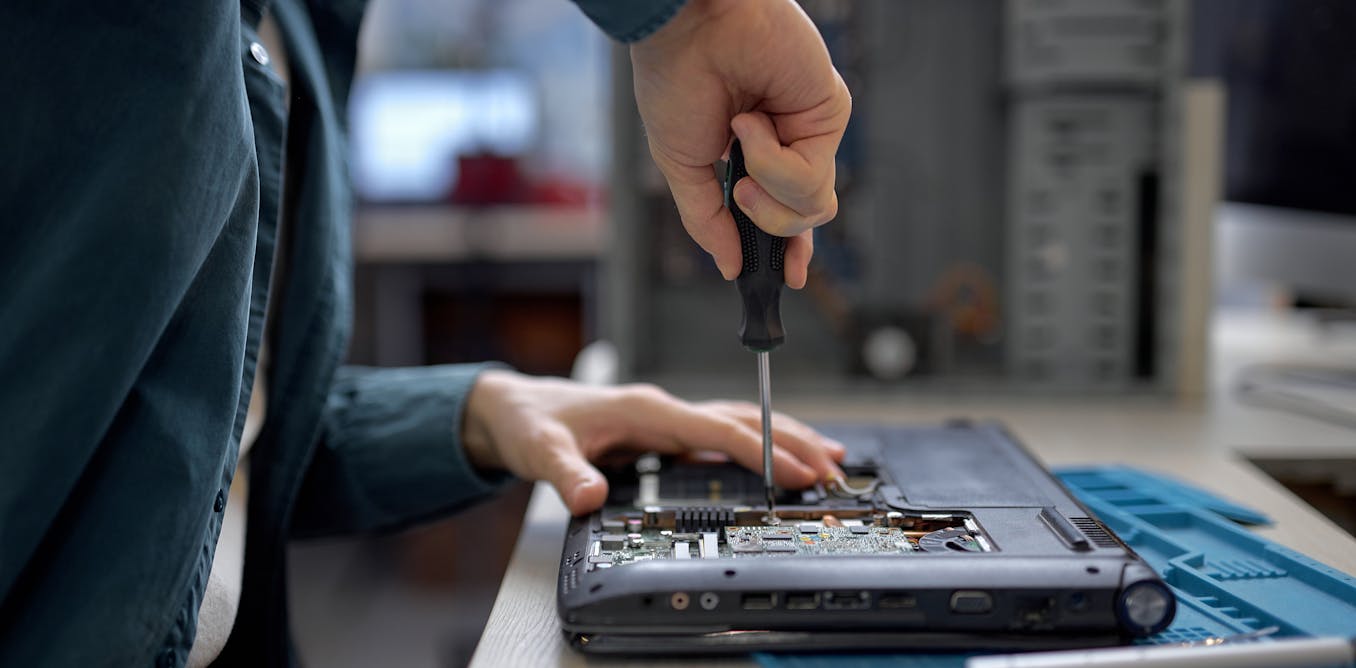
The EUs repair policies are changing the way tech is designed
In the late 1970s, concerned by resource use and scarcity, German industrial...

The Monday Brief – While America Builds, Europe Schemes To Rob Its Citizens – August 31, 2026
Watch on YoutubeThe G20 meets today in Asheville and Barbara Boyd frames...

Promethean Overviews Trump Declares War on the Foundations Cartel: Bessent’s Plan to End the Dark Money Empire
Scott Bessent and President Trump are targeting the dark money nonprofit networks...



The Promethean Weekly August 2430, 2026
🔥 The Promethean WeeklyAugust 24–30, 2026 · Your week behind + the...
