

CommentaryCanada’s premiers raised a glass to internal trade last week. Nine provinces signed an agreement allowing licensed Canadian wineries, breweries, and distilleries to sell directly to consumers across participating jurisdictions. Quebec and Yukon, which helped develop the framework, have not yet joined but say they are working toward implementation. British Columbia, meanwhile, will not have its full system operating until Feb. 2027.Politically, the announcement sounds consequential. Economically, it is much more modest. Canadians were already ordering alcohol from producers in other provinces, often through a patchwork of exemptions, informal practices, and rules that were rarely enforced consistently. The new agreement brings a measure of legitimacy to activity that was already occurring under the radar. What was once ambiguous is now more openly tolerated.But this is not a duty-free Canadian alcohol market in any meaningful sense. The agreement explicitly preserves each province’s authority to require registrations and licences, impose minimum prices, and collect fees, markups, and taxes. Destination provinces can require an out-of-province producer to collect and remit those charges. The agreement itself also states that it creates no legally enforceable obligations. Canada has opened a new pipe between producers and consumers, but every province still controls the valve and can still charge a toll.That matters because market access is about more than legal permission. Provinces must also make out-of-province Canadian products commercially attractive. Shipping costs, registration requirements, provincial markups, and the enormous purchasing power of liquor monopolies can still make domestic expansion uneconomic.An Ontario winery owner told CBC last week that, even with a looming 50-percent U.S. tariff on certain Canadian alcohol products scheduled for Aug. 19, doing business in the United States remained more attractive than selling into other Canadian provinces. That is an extraordinary indictment of our internal market. When exporting through an international border facing a punitive tariff can still appear preferable to selling within Canada, the problem is much deeper than direct-to-consumer rules.The premiers’ announcement may be a step forward but it’s hardly the liberation of the Canadian alcohol market. It expands choice at the margins, especially for small producers with loyal customers, yet it leaves the basic provincial distribution architecture intact. It is progress wrapped in considerably more political theatre than economic transformation.If governments truly want a single Canadian market, they should now turn to food. Fruits, vegetables, meat, dairy products, eggs, and processed foods still encounter different inspection regimes, licensing systems, marketing rules, and technical standards. A processor can meet federal export requirements and sell abroad, yet still face obstacles serving customers in another province. For a country urgently trying to strengthen domestic supply chains, this is economically incoherent.Supply management is the most politically sensitive part of that conversation, but it cannot remain outside it. This does not require abolishing production quotas. Dairy, poultry, and egg production can remain supply managed while becoming genuinely national. Today, national production requirements are ultimately divided and implemented through provincial allocations and marketing boards. The result is a system designed around historical provincial shares even though processors, retailers, and consumers increasingly operate in a national market.A pragmatic reform would preserve existing quota rights while harmonizing allocation nationally. All future quota growth could be assigned according to consumer demand, production efficiency, processing capacity, logistics, and regional food security needs—not simply historical provincial entitlement. A national quota exchange or leasing platform could gradually improve mobility without confiscating existing assets. Regional production reserves could protect remote markets and supply resilience. Most importantly, milk, poultry, and eggs should be able to move freely across provincial boundaries without duplicative requirements or artificial restrictions imposed to protect local incumbents.The potential consumer benefit is meaningful, though it should not be exaggerated. Our preliminary modelling suggests that conventional reforms to internal food and alcohol trade could eventually save approximately $120 per Canadian annually. National quota allocation and freer movement of supply-managed commodities could add another $25 to $60. The combined central estimate is roughly $155 per Canadian or about $370 for an average household and $6.4 billion nationally.These are long-run estimates, not promises of an immediate reduction at the grocery checkout. Savings would emerge gradually as production, processing and distribution adjusted. They would also depend on competition. If lower production costs merely inflate quota values or increase margins elsewhere in the chain, consumers would see little benefit. Any national quota reform should therefore include a transparent efficiency dividend, ensuring that measurable reductions in production and regulatory costs are reflected in regulated farm-gate prices.There would be resistance. Provincial boards would surrender influence, some regions would attract more incremental production than others, and governments would need to protect legitimate existing investments during the transition. Those concerns deserve serious treatment. They do not justify preserving a fragmented system indefinitely. Beginning with future quota growth would allow Canada to modernize gradually without upending farm balance sheets overnight.The alcohol agreement offers a useful lesson. Removing a prohibition is not the same as creating a competitive market. Canada cannot credibly celebrate the free movement of a few cases of wine while fruits, vegetables, meat, milk, poultry, and eggs remain caught in provincial silos. If the objective is one Canadian economy, governments must be prepared to build one Canadian food market. Anything less is another toast to reform without actually serving the main course.Views expressed in this article are opinions of the author and do not necessarily reflect the views of The Epoch Times.









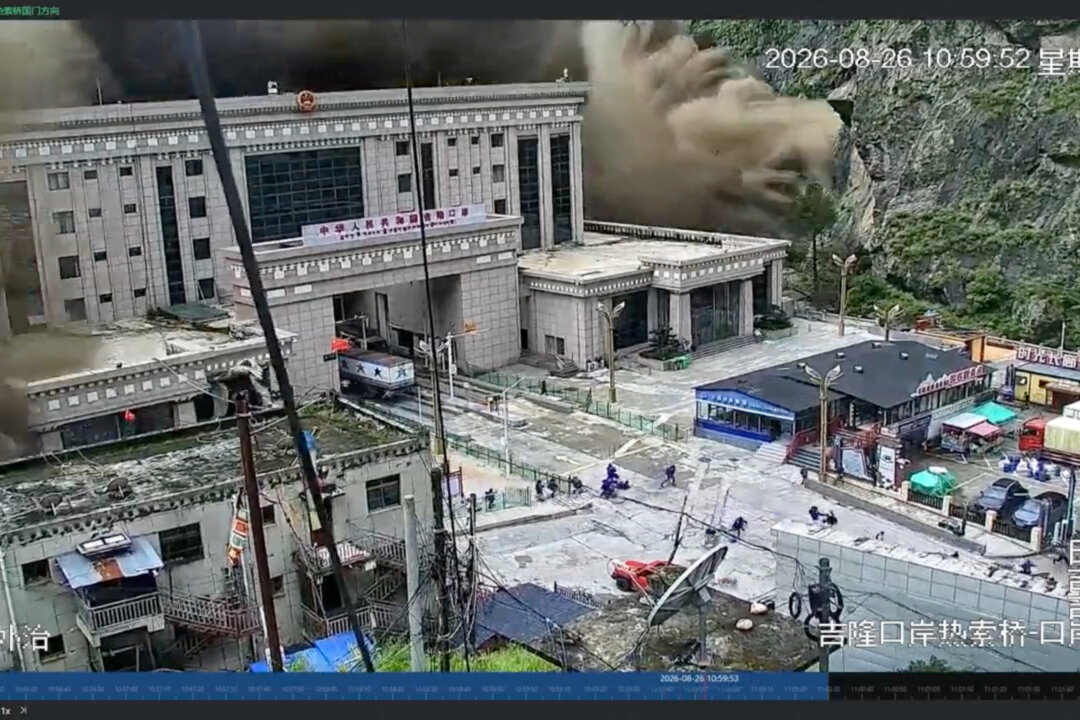
Chinese Scientists Flagged Glacial Flood Danger One Year Before Nepal Catastrophe
More than a year before the catastrophic flash flood devastated the China–Nepal...

Iceland Focuses on Security Partnerships After Voters Reject Opening EU Membership Talks
Icelandic Minister for Foreign Affairs Thorgerdur Katrin Gunnarsdottir attends a press conference...

Italy, Spain Extend Tit-for-Tat Border Curbs After Ceuta Illegal Immigrant Crisis
Immigrants gather on a hill as they attempt crossing from the border...



Vaccine Maker Halts Trial on mRNA Cancer Shot
A pharmacist administers the Pfizer-BioNTech vaccine in Los Angeles, Calif., on October...
