The technology trade that has powered much of this year’s stock-market rally came under renewed pressure, as investors questioned whether heavy artificial-intelligence spending by the biggest tech companies will translate into profits—or consume cash that might otherwise go to shareholders.The Nasdaq Composite fell 2 percent for the week, the weakest among the major U.S. stock indexes, after several technology bellwethers posted earnings that missed elevated expectations.The selloff intensified Friday after reports from Amazon and Intel deepened concerns about slowing growth in parts of the tech sector and higher AI-related capital spending.The Dow Jones Industrial Average declined 0.85 percent for the week to 51,770, while the S&P 500 slipped 0.57 percent to 7,580.Small-cap shares outperformed again, with the Russell 2000 rising 1.29 percent for the week, as investors rotated away from the largest technology names and into areas seen as more insulated from the AI spending debate.The CBOE Volatility Index finished the week little changed at 19.42, though it briefly climbed above 23 during Friday’s sharp intraday selloff.Friday Tech Sell-OffThe week showed a market increasingly willing to distinguish between companies that can fund AI ambitions from existing cash flow and those that may face pressure on margins, balance sheets, or shareholder returns.“The big focus is what these companies expect to spend on AI going forward and whether this spending can continue to be financed by cash flows, or if equity and debt issuance will be necessary, too,” Richard Saperstein, chief investment officer of New York-based investment firm Treasury Partners, told The Epoch Times.The pressure was most visible in megacap technology shares. Alphabet closed down 12.29 percent on Thursday after disappointing advertising revenue added to worries about the cost of its AI investments.Microsoft, whose Azure cloud business beat expectations, also ended the day slightly lower despite a stronger report.By Friday, the selloff had broadened. Amazon dropped more than 7 percent in early trading after missing revenue and earnings estimates and sliding into negative free cash flow because of AI spending. The stock later recovered much of the loss, closing down 1.41 percent.Intel plunged more than 28 percent, its worst single-day decline in decades, after topping estimates but issuing disappointing fourth-quarter guidance tied to sluggish PC sales growth.The iShares Semiconductor ETF fell 8.24 percent.The Nasdaq dropped nearly 4 percent at one point on Friday before ending the session down 2.86 percent. The S&P 500 fell 1.82 percent, the Dow lost 1.09 percent, and the Russell 2000 declined 1.66 percent.AI Cost ConcernsInvestors began the week in a more upbeat mood after Anthropic filed a registration statement with the Securities and Exchange Commission for a proposed initial public offering of Class A common stock, briefly reviving enthusiasm for AI-related shares.Semiconductor stocks rallied early in the week, with AMD, Broadcom, and Intel among Tuesday’s gainers.But the mood shifted as earnings reports forced investors to focus less on AI potential and more on AI costs.“We are now getting to see who is spending rationally on AI and who is not,” Richard Reyle, chief investment officer of Paramus, New Jersey-based Questar Capital Partners, told The Epoch Times.“Microsoft’s AI spending was rational and measured, and it has remained cash-flow positive, while Alphabet was cash-flow negative, just like Meta, and its stock is getting hammered.”The Federal Reserve offered little immediate catalyst for the market. The central bank held its benchmark federal-funds rate steady, as expected, leaving investors to weigh sticky inflation against signs of economic resilience.“The Fed is trying to balance stubbornly high inflation with a fragile labor market and stretched consumers,” Melissa Cohn, regional vice president of William Raveis Mortgage, told The Epoch Times.She said the central bank was also likely mindful of acting too close to the midterm elections.Rick Gardner, chief investment officer of Raleigh, North Carolina-based RGA Investments, said holding rates steady gives policymakers more time to assess inflation after a period in which bond markets already tightened financial conditions.“While bond yields have cooled off, they surged in the weeks following the Fed’s September rate hike, suggesting that the markets have done plenty of tightening for the Fed already,” he told The Epoch Times.The 10-year Treasury yield remained below 5 percent after a three-week decline pushed the benchmark yield to one-month lows. Oil prices also eased, with Brent crude trading below $115 a barrel on Tuesday, helping support small-cap stocks and other rate-sensitive areas of the market.Encouraging Economic DataEconomic data were broadly supportive. The Conference Board’s Consumer Confidence Index rose to 91.7 in October from a revised 84.2 in September. GDP rose 3.4 percent annually in the third quarter, the strongest pace in a year and above expectations for 3.2 percent growth.“Thursday’s GDP report showed that the economy has a remarkable ability to withstand elevated borrowing costs and high interest rates,” Reyle said.“Even though GDP is backward-looking, it helps to confirm the stock market’s recent strength.”Still, investors preferred areas outside the AI trade. Pharmaceutical stocks helped cushion the broader market on Thursday after strong results from Eli Lilly and Merck.Small caps, which have lagged much of the year, continued to benefit from steadier yields, lower energy prices, and rotation out of megacap technology shares.Not all market watchers view the tech pullback as a warning sign.Paul Stanley, managing director and founding advisor of New York-based wealth-management firm Arca, said October’s volatility was concentrated in the Nasdaq as investors reassessed valuations after a powerful run.“Investors took a moment to examine whether the recent pace of tech valuations still made sense, given all of the spending on AI development that is hitting cash flows,” he told The Epoch Times.Stanley said he remains constructive on the long-term AI theme and views the selloff as a potential buying opportunity.“This is not the first tech and AI correction, and it won’t be the last,” he said. “We are still in the very early stages of AI development, and pullbacks are par for the course.”

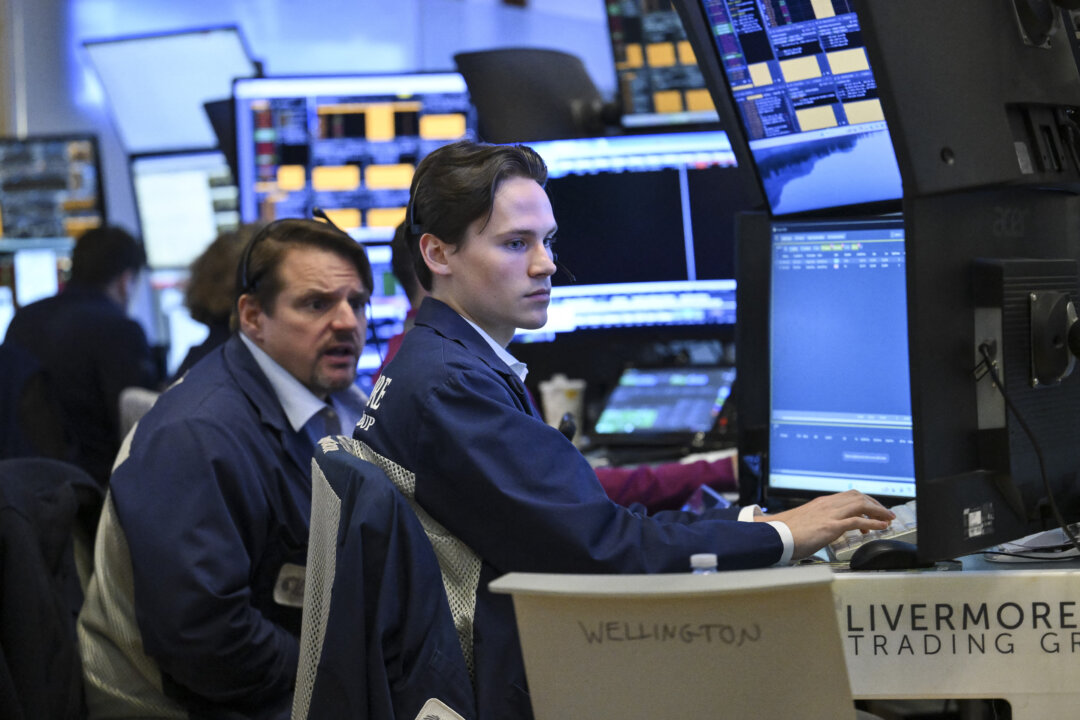
Wall Street Review: Small Caps Beat Tech Again Amid AI Cost Concerns









Related Articles

China NewsCrime & Public SafetyNational SecurityThreat from Communist ChinaUSUS NewsUS-China Relations
2 Chinese Agents Sentenced for Helping Recruit US Military Personnel as Sources
Two Chinese nationals were each sentenced Friday to 30 months in prison...
China NewsUSUS-China Relations
FCC Proposes to Restrict Chinese Telecom Carriers Access to US Phone Numbers
The seal for the Federal Communications Commission in the commission's briefing room...
BusinessCompaniesCourtsMedia & Big TechSocial MediaTechUSUS News
Meta Settles With Teen During Trial Over Social Media Addiction Claims
Meta settled a lawsuit Friday with an 18-year-old Mississippi plaintiff, identified only...



Australia NewsAustralia Top NewsBusinessCompaniesOpinionSocial IssuesViewpointsWorld News
NABs Planned 2,500 Job Cuts Add to Mounting Pressure on Australias Labour Market
CommentaryThousands of banking workers face an uncertain future as National Australia Bank...
