
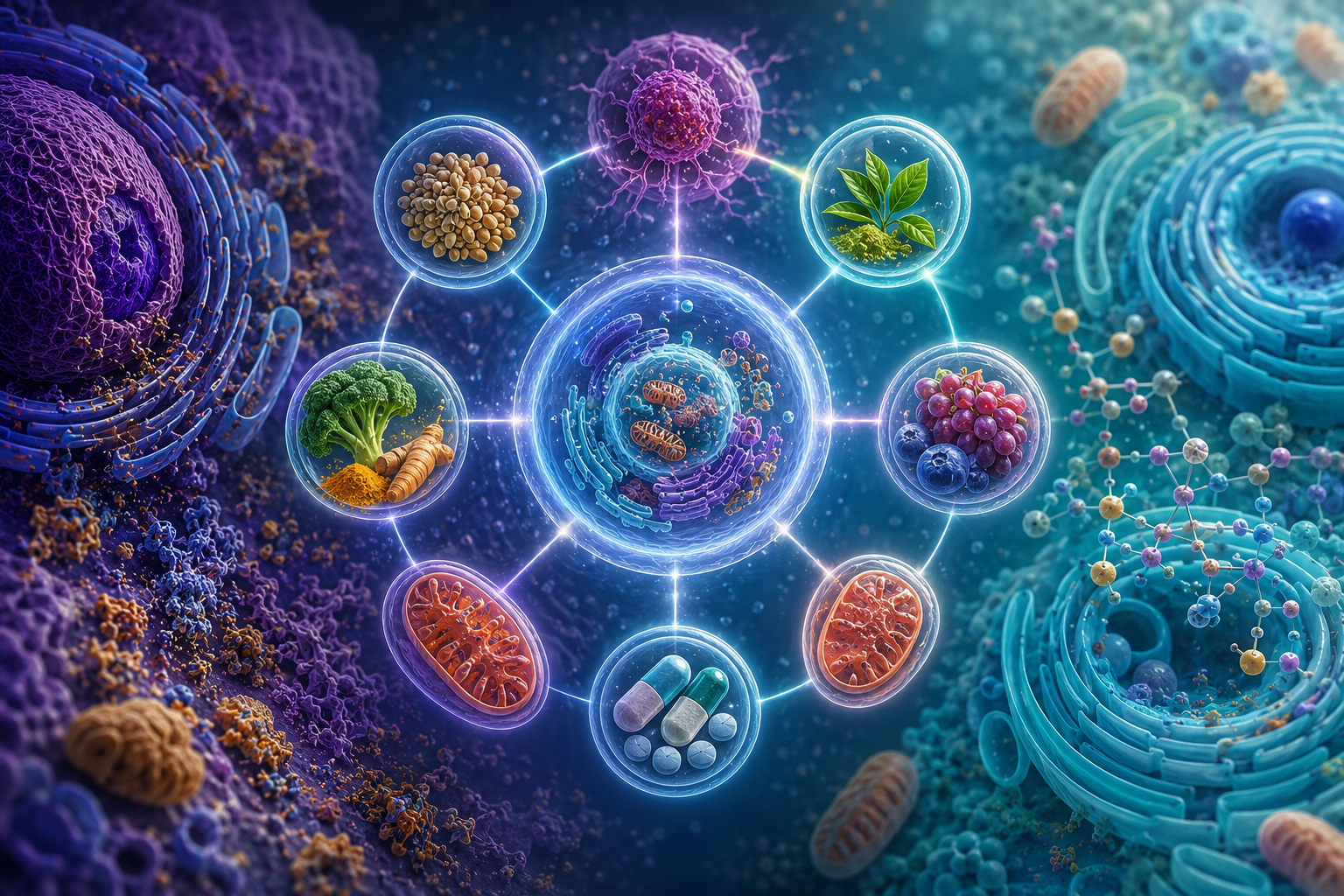
Recently, we explored how intermittent fasting naturally enhances autophagy, one of the body’s most important cellular repair mechanisms. Today, I’d like to share several nutrient-based supplements and repurposed medications that research suggests may further enhance autophagy and support healthier aging. While evidence varies between these compounds, many have demonstrated promising effects in laboratory and animal studies, and several are now being actively investigated in human clinical trials.Many of these compounds work by influencing three key cellular pathways: mTOR, AMPK, and sirtuins. (If you want a better understanding of how these pathways work before reading about these supplements and medications, see the explanations at the bottom of this post. Otherwise, feel free to continue reading.)These compounds are generally more accessible and tend to have milder effects than prescription medications. Many are naturally occurring polyphenols or polyamines found in foods and have shown promising autophagy-promoting effects in laboratory and animal studies, with some now being investigated in human clinical trials.Resveratrol: Found in red wine, grapes, berries, and peanuts. Activates sirtuins (e.g., SIRT1) and can induce autophagy via multiple pathways. Popular in longevity research, though bioavailability can be an issue.Spermidine: A polyamine (found in wheat germ, aged cheese, mushrooms, soybeans) that robustly induces autophagy. Linked to longevity, cardioprotection, and cognitive benefits in studies.Quercetin and Fisetin: Flavonoids with senolytic (senescent cell-clearing) properties that also promote autophagy. Quercetin is in onions, apples, and capers; fisetin in strawberries. Curcumin (from turmeric): Activates autophagy pathways and has anti-inflammatory effects. Bioavailability is enhanced with piperine (black pepper) or special formulations.










Wins of the Week 144 with Ted Kuntz
This week brought significant developments around medical policy, free expression, individual rights,...
ALERT: AI Can Now Design New Viruses From Scratch
Researchers at Stanford University have used artificial intelligence to design and build...

Wins of the Week 143 with Ted Kuntz
Momentum continued this week on medical accountability, freedom of expression and protections...


Health Canada Knew About Myocarditis Risks Before Approving COVID “Vaccines”
A recent CTV News report highlighted rising heart failure among Canadians aged...
