
Banning Christian Prayer at Official Military Events While Allowing Indigenous Practices Is a Double Standard, Chaplains Say
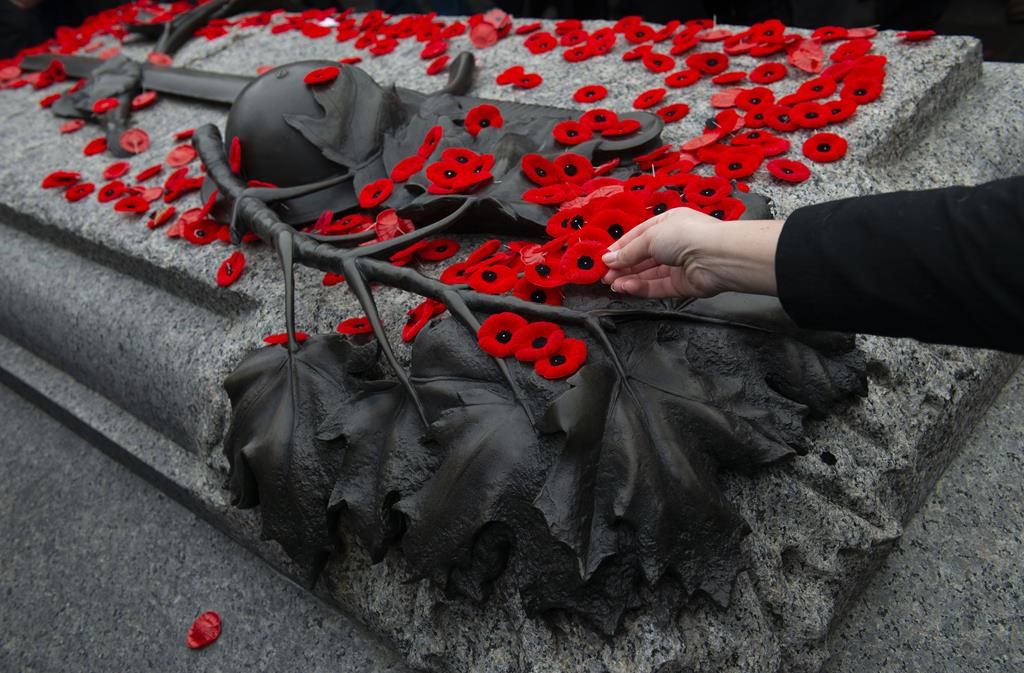
Two active-duty Canadian military chaplains are questioning why Christian prayer and other faith practices are banned during addresses by military personnel at official ceremonies while indigenous spiritual practices are exempted, saying it amounts to a double standard.“I do not understand why First Nations are exempt from this policy. This is obviously a double standard,” said one chaplain who asked to remain anonymous because he is currently serving.“Some faith traditions are apparently more equal than others.”The Department of National Defence (DND) on July 29 released a new directive that forbids all military personnel from using faith-specific language and practices during official military events, banning the use of words such as “God” and “Heavenly Father,” and directing them to instead offer a “spiritual reflection.” Official events are defined as those relating to government business that military members are mandated to attend.The directive exempts indigenous practices during official events, stating that this is due to “Canada’s constitutional recognition of Indigenous rights, the historical suppression of Indigenous traditions by the state, and an ongoing commitment to reconciliation.”It adds that the inclusion of the indigenous practices doesn’t constitute “an endorsement or advancement of a particular system of belief,” and that they should be framed “within an educational and cultural context.”Another active-duty chaplain told The Epoch Times that the directive is “disguised as empathy and compassion for all,” but it amounts to “compelled speech” as it directs religious leaders what to say.He asked why the same “freedom given to indigenous groups” aren’t provided to members of other faiths.“This is a clear example of double standards,” he said.“The policy acknowledges that the state allowing a First Nation prayer is not an endorsement by the state of their religious views. However the argument to silence every other religion, Christian in particular, is that the state [must] maintain neutrality.”The chaplain said that what is behind the exclusion of other faiths but inclusion of indigenous practices is a “political position” that is not widely accepted outside the “political left.” He added that this has the effect of infringing on religious freedom in Canada.“It’s a political infiltration destroying Canadian history, values, and foundation of our True North Strong and Free,” he said.The July 29 directive supersedes a 2023 directive that forbade chaplains from offering prayers during official ceremonies such as Remembrance Day events, and compelled them to offer “spiritual reflections” instead. The new directive extends this requirement to all DND employees, contractors, and volunteers engaged in offering “spiritual or religious services” for the Canadian Armed Forces (CAF), and provides further specific instructions.It says that the requirements don’t apply to military funerals, where it’s allowed to follow the wishes of the deceased and their family members. CAF members are also allowed to offer faith-specific prayers during private and voluntary events.DND spokesperson Maj. Soomin Kim said the new directive is meant “to better respond to the moral and spiritual needs of all members.” It’s motivated by the “growing religious and spiritual diversity” of CAF members, and is meant to make all personnel feel included, Kim added.The spokesperson cited a 2015 Supreme Court of Canada ruling that requires state neutrality, with the court saying that the state “must neither encourage nor discourage any form of religious conviction whatsoever.”On the issue of the inclusion of indigenous practices, Kim cited a 2020 B.C. Supreme Court ruling where the court held that indigenous spiritual practices presented in a non-compulsory educational context don’t breach the state’s duty of religious neutrality.“Instead, they can serve to promote understanding, inclusion, and reconciliation which are both morally and legally supported under the Truth and Reconciliation Commission’s Calls to Action and the Government of Canada’s reconciliation framework,” Kim said.BC CaseThe B.C. case came about after B.C. mother Candice Servatius of Port Alberni said her two elementary school-aged kids had been compelled to stay in class to observe an indigenous smudging ceremony at their public school, as well as having an aboriginal prayer recited at a school assembly a few months later in 2015.In a letter to parents explaining the smudging ritual, the school explained that it’s based on the belief that “bad energy” has to be “cleansed” because “everything has a spirit and energy.”Servatius, an evangelical Christian, said that exposing her children to the indigenous spiritual practice and prayer amounted to compelling them to participate in the ceremony and thus violated their freedom of religion and the public school’s legal obligation to remain secular.Servatius took the case against the school district to the Supreme Court of B.C. in 2016. The court dismissed the petition on Jan. 8, 2020, after which she appealed to the B.C. Court of Appeal, which heard the appeal in June 2022, and subsequently dismissed it in December 2022.In its dismissal, the appeal court ruled that students being asked to observe indigenous cultural practices for educational reasons doesn’t amount to being asked to participate in a religious ritual.Indigenous PracticesIndigenous spiritual and cultural practices in the CAF have included land acknowledgments, sweat lodge, smudging, and sunrise ceremonies, drumming and dancing, sharing circles, and hosting teachings by First Nations elders.During DND’s Indigenous Awareness Week in May, several bases hosted smudging ceremonies as well as prayers, drumming, dancing, and a sharing circle with elders.In a May 29, 2019, directive for the Royal Canadian Chaplain Service (RCChS), the Defence Department instructs chaplains to help indigenous CAF members access their spiritual practices, and encourages that indigenous land acknowledgements be included before commemoration services held in multi-faith worship spaces.“The RCChS is committed to supporting and assisting Indigenous CAF members in celebrating their rich spiritual heritage and practising their ancestral ceremonies,” the directive states.Further background to the subject of indigenous spiritual practices comes from a January 2022 Defence Department advisory-panel report on “systemic racism and discrimination with a focus on Anti-Indigenous and Anti-Black Racism, LGBTQ2+ Prejudice, Gender Bias, and White Supremacy.”“There is very little effort to promote access to traditional Indigenous medicines, or spiritual practices such as smudging ceremonies,” the report says.






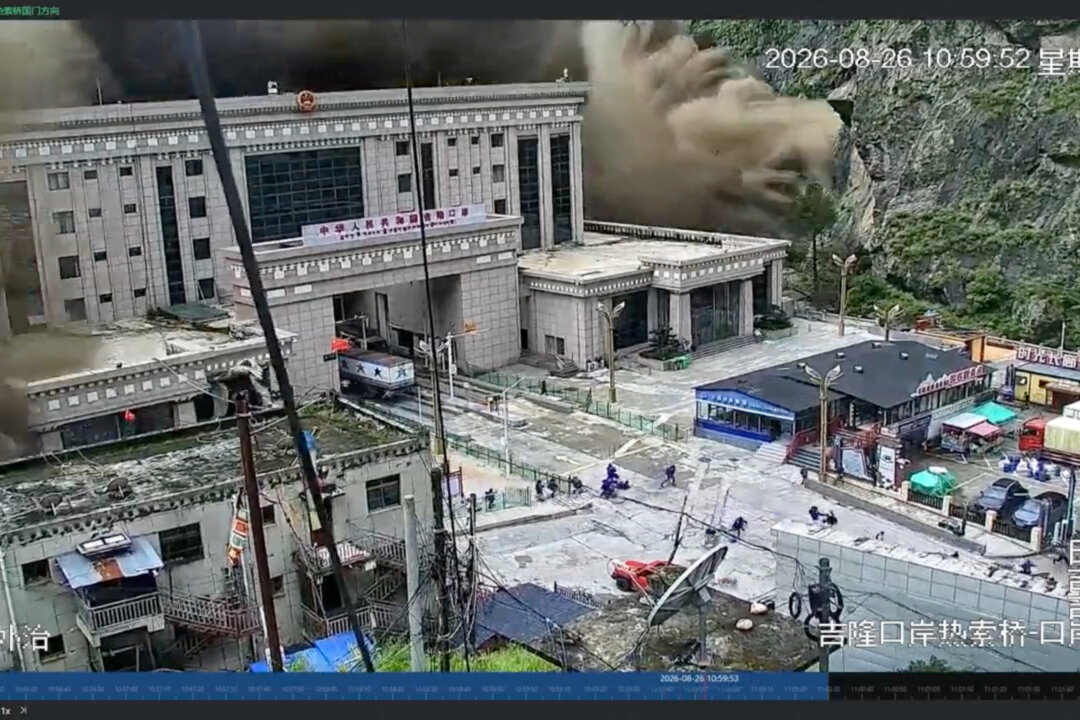
Chinese Scientists Flagged Glacial Flood Danger One Year Before Nepal Catastrophe
More than a year before the catastrophic flash flood devastated the China–Nepal...
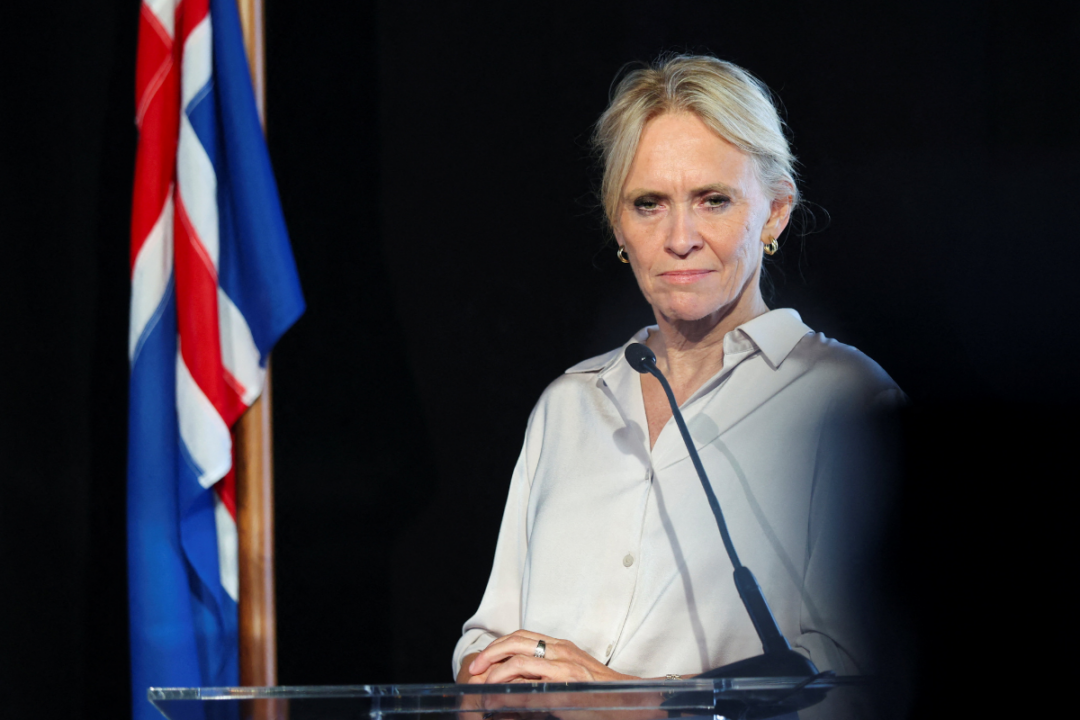
Iceland Focuses on Security Partnerships After Voters Reject Opening EU Membership Talks
Icelandic Minister for Foreign Affairs Thorgerdur Katrin Gunnarsdottir attends a press conference...
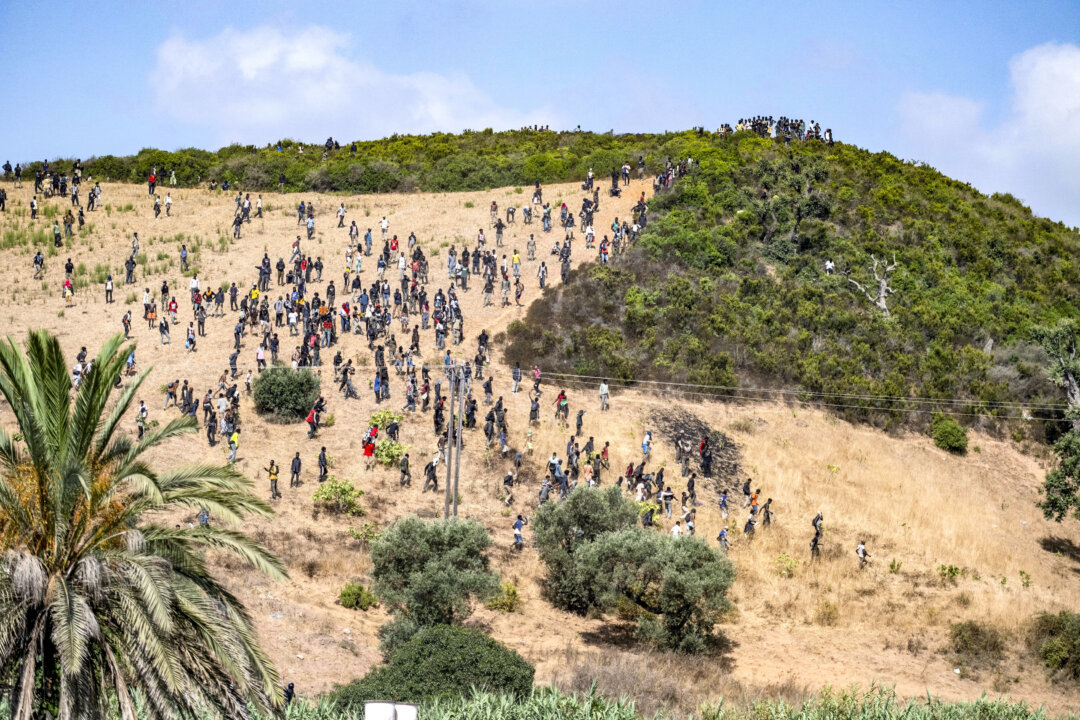
Italy, Spain Extend Tit-for-Tat Border Curbs After Ceuta Illegal Immigrant Crisis
Immigrants gather on a hill as they attempt crossing from the border...



Vaccine Maker Halts Trial on mRNA Cancer Shot
A pharmacist administers the Pfizer-BioNTech vaccine in Los Angeles, Calif., on October...
