Countries around the world have pushed back after the United States imposed new tariffs of between 10 percent and 12.5 percent on imports from more than 60 trading partners, citing concerns that they had failed to prevent goods made with forced labor from entering U.S. supply chains.The tariffs took effect on July 24 after temporary 10 percent global tariffs expired at midnight. The Trump administration said the new measures rely on Section 301 of the Trade Act of 1974, which it is using to address forced labor concerns.European Union foreign policy chief Kaja Kallas challenged the decision.“You can’t say that for the European Union,” Kallas said on July 24 during ASEAN meetings in Manila. “If you compare our labor laws to the ones of the United States, I mean, we have paid vacations, we have very good labor conditions for our employees, so it’s not really grounded.”Kallas said the EU had honored its commitments under its trade agreement with Washington, reached in July 2025, and described the tariffs as “a negative surprise” because “this agreement is not kept.”The tariffs come a little more than a month after the EU lawmakers approved legislation on June 16 implementing key parts of the EU–U.S. trade agreement.Switzerland rejected the U.S. justification for the tariffs and said it remains committed to negotiating a broader trade agreement with Washington.The Swiss Federal Department of Economic Affairs, Education, and Research said in a July 24 post on X that it “takes note of the announced additional US tariff of up to 12.5% on Swiss imports,” adding that the Federal Council rejects the allegations underpinning the U.S. forced labor investigation.The two countries have continued negotiating a broader trade agreement after the United States imposed a 39 percent tariff on Swiss imports in 2025 before later reducing it to 15 percent under a framework agreement reached in November 2025.The department noted that the United States “continues thereby to uphold the Joint Statement of [Nov. 14, 2025],” which set a 15 percent tariff ceiling for most Swiss goods.U.S. President Donald Trump (L) waves after being greeted by Swiss President Guy Parmelin (R) as U.S. Ambassador to Switzerland Callista Gingrich (C) looks on in Geneva, Switzerland, on June 15, 2026. Anna Moneymaker/Getty ImagesSwiss business group Economiesuisse also disputed the U.S. allegations. The organization said in a July 24 statement there is no evidence that Swiss supply chains are being used to channel goods produced with forced labor into the U.S. market.A UK government spokesperson told The Epoch Times in a July 24 emailed statement that Downing Street takes forced labor “very seriously” and works to ensure businesses are not complicit in forced labor or human rights abuses in global supply chains.“The UK remains on a 10% tariff rate and the preferential access secured under our agreement with the United States remains in place,” the spokesperson added.UK Prime Minister Andy Burnham attends his first cabinet meeting as prime minister at 10 Downing Street, London, on July 21, 2026. Eddie Mulholland/APCanadian Trade Minister Dominic LeBlanc said in a July 23 statement that the United States had previously indicated it would replace existing baseline tariffs before they expired.He noted that Canada would continue facing a 10 percent tariff rather than the 12.5 percent rate applied to most affected economies.LeBlanc said Canada shares the United States’ goal of preventing goods made with forced labor from entering supply chains and has strengthened its legal framework to combat the practice. He added that Ottawa would continue engaging with Washington “to the mutual benefit of our citizens.”Australian Trade Minister Don Farrell said on July 24 that Canberra was disappointed by the higher tariffs and rejected the U.S. justification.A man handles wine stock in the processing building at Obsession Wines on Nov. 24, 2020, in Tumbarumba, Australia. Lisa Maree Williams/Getty Images“We do not believe it was justified,” Farrell told journalists in Adelaide. He said Australia takes modern slavery seriously and will continue pressing the United States to remove all tariffs on Australian goods.The Brazilian government said in a July 23 statement that it rejects the U.S. decision to impose a 12.5 percent tariff on Brazilian products under Section 301.It described the tariffs as “completely arbitrary and unjustified” and said it would immediately begin procedures under Brazil’s Reciprocity Law and take the dispute to the World Trade Organization’s dispute settlement mechanism.Brazilian President Luiz Inacio Lula da Silva speaks during a press conference at the Brazilian Embassy after his White House meeting with President Donald Trump on May 7, 2026. Saul Loeb/AFP via Getty ImagesChina reiterated its longstanding opposition to unilateral tariffs after the new measures were announced.Chinese Foreign Ministry spokesperson Lin Jian said during a regular press briefing on July 23 that China opposes “all forms of unilateral tariffs” and warned that “tariff wars and trade wars do not serve any parties’ interests.”Chinese leader Xi Jinping is expected to meet with U.S. President Donald Trump during a visit to the United States on Sept. 24.Reuters and The Associated Press contributed to this report.

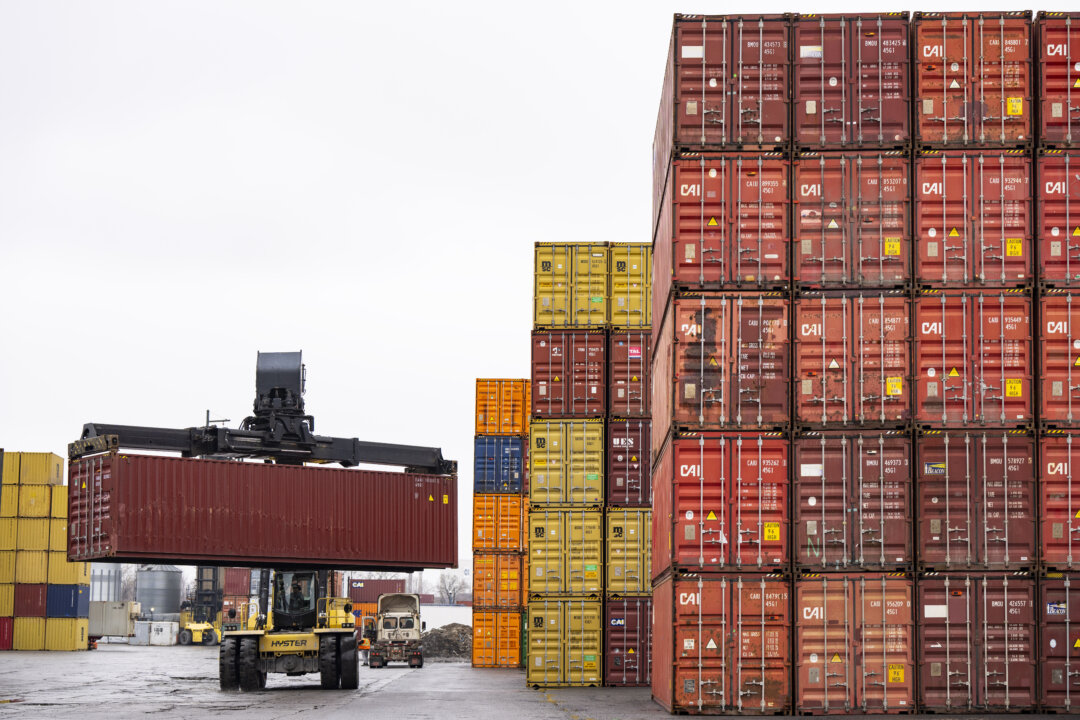
US Imposes Forced Labor Tariffs, Drawing Pushback From Trading Partners






Related Articles

EuropeThe Final wakeup call
Lula wins a miracle election in Brazil. Now comes the hard part: putting the country back on the right track
Three weeks ago, Brazilian President Luiz Inácio Lula da Silva’s political obituaries...
EuropeThe Final wakeup call
US midterms: what a new Congress could and could not change for Europe
US midterm elections traditionally attract fewer voters than presidential contests. But this...

EuropeThe Final wakeup call
Political power without balance leads to the erosion of democracy, what Montesquieu can teach modern-day France
KEY TAKEAWAYS Democratic erosion does not start by doing away with elections;...


BusinessCompaniesEnergy
EQT to Buy Range Resources, Creating Largest US Natural Gas Producer
EQT Corp. has agreed to acquire rival Appalachian shale driller Range Resources...
