For years, our understanding of street art has been incomplete. Some people reduce it to decoration, a tourist attraction, or a form of urban cosmetic enhancement. Others eye it suspiciously, viewing it as an unsolicited aesthetic imposition. But neither of these positions tells the whole story. The fundamental issue is not whether a particular mural is widely liked or disliked, or whether a particular sculpture looks good in photos. The real question is this: how does an artistic intervention change the everyday experience of a town or city? We are not just talking about the urban landscape, but about how a city can become more integrated, balanced and meaningful for those who live there. In other words, we are talking about quality of life. Urban art can (some would argue it must) introduce everyday beauty, serenity and reflection – things that symbolically activate public space in the service of subjective wellbeing. Who gets to make urban art? Well-known urban artists have never flown under the radar. Whether in informal art (such as graffiti) or more mainstream works, artists have always fervently asserted their authorship. But what street art seeks to do above all else is generate headline-grabbing moments of surprise. Take Banksy’s Girl with Balloon, which captivated people because its simple, minimalist image, found on the street, was able to stir up a range of emotions, from loss and childhood nostalgia to hope and fragility. Banksy’s ‘Girl with Balloon’ mural. Dominic Robinson/Flickr, CC BY-NC Nevertheless, the presence of well-known names establishes a silent hierarchy. This means that artists like Taki 183, Keith Haring, Basquiat, Blek le Rat, Oldenburg, Banksy, OBEY and Kapoor are able to intervene in public spaces, while others are not. It is not enough to simply occupy a wall or produce any old image; it takes artistic skill, authorisation and negotiation, understanding of the context, responsibility, and the ability to create a meaningful experience. But even among those who manage to make their mark in the public sphere, not every work succeeds in having a positive impact on the quality of shared urban life. Read more: Graffiti has undergone a massive shift in a few quick decades as street art gains social acceptance A deeper question This is the focus of AUPART, our ongoing research project into urban art and quality of life. The project does not start from the premise that any piece of urban art automatically improves collective wellbeing; it deeply probes this assumption, and seeks to find out whether it is true at all. Quality of life is not a simple concept, nor can it be directly attributed to a single factor. According to, for instance, the framework set out by the Spanish National Statistic Institute’s Multidimensional Quality of Life Indicator, it depends on material conditions, social relations, perception of the environment, safety, governance, subjective wellbeing and everyday experience of a place. That is why, when we study urban art, we ask ourselves in what specific ways it can exert an influence, and under what conditions it might have an impact. A work of art should not be judged solely on formal quality, scale or whose signature it bears, but also on its ability to act as a mediator between public space and urban life. When public art succeeds or fails Two long-running projects that have done just this are Mural Arts of Philadelphia, which features numerous works that have had an impact on the community, and the Inside Out Project led by the French street artist JR, which has an international reach. In our study we have analysed works such as Julia, the Jaume Plensa sculpture in Madrid’s Plaza de Colón. With results currently undergoing peer review we cannot claim that it improves quality of life in absolute terms. But we can say that it plays an undeniable role in urban mediation, offering a highly visible artistic presence that can alter the experience of the surroundings, the perception of safety, the symbolic value of place, and emotional connections to the square where it is installed. Julia, in plaza de Colón, Madrid. ColorMaker/Shutterstock However, a work of great artistic merit can also fail socially if it does not fit in with the practical reality of the space where it is installed. This was what happened with Richard Serra’s Tilted Arc, a solid steel plate some 36 metres long, installed in 1981 in Federal Plaza, New York. The sculpture was criticised, not only for aesthetic reasons but also for its impact on the everyday use of the space. This was actually the artist’s intention, but it did not go down well. By dividing the square, it meant that members of the public had to alter their normal routes. It led to concerns regarding safety and traffic flow, and was removed in 1989 after a lengthy public and institutional controversy. Beyond aesthetics It is often believed that street art is in itself enough to regenerate an area. For example in Wynwood, a neighbourhood in Miami, urban mural art has generated visibility and an urban brand, but the district’s evolution has led to growing commercialisation, increasingly standardised murals being commissioned, and concerns about runaway gentrification and the loss of the creative community that made the area famous in the first place. There was reputational and economic success, but that did not equate to social regeneration. Wynwood’s murals have become a tourist attraction, and even have their own shop. Bada1/Shutterstock Mural Istanbul, an initiative in the Turkish capital, made similar mistakes. It addressed artistic activism from a solely aesthetic point of view, and was widely seen as a form of social alienation that only aimed to draw attention to a neglected part of the city. Authors – such as urbanists Malcolm Miles, Ann Markusen and Anne Gadwa, art historian Miwon Kwon and architect Kevin Lynch – have all highlighted from their own perspectives that the value of public art cannot be separated from the society, institutions and territory that make it possible. It is not enough for people to just see a work of art. It is also essential that they remember it, understand it, apply it to their own understanding of their surroundings, analyse it, evaluate it and, ultimately, feel able to draw inspiration from it. This was the case with the Heerlen Murals project in the Netherlands. Following the decline of Herleen’s mining industry, the city used community murals to promote social and urban regeneration, improve the image of deprived neighbourhoods, and encourage participation among different groups of citizens. Read more: Melbourne’s love-hate relationship with being Australia’s ‘street art capital’ Not just decoration On its own, street art cannot resoundingly improve life in a city, but it can help to strengthen certain aspects of quality of life. It achieves this when it manages to create stronger bonds with place, stimulates social interaction, reinforces shared identity, helps people understand their surroundings, and manages to be accepted by locals while receiving institutional support. When this happens, artists become more than image producers – they become somebody capable of creating bonds between their work, place and community, making public space an expression of memory, values and shared forms of belonging. Following the 2005 riots in the suburbs of Paris, JR launched the project ‘Portraits of a Generation’. He photographed and pasted up portraits of young people from those neighbourhoods across the city. He sought to replace the media’s image of the ‘dangerous youth’ with specific, direct, and strikingly visible human faces. If we aspire to more liveable, inclusive and culturally vibrant cities, we have to find the conditions under which artistic interventions have positive, measurable effects on public space and community life. This requires us to prepare each project more thoroughly, assess its social relevance, check whether the location actually needs it, and analyse the context. It means recognising that the impact of urban art is not measured solely by how it decorates the city, but by how it transforms a community’s relationship with the place it inhabits, and acknowledging the value of public space as a catalyst for social learning. If we settle for something that just looks nice, we miss out on an enormous opportunity to improve the places where we live. A weekly e-mail in English featuring expertise from scholars and researchers. It provides an introduction to the diversity of research coming out of the continent and considers some of the key issues facing European countries. Get the newsletter!










Related Articles
EuropeThe Final wakeup call
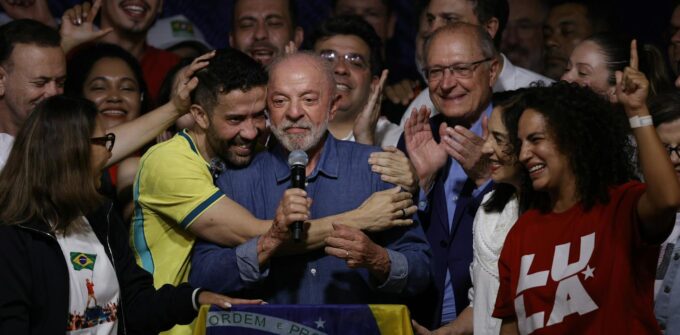
Lula wins a miracle election in Brazil. Now comes the hard part: putting the country back on the right track
Three weeks ago, Brazilian President Luiz Inácio Lula da Silva’s political obituaries...

EuropeThe Final wakeup call
US midterms: what a new Congress could and could not change for Europe
US midterm elections traditionally attract fewer voters than presidential contests. But this...
EuropeThe Final wakeup call
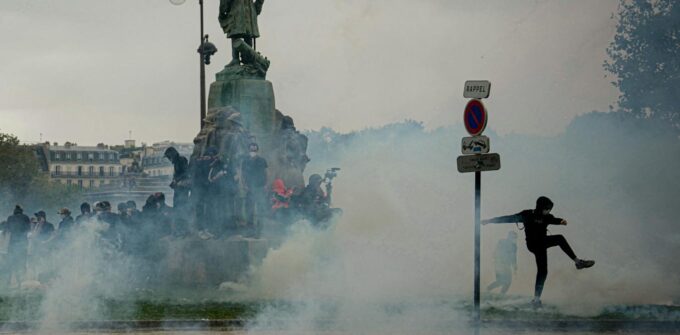
Political power without balance leads to the erosion of democracy, what Montesquieu can teach modern-day France
KEY TAKEAWAYS Democratic erosion does not start by doing away with elections;...



DruthersThe Final wakeup call
Facing the Crooked of Hormuz
By Tom Engelhardt | Substack.com/@TomEngelhardt I was born on July 20, 1944,...
