
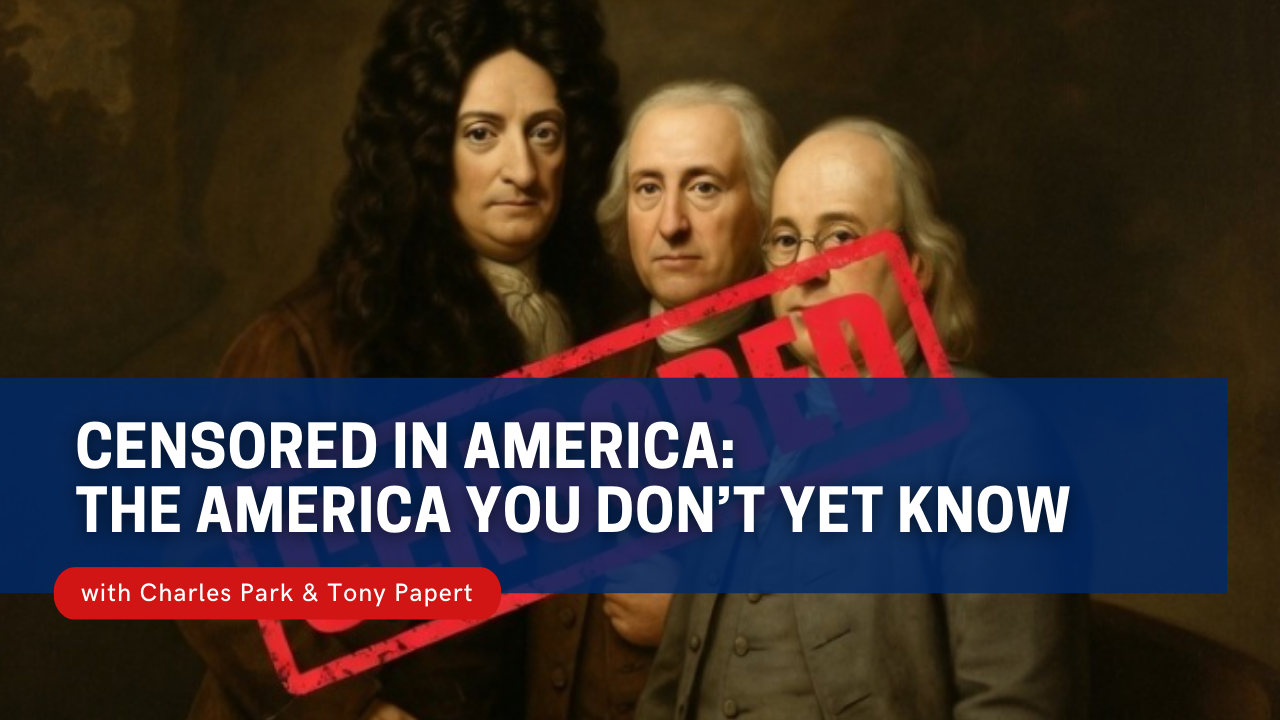
Saturday Class They rewrote your history. A suppressed 400-page manuscript — hidden for 230 years — reveals the true philosophical war behind the American Revolution. Charles Park traces the direct line from Leibniz through Logan and Franklin to the founding of the republic. Every week, Promethean Action holds a Saturday Class—a deep dive into the ideas, history, and strategic thinking that the mainstream won’t touch.We’d love for you to join us live. Sign up here and we’ll send you class details every week.What if the real story behind the American Revolution has been hidden from you for over 200 years?That’s not a rhetorical question. A 400-page manuscript — written decades before the Declaration of Independence — was suppressed for over 230 years.It proves that the intellectual foundations of our republic were far deeper, and far more radical, than anything you were taught in school.In this week’s class, Charles Park — who worked alongside Lyndon LaRouche for 50 years on the intellectual battles that shaped America — presents the suppressed philosophical history behind our founding. His starting point: President Trump’s January 2025 executive order reestablishing the 1776 Advisory Committee to restore America’s true history for the 250th anniversary.Ending Radical Indoctrination in K-12 SchoolingBy the authority vested in me as President by the Constitution and the laws of the United States of America, it is hereby ordered: Section 1. Purpose andThe White HouseThe White HousePresident Trump’s January 2025 executive order reestablishing the 1776 Advisory CommitteeThe class centers on three universal geniuses — Gottfried Leibniz, James Logan, and Benjamin Franklin — and the irreconcilable philosophical war they waged against the apologists of the British Empire: Thomas Hobbes, John Locke, and Isaac Newton.Two world outlooks, locked in battleOn one side: the Hobbesian view — that man is an unreasoning beast, driven only by self-interest, requiring an authoritarian “social contract” to prevent chaos. This became the philosophical justification for the British Empire and remains the foundation of the globalist world order today.On the other: the Renaissance concept of Imago Viva Dei — that every human being is made in the image of the Creator, endowed with a creative mind capable of discovering new principles of the universe. This is the tradition that informed our founding fathers and gave us “life, liberty, and the pursuit of happiness” — Leibniz’s concept, which Franklin ensured was placed into the Declaration of Independence over Locke’s “life, liberty, and property.”The lost manuscriptThe primary source for this class is a 400-page manuscript written by James Logan between 1732 and 1737, titled Of the Duties of Man, As They May Be Deduced from Nature. Logan — secretary to William Penn, mayor of Philadelphia, chief justice, and acting governor of Pennsylvania — was the philosophical mentor who helped inspire and educate the young Ben Franklin.His manuscript is a systematic, reasoned refutation of Hobbes, Locke, and Newton. It demonstrates that an intellectual independence from the British Empire — steeped in Renaissance ideas and rooted in Leibniz — existed within the developing American intelligentsia decades, even a century, before the formal Declaration of Independence.The manuscript was considered lost for 200 years until a copy was discovered in the 1970s, buried under cartons in the Historical Society of Pennsylvania. After a limited publication, it disappeared from circulation again. Out of 250 years of American history, this foundational document has been available for roughly 20. Much of this material is documented at length in Phil Valenti’s original study of Logan and the other intellectuals surrounding Benjamin Franklin.From Leibniz to Franklin to HamiltonCharles traces the direct intellectual pipeline from Leibniz through Logan and Franklin to the American System of Economics. Logan publicly defended Leibniz in the calculus dispute with Newton. He recognized, a decade before Franklin’s famous electricity experiments, the potential of electricity to overturn Newtonian physics. And when Logan died in the 1750s, he willed his 3,000-volume library — one of the largest in America — to become the first lending library, the Philadelphia Library Company, founded by Franklin.The connection extended across the Atlantic. By the 1740s, Franklin was in direct correspondence with Abraham Kästner and other scholars at the Leibnizian Göttingen University in Germany — established by Princess Caroline, a protégé of Leibniz, specifically to preserve and transmit his ideas after King George seized Leibniz’s writings. By 1765, Leibniz’s New Essays on Human Understanding — his rebuttal of Locke — was in the Philadelphia Library Company with a preface by Kästner.This Renaissance tradition became the foundation of Alexander Hamilton’s American System of Political Economy — a system President Trump and his cabinet are now explicitly studying and reviving. Trade Advisor Jamieson Greer made that clear in his speech at Davos on January 20, 2026.Charles concludes:”When Americans realize that they’re tasked with the joyful responsibility to restore, protect, and advance the Renaissance ideas that made our nation unique in world history, the true American spirit will be rekindled on a scale that leaves the British Wall Street globalists in history’s dustbin. Let us finish the American Revolution — in such a way as to be the beacon of hope for the rest of the world.”This is the first of two classes. The follow-up will explore the culture that shaped the American fight for independence.Watch the class and discover the America you don’t yet know.—Promethean Action Editorial StaffPS: Alexander Hamilton design now available. Our America 250 Founding Fathers Collection is live with George Washington, Ben Franklin, and Alexander Hamilton tees and mugs. Authors Activist with LaRouche since the 1970s. Author and speaker on the culture of the American Revolution, Ben Franklin, and James Logan. Follow my Substack, “Creating a New American Intelligentsia.” View articles Founding member of the LaRouche movement in the 1960s. Former editor of LaRouche’s writings and EIR magazine. Regular host of our Saturday class series. View articles






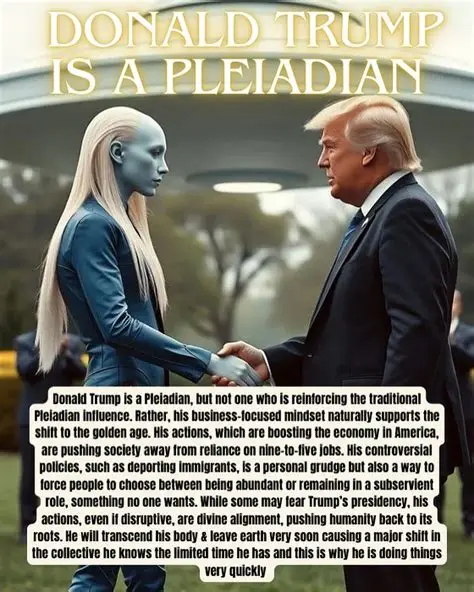
Trump and his important role in this Change
I'm getting a lot of threats that you don't know about... Any...

The EUs repair policies are changing the way tech is designed
In the late 1970s, concerned by resource use and scarcity, German industrial...

The Monday Brief – While America Builds, Europe Schemes To Rob Its Citizens – August 31, 2026
Watch on YoutubeThe G20 meets today in Asheville and Barbara Boyd frames...
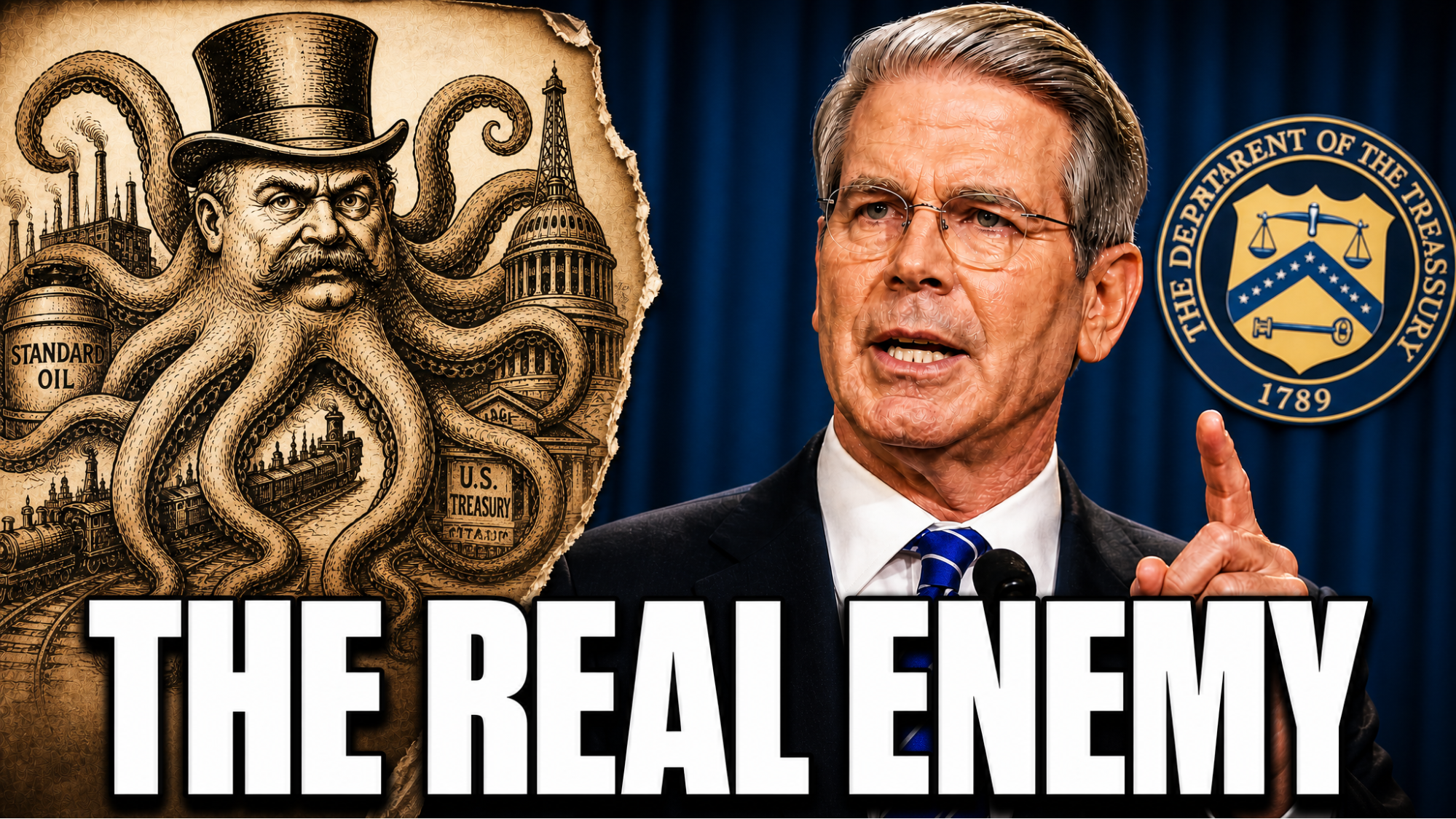


Promethean Overviews Trump Declares War on the Foundations Cartel: Bessent’s Plan to End the Dark Money Empire
Scott Bessent and President Trump are targeting the dark money nonprofit networks...
